KEY POINTS
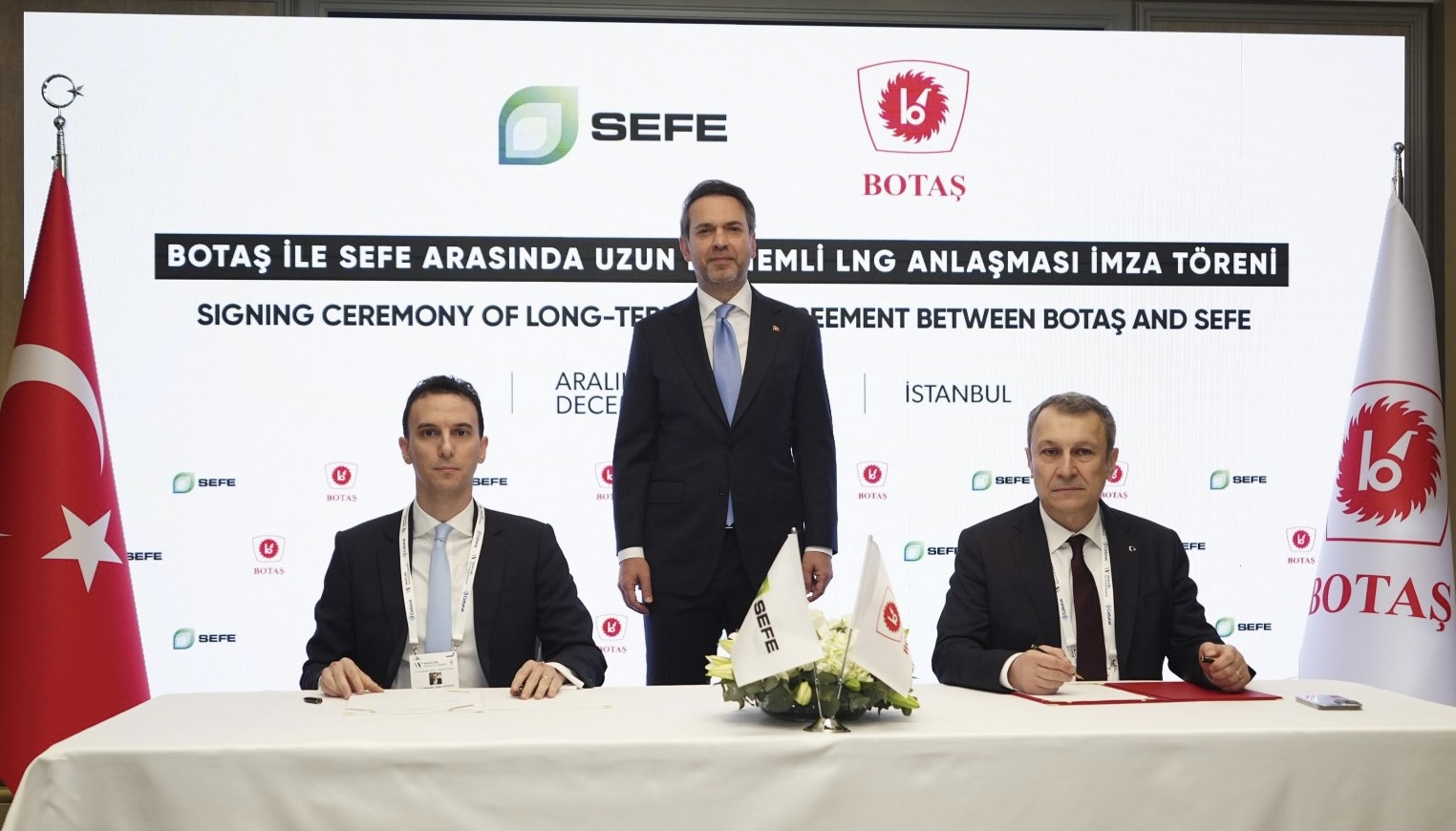
- Turkiye’s BOTAS signed separate 10-year LNG supply deals with Germany’s SEFE and Italy’s Eni, expanding its long-term import portfolio.
- SEFE will supply around five million tonnes annually from 2028, while Eni will deliver 0.4 million tonnes a year under its first long-term sale to Turkiye.
- The agreements support Turkiye’s broader push to diversify gas sourcing and align with Eni’s global LNG expansion across Africa, Asia and South America.
Turkiye has moved to deepen the resilience of its gas supply mix after state-owned pipeline operator BOTAS struck two separate long-term agreements for liquefied natural gas with Germany’s SEFE Securing Energy for Europe and Italy’s Eni.
The deals mark another phase in Ankara’s shift towards more diversified LNG sourcing as it prepares for rising domestic demand and greater volatility in global gas markets.
The new accords were announced late Wednesday, outlining delivery plans that stretch well into the next decade and underscore Turkiye’s intention to secure predictable volumes from a wider pool of suppliers.
SEFE, which is owned by the German state, will supply roughly five million metric tonnes of LNG per year from the final quarter of 2028. The commitment builds on an earlier three-year contract agreed at the start of the year, under which BOTAS is taking more than 1.5 million tonnes in total.
SEFE said the expanded deal draws from its growing global LNG book, anchored by long-term volumes sourced from the United States.
Eni will deliver a much smaller tranche, around 0.4 million tonnes annually, but the agreement carries strategic value for both sides. It follows a similar short-term arrangement struck in September, in which BOTAS agreed to purchase identical volumes for three years.
For Eni, the new contract is its first long-term LNG sale into the Turkish market, cementing its ambition to grow its LNG footprint in regions with rising consumption.
Turkiye’s LNG Portfolio Broadens as Demand Outlook Shifts
BOTAS has been piecing together a broader LNG procurement mosaic throughout the year. In September, the company detailed agreements with a string of global suppliers, including BP, Cheniere, Equinor, Hartree Partners, JERA and Shell, covering around 15 billion cubic metres of LNG for delivery between 2025 and 2028.
Ankara is seeking to avoid the price shocks that hit its energy system in the wake of Russia’s supply cuts to Europe, prompting a deeper push into flexible seaborne gas markets.
Eni said the deal with BOTAS aligns with a strategy to expand its LNG portfolio to around 20 million tonnes per year by 2030, drawing on new and existing production in Congo, Mozambique, the United States, Indonesia and other regions.
The Italian company has been scaling up its LNG capabilities across Africa, with the second phase of its Congo LNG project now operational and capable of producing three million tonnes a year. Feed gas has recently been introduced into the Nguya floating liquefaction unit, with the first cargo from the second phase expected in early 2026.
Congo LNG, the country’s first LNG export development, shipped its inaugural shipment in February 2024 through the Tango FLNG unit. The wider Marine 12 concession underpinning the project is operated by Eni with a 65 per cent stake, while Russia’s Lukoil holds 25 per cent and the national oil company SNPC the remaining 10 per cent.
Eni is also pressing ahead in Mozambique, having taken a positive investment decision in October on the Coral North floating LNG project, which is expected to begin operations in 2028. That facility will add 3.6 million tonnes to the company’s production slate, complementing the Coral South project, which came online in 2022.
In South America, Eni has signed an agreement with Argentina’s YPF to build a liquefaction facility for gas from the Vaca Muerta shale formation. The partners plan an eventual capacity of up to 30 million tonnes per year by 2030, underscoring the company’s belief that LNG demand will continue to expand across global markets.
For Turkiye, the long-term contracts with SEFE and Eni serve to lock in supply at a time of mounting competition for LNG in Europe and Asia. With domestic consumption expected to rise alongside industrial activity and population growth, Ankara is aiming to shield its energy system from external shocks while strengthening its role as a regional gas transit hub.