

KEY POINTS
- NNPC and Heirs Energies have signed commercialisation agreements to capture and monetise flared gas from their OML 17 joint venture.
- The deal brings in multiple approved offtakers to channel the gas into power, industrial use, LPG and CNG markets in line with Nigeria’s energy transition goals.
- The move comes as Nigeria struggles with rising flare volumes, with OML 17 now being positioned as a practical model for rapid flare-out implementation.
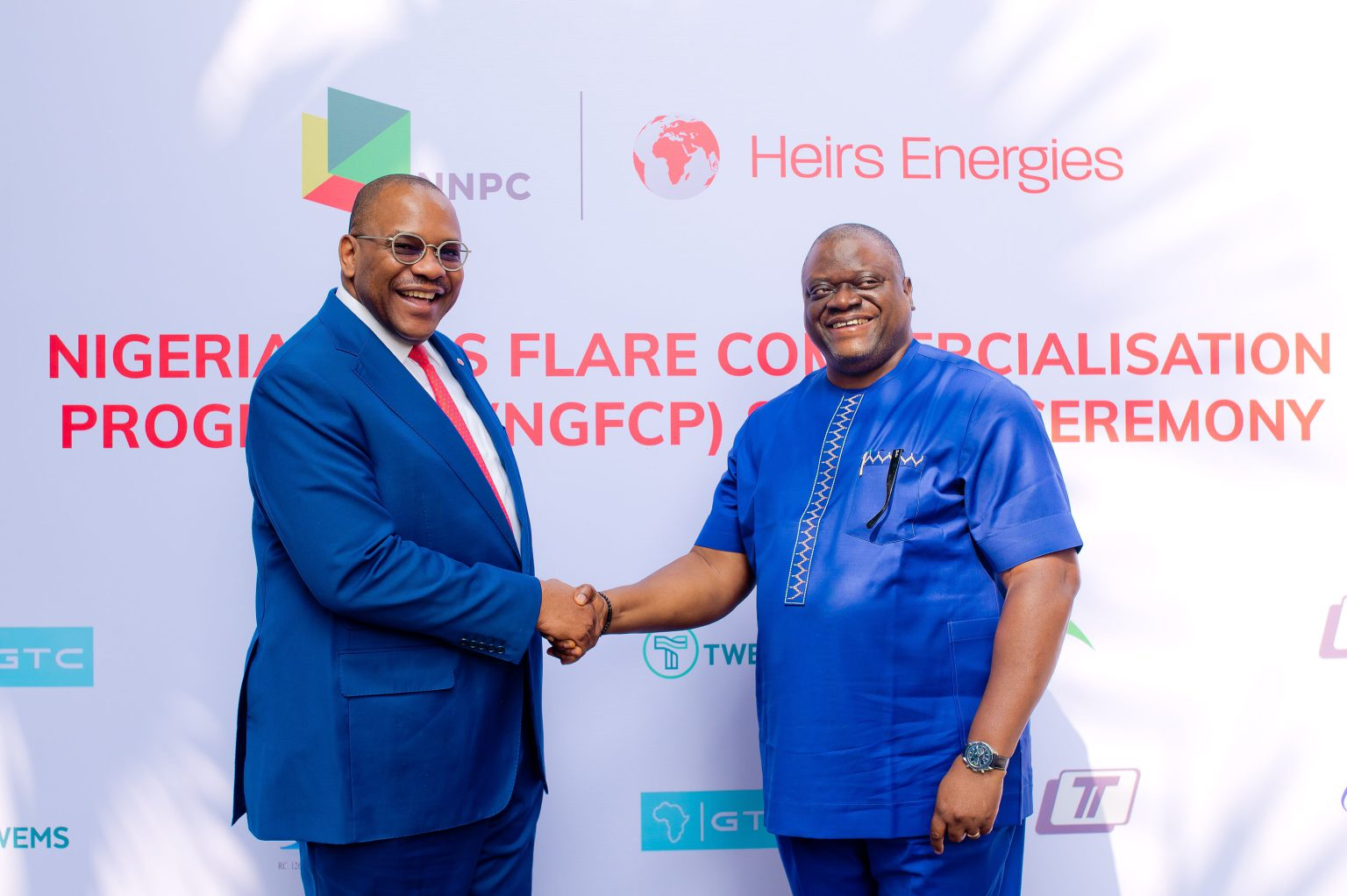
The Nigerian National Petroleum Company Limited and Heirs Energies have taken a significant step toward curbing long-standing flaring of OML 17 across their joint onshore asset, sealing agreements that aim to turn wasted gas into a commercial stream while supporting the country’s broader energy transition push.
The deal, struck under the Nigerian Gas Flare Commercialisation Programme, enables both firms to capture gas currently being burnt off at OML 17 and divert it into power generation, industrial use and the domestic LPG and CNG markets.
It is one of the more ambitious attempts by a Nigerian operator-led joint venture to monetise flare volumes rather than rely on stop-gap measures or prolonged project timelines that have plagued earlier flare-out efforts.
New Commercial Arrangements Bring Together Operators and Approved Offtakers to Eliminate Routine Flaring
Under the agreements, Heirs Energies, which operates the OML 17 joint venture, will work alongside a group of approved offtakers comprising AUT Gas, Twems Energies, Gas & Power Infrastructure Development Limited, PCCD, and Africa Gas & Transport Company Limited. The framework is designed to create a predictable off-take pathway for gas that would otherwise be sent up the flare stack, allowing the companies to channel it into Nigeria’s growing industrial and power-related demand centres.
Gas flaring has remained a persistent challenge for the country, undermining decarbonisation commitments and wasting a resource that could ease supply gaps across the domestic market. Nigeria recorded a 12 per cent jump in flaring volumes last year, according to World Bank data, the second-largest increase globally after Iran. Much of this was attributed to smaller operators and assets tied to the state oil company, where limited investment in gas capture or processing continues to hold back utilisation.
Flaring from national oil company-linked assets and marginal fields accounted for around 60 per cent of the country’s total flared volumes and three-quarters of the year-on-year increase in 2024, the data showed. It is in this context that the OML 17 partnership is being closely watched, particularly as it seeks to move quickly from regulatory approval to on-ground execution.
Heirs Energies’ chief executive, Osa Igiehon, said the company’s approach had centred on consistent investment and disciplined project delivery. He noted that the new commercial arrangements would allow the joint venture to convert waste into domestic energy, reinforcing supply security while improving environmental performance across the field.
For NNPC, the deal forms part of its attempt to reposition gas as a core pillar of upstream development. Speaking on behalf of the company, the chief upstream investment officer of NNPC Upstream Investment Management Services, Seyi Omotowa, described the initiative as a tangible demonstration of Nigeria’s commitment to gas-based growth.
According to him, flare gas commercialisation should not be viewed merely as a regulatory obligation but as a strategic tool for boosting energy availability, advancing gas-driven industrialisation and strengthening the country’s reputation as a responsible producer. He said OML 17 had already become a model for how quickly operators could move from approval stages to practical delivery once the commercial pathways were in place.
He commended Heirs Energies for maintaining steady investment and operational discipline, saying the venture continued to set important benchmarks within the country’s upstream gas agenda.