

KEY POINTS
• Tripartite MoU signed during African Union Summit in Addis Ababa
• Agreement promotes peaceful nuclear energy and skills development
• Africa produces up to 18 percent of global uranium but generates under 1 percent of nuclear electricity
African institutions have signed a tripartite agreement to advance peaceful nuclear energy across the continent. The move signals a coordinated effort to strengthen cooperation, skills and regulation.
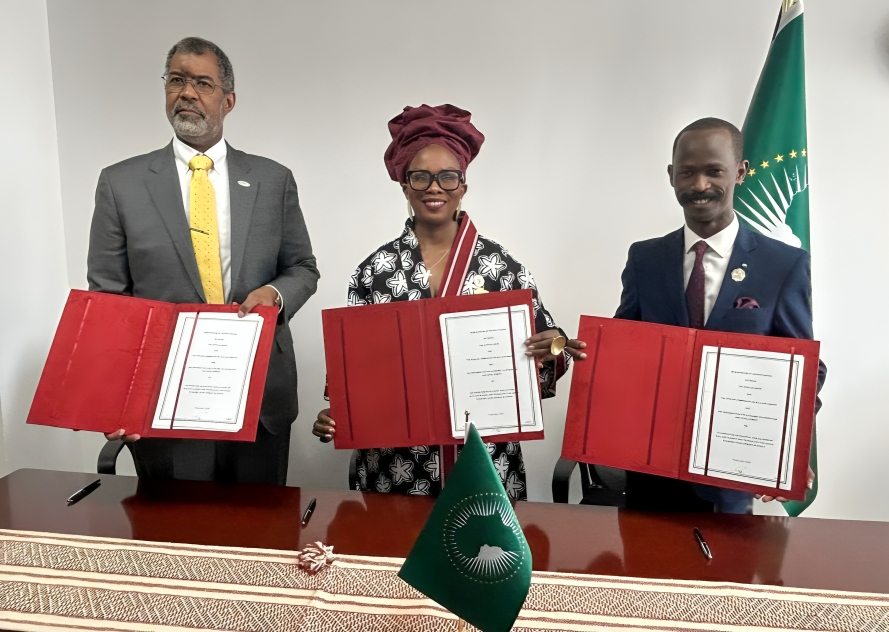
The memorandum of understanding was formalised on February 13 during the 39th African Union Summit in Addis Ababa. Representatives of the African Union Commission, the African Commission on Nuclear Energy and the OECD Nuclear Energy Agency signed the deal.
The agreement creates a framework to promote peaceful nuclear applications for socio economic development in African Union member states. It also supports skills training, industrial growth and stronger policy and regulatory systems.
Promoting peaceful nuclear development
Officials said the deal supports Africa’s energy goals under Agenda 2063. The framework encourages knowledge sharing, joint events and collaborative research.
Lerato Mataboge, Commissioner for Infrastructure and Energy at the African Union Commission, said Africa is at a critical stage in its energy journey. She said the agreement supports energy sovereignty and positions nuclear power as a tool for industrial growth and resilience.
Africa produces between 15 and 18 percent of the world’s mined uranium. Namibia, Niger and South Africa are major producers. Yet the continent generates less than 1 percent of global nuclear electricity.
Officials said this gap shows the potential for Africa to use its resources to drive development at home.
Strengthening skills and regulation
The agreement will run for three years. It may be renewed after review. It aims to strengthen technical expertise and institutional capacity in countries that plan to develop nuclear energy programmes.
According to World Nuclear News, Gaspard Liyoko Mboyo, chairperson of the African Commission on Nuclear Energy, said the agreement comes at a time when many African states face rising energy demand. He said nuclear power can support a reliable, low-carbon supply.
William Magwood, Director General of the OECD Nuclear Energy Agency, said the agency will provide global best practices and technical advice. He said the focus will be on safe and well regulated nuclear programmes.
The cooperation builds on the NEA Common Journey Initiative. The initiative supports engagement with African countries exploring nuclear power.
Countries exploring nuclear power
South Africa is the only African country that currently generates nuclear electricity. Nuclear energy provides about 5 percent of its power supply. The country has installed capacity of 1,854 megawatts.
Egypt is building a 4.8 gigawatt nuclear power plant. The project is expected to be completed in 2031. Other countries have expressed interest in nuclear programmes. These include Algeria, Ethiopia, Ghana, Kenya, Morocco and Nigeria.
Energy demand is rising across Africa. Governments are seeking diverse and sustainable sources of power. The new agreement aims to ensure that any expansion of nuclear energy is supported by skills, regulation and international cooperation.