KEY POINTS
- The 148MW Bolobedu Solar Plant in Limpopo is now fully commissioned and supplying clean power.
- French company Voltalia built the plant under a 20-year power deal with Rio Tinto’s Richards Bay Minerals.
- The project employed 800 local residents and is backed exclusively by two local women investors.
South Africa has a new solar milestone, and it sits on 347 hectares of Limpopo ground.
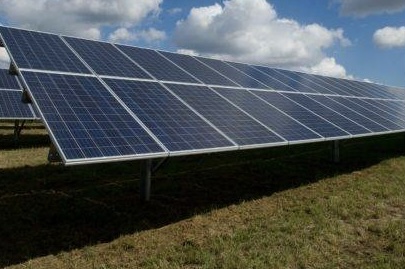
Voltalia has fully commissioned the Bolobedu Solar Plant in Limpopo. The 148-megawatt photovoltaic facility feeds clean power into South Africa’s national grid through Eskom’s transmission network. It supplies Richards Bay Minerals under a 20-year corporate power purchase agreement. Richards Bay Minerals is a subsidiary of Rio Tinto and South Africa’s largest mineral sands producer.
Voltalia says Bolobedu is the first large-scale photovoltaic project developed in South Africa exclusively for a private client. Voltalia CEO Robert Klein called it proof of the company’s commitment to accelerating industrial decarbonization in the country.
What the plant delivers
The numbers are significant. Bolobedu is expected to generate approximately 300 gigawatt-hours of electricity annually, enough to cover the yearly power consumption of around 425,000 people. The plant will cut carbon dioxide emissions by more than 237,000 tonnes per year, equivalent to removing roughly 50,000 cars from the road.
Richards Bay Minerals Managing Director Werner Duvenhage framed the project in terms of long-term mining sustainability. “This initiative is not just about energy security but also about the long-term sustainability of our mining operations,” he said, adding that the plant paves the way for a cleaner energy future as the company breaks ground on Zulti South.
Local impact and women-led investment
Beyond the megawatts, Bolobedu’s construction phase employed approximately 800 local residents from three host communities. Fifty-six percent of those workers were youth and 21 percent were women. Workers received on-the-job training in engineering support, solar panel installation and health and safety practices, with many gaining their first formal employment through the project.
The project also supported local transport cooperatives, women-led catering businesses and handicraft providers. Voltalia noted that two local women investors participated in the project, describing Bolobedu as the first large-scale renewable energy development in the area backed exclusively by women investors.
South Africa currently has 14.2 gigawatts of installed solar capacity and is targeting an additional 28.7 gigawatts by 2039. Projects like Bolobedu, which pair private sector capital with community benefit, represent the model the government says it wants to replicate across the country’s energy transition.