

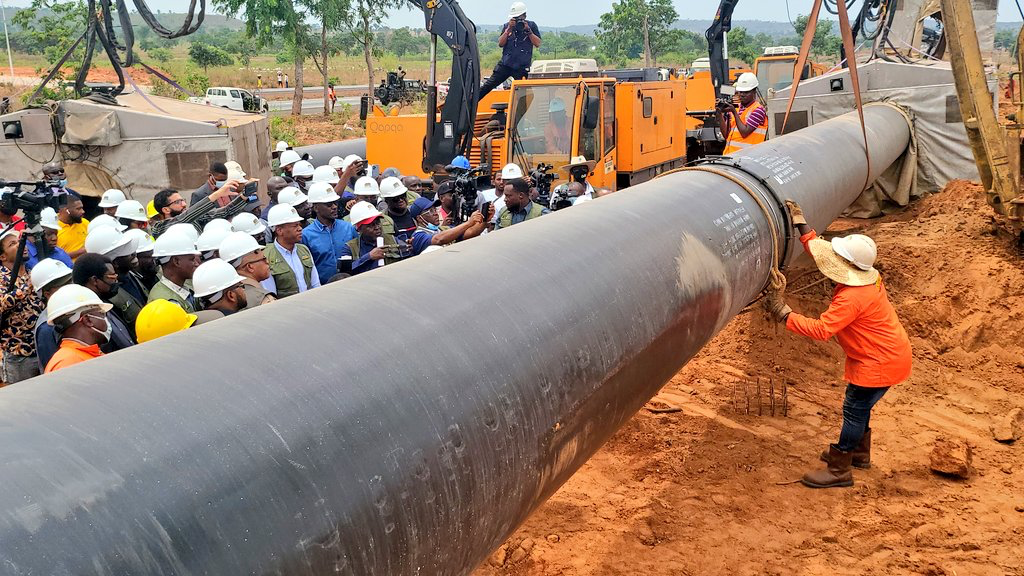
KEY POINTS
- Nigeria plans to begin gas delivery to Abuja by July 2026 via the AKK pipeline, now over 90% complete.
- The pipeline will transport over 2.2 billion cubic feet of gas daily to boost power supply and industrial growth, especially in northern Nigeria.
- Despite years of delays and engineering challenges, the project is nearing completion and is central to Nigeria’s gas-based economic strategy.
Nigeria is set to achieve a major milestone in its energy sector as plans are underway to commence natural gas deliveries to Abuja by July 2026 through the Ajaokuta–Kaduna–Kano (AKK) gas pipeline.
According to the Nigerian Upstream Petroleum Regulatory Commission, the long-anticipated project is now nearing completion, raising optimism about improved domestic gas distribution.
A spokesperson for the commission expressed confidence that gas would begin flowing to the nation’s capital within the projected timeline, marking a turning point for Nigeria’s gas infrastructure development.
Strategic Pipeline to Power Northern Nigeria and Cut Energy Costs
The 614-kilometre AKK pipeline is designed to transport over 2.2 billion cubic feet of gas per day. It is a central component of Nigeria’s strategy to transition toward a gas-powered economy.
By supplying gas to power plants and industries, particularly in northern regions, the pipeline is expected to reduce dependence on costly and environmentally harmful fuels such as diesel and fuel oil. This shift aligns with broader efforts to enhance energy security and support industrial growth across the country.
Despite possessing Africa’s largest proven gas reserves, estimated at more than 210 trillion cubic feet, Nigeria has struggled with underdeveloped infrastructure. The AKK project is therefore seen as a critical test of the country’s ambition to fully harness its gas potential.
Initially conceived in 2008, the $2.8 billion AKK pipeline project has faced multiple delays, missing earlier completion targets set for 2023 and late 2025.
Construction, which began in 2020, encountered significant setbacks due to funding constraints and technical challenges. One of the most complex phases involved crossing the River Niger using horizontal directional drilling, a sophisticated engineering method often likened to a smaller-scale version of the Channel Tunnel.
However, recent updates indicate substantial progress, with the project now more than 90% complete, according to industry sources.