

KEY POINTS
- The USS George HW Bush is sailing in Namibia’s exclusive economic zone, not territorial waters.
- The carrier is travelling under the UN Convention on the Law of the Sea provisions.
- The warship is routing around Africa to avoid the Red Sea and Bab el-Mandeb Strait.
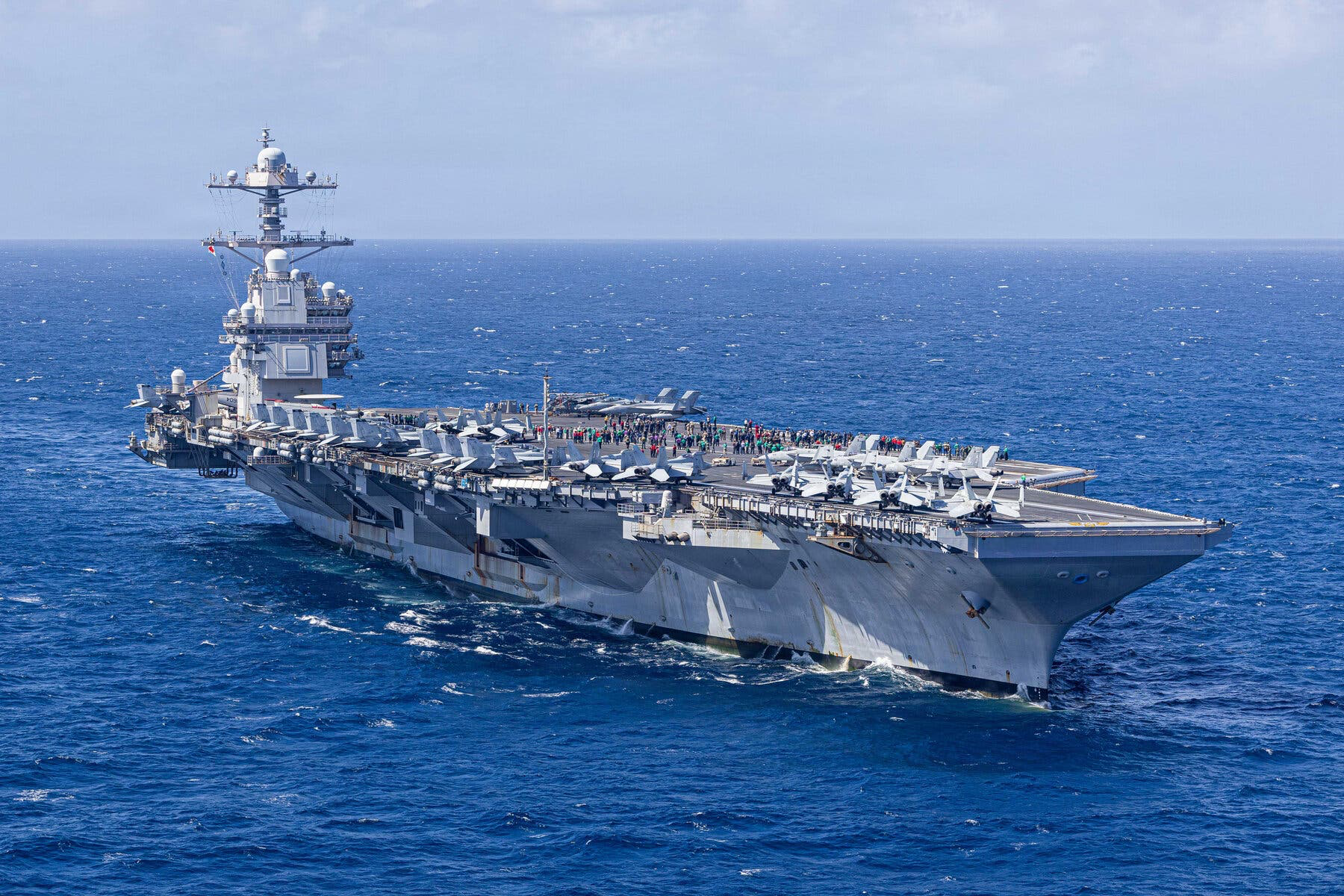
A United States nuclear-powered super carrier is sailing off the coast of Namibia. The USS George HW Bush, designated CVN-77, is moving through the country’s exclusive economic zone on a route that will eventually take it to the Arabian Sea.
Namibian authorities confirmed the carrier’s presence but moved quickly to clarify the boundaries of that transit. The ship has not entered Namibia’s territorial waters, and it is operating under the provisions of the United Nations Convention on the Law of the Sea.
Ministry of Works and Transport spokesperson Petrus Shilumbu laid out the legal framework in direct terms.
“It should be noted that Unclos guarantees freedom of navigation, primarily under article 87, which establishes that the high seas are open to all states. This includes activities such as fishing, overflight and the laying of cables,” Shilumbu said.
What the carrier is doing off Namibia
Shilumbu said the carrier does not need to refuel at Walvis Bay. A nuclear-powered vessel of this size carries operational capabilities that remove the need for routine port calls during a transit of this nature.
Unclos also covers innocent passage in territorial seas and transit passage through straits. Shilumbu cited both as relevant provisions. The Namibian Ports Authority has acknowledged the carrier’s presence and is awaiting guidance from the Ministry of Works and Transport before taking any further steps.
The United States Naval Institute reported last week that the USS George HW Bush deployed at the end of March. Its current passage off the Namibian coast is part of a broader route around the African continent, with the carrier expected to join a growing US naval presence in the Arabian Sea.
Why the route matters
The circumnavigation is deliberate. Routing around Africa allows the carrier and its escort vessels to bypass the Red Sea and the Bab el-Mandeb Strait, both of which have seen heightened activity in recent years. Drone and missile attacks on US and commercial shipping disrupted the corridor across 2024 and 2025, turning the shortcut through Egypt’s Suez Canal into a calculated risk for major warships.
The Strait of Hormuz itself is the destination. US forces are currently enforcing a blockade in that chokepoint, and the George HW Bush is being positioned to reinforce that presence. Namibia’s role in the transit is entirely passive, but its waters have now become part of the map of a wider geopolitical realignment playing out across the Indian Ocean and the Gulf.