KEY POINTS
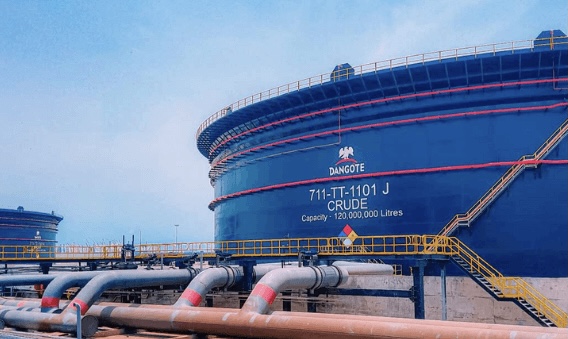
- Dangote Refinery has increased its crude processing capacity to 700,000 barrels per day after a successful performance test.
- The facility is now the world’s largest single-train refinery and plans further expansion to 1.4 million bpd by 2028.
- The refinery is boosting Nigeria’s fuel supply stability and expanding exports across Africa, Europe, and beyond.
The Dangote Petroleum Refinery & Petrochemicals has achieved a major milestone by increasing its crude oil processing capacity to 700,000 barrels per day (bpd), following a successful performance test conducted by its process licensors.
The new output level exceeds its original nameplate capacity of 650,000 bpd, confirming improved efficiency and operational optimisation across its production systems.
This development further strengthens the refinery’s status as the world’s largest single-train petroleum refinery.
According to the company, the capacity increase forms part of a broader expansion strategy aimed at more than doubling production to 1.4 million barrels per day within the next 30 months.
Devakumar Edwin, Vice President for Oil and Gas at Dangote Industries Limited, said the expansion reflects a deliberate effort to position the refinery as a global refining powerhouse.
He noted that the long-term goal is not only to meet domestic demand but also to establish continental and global dominance in petroleum refining.
Strengthening Nigeria’s Energy Security
Since beginning fuel production in 2024, the refinery has steadily increased output of petrol, diesel, aviation fuel, and other refined products.
It has played a key role in reducing Nigeria’s reliance on imported fuel, easing pressure on foreign exchange reserves, and improving domestic fuel availability.
The facility has also become a stabilising force in the downstream oil sector, especially amid global supply disruptions caused by geopolitical tensions.
The refinery has expanded its international footprint by supplying refined petroleum products to several countries across Africa, Europe, Asia, and the Americas.
Its exports include shipments to the United Kingdom, France, Spain, Italy, the Netherlands, as well as petrol deliveries to the United States and jet fuel supplies to Saudi Arabia.
In April, the refinery was also reported to be the world’s largest exporter of jet fuel, according to S&P Global Commodities, highlighting its growing influence in global energy markets.
The refinery’s rising production capacity has attracted increased attention from global crude suppliers and trading firms.
It sources crude oil from both local and international producers to sustain its expanding operations, positioning itself as a key hub for energy supply in Africa.
Many African countries have increasingly relied on the facility for fuel imports due to disruptions in other global supply chains.