KEY POINTS
- Motorists are spending hours at CNG stations as limited refuelling infrastructure struggles to meet rising demand.
- Experts say Nigeria has abundant natural gas, but too few operational CNG stations and weak logistics are causing the crisis.
- Stakeholders want faster expansion of refuelling stations, improved gas delivery systems, and better policy coordination to sustain the government’s CNG programme
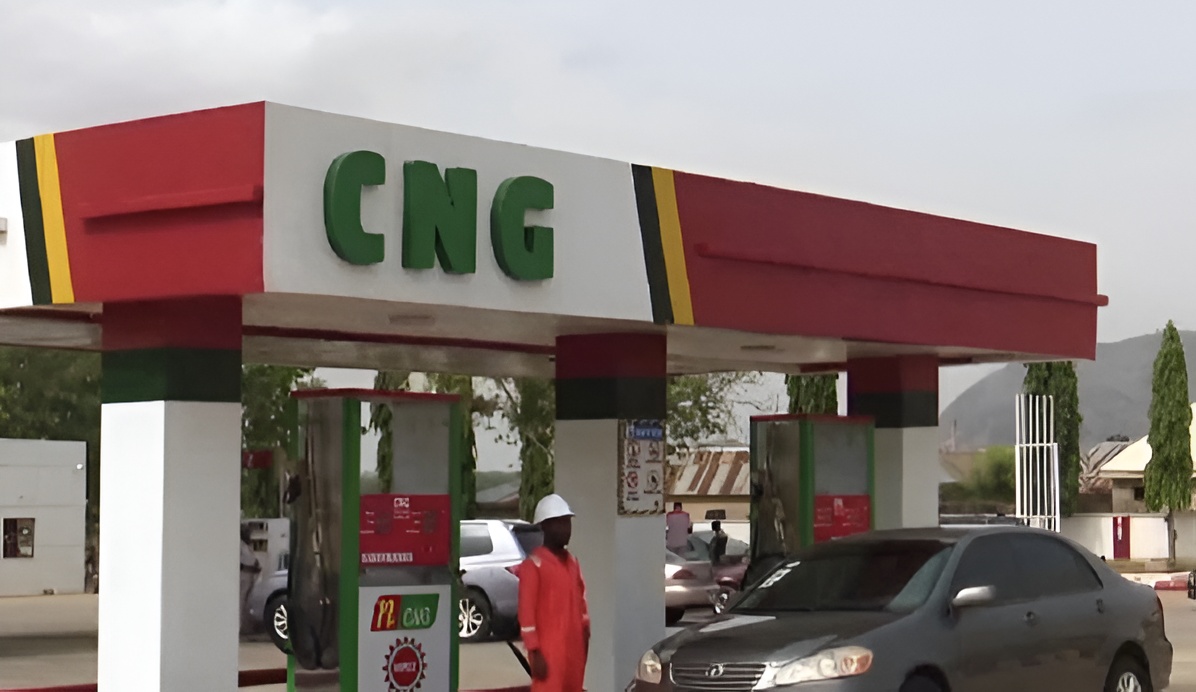
Motorists in Lagos and several other major Nigerian cities are increasingly spending hours in long queues to refill their vehicles with Compressed Natural Gas, CNG, raising fresh concerns about the country’s preparedness to support the Federal Government’s ambitious transition to cleaner and more affordable transportation.
Commercial bus operators, ride-hailing drivers, fleet owners and private motorists who have converted their vehicles from petrol to CNG are now facing growing delays at refuelling stations due to limited dispensing capacity.
The situation has sparked fears that unless urgent investments are made to expand refuelling infrastructure, the government’s drive to encourage the use of CNG could lose public confidence despite growing interest in the alternative fuel.
Experts Say Infrastructure, Not Gas Supply, Is the Problem
Energy experts insist that Nigeria’s current challenge is not a shortage of natural gas but the country’s inability to efficiently deliver it to consumers.
Executive Director of the Emmanuel Egbogah Foundation, Prof. Wumi Iledare, warned that Nigeria’s CNG market is beginning to resemble the country’s former petrol market, where motorists routinely endured long queues due to inadequate distribution systems.
According to him, the growing congestion at CNG stations reflects years of underinvestment in dispensing facilities and supporting infrastructure rather than insufficient gas reserves.
He argued that the Presidential CNG Initiative should not be viewed merely as a temporary response to the removal of petrol subsidies but as a long-term transportation policy driven by economic and environmental benefits.
Iledare stressed that achieving this vision requires sustained investments in refuelling stations, gas distribution networks, vehicle conversion centres and a stable regulatory framework.
He warned that unless infrastructure expands alongside rising demand, Nigeria risks replacing petrol queues with CNG queues.
Also commenting on the situation, Energy Partner at Bloomfield Law Practice, Dr. Ayodele Oni, said the rapid adoption of CNG vehicles has far exceeded the country’s ability to provide adequate refuelling services.
He explained that more than 100,000 vehicles have already been converted to operate on CNG, while the number of operational refuelling stations remains far too small to support such growth.
According to Oni, most CNG stations are concentrated in only a handful of states, leaving many parts of the country underserved.