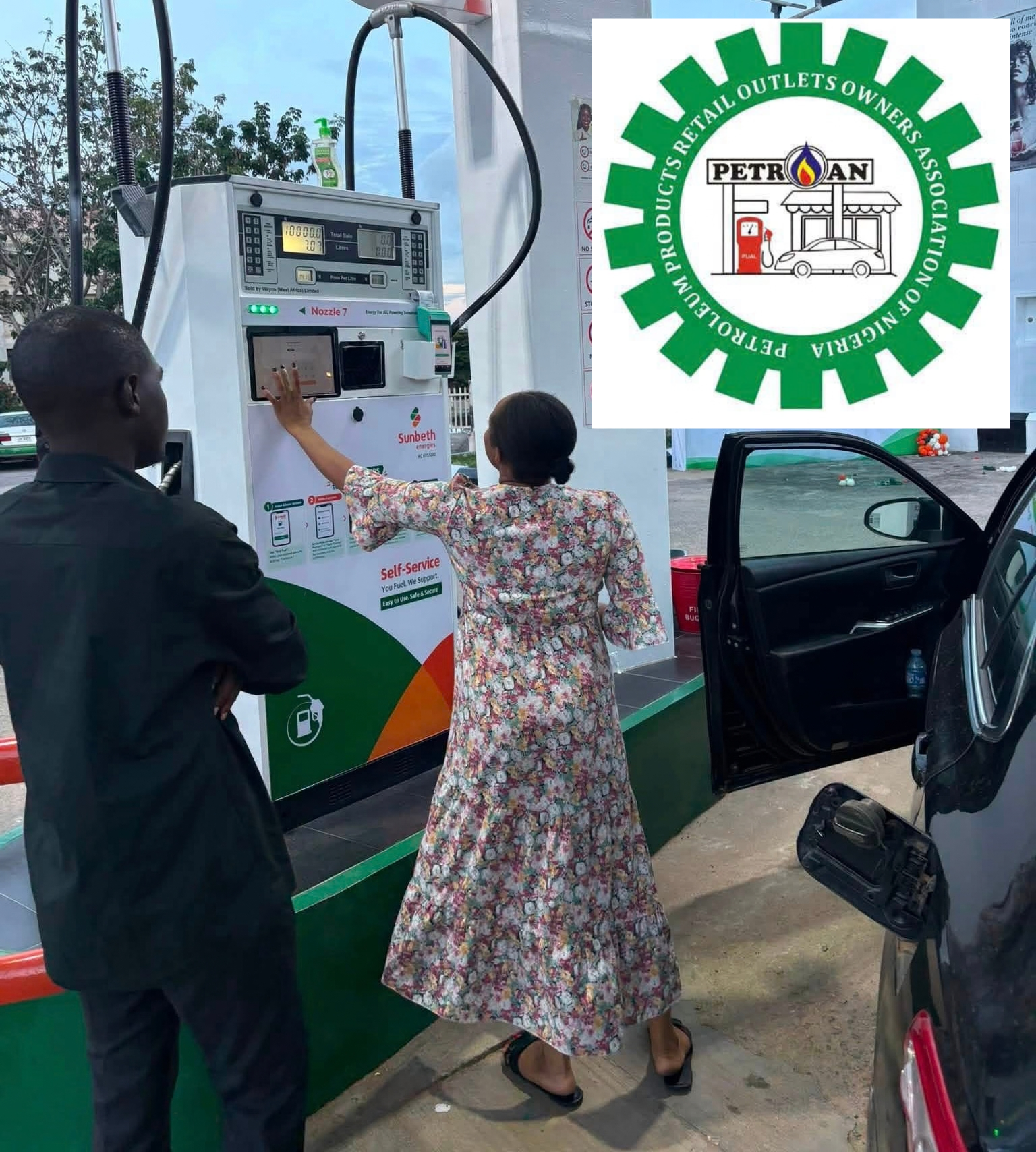
KEY POINTS
- PETROAN directed members to inspect fuel dispensing meters nationwide.
- NMDPRA warned stations over short-changing motorists through faulty or inaccurate meters.
- Marketers urged customers to check pump readings and request receipts.
The Petroleum Products Retail Outlets Association of Nigeria, PETROAN, has directed its members across the country to immediately inspect their fuel dispensing meters following concerns raised by the Nigerian Midstream and Downstream Petroleum Regulatory Authority over alleged under-dispensing of petroleum products.
PETROAN National President, Billy Gillis-Harry, disclosed the directive during an interview on Channels Television’s The Morning Brief.
He said the association convened an emergency meeting of its National Executive Council on Tuesday after the NMDPRA brought the under-dispensing issue to its attention.
According to him, the meeting lasted until about 10pm, after which PETROAN communicated with its members nationwide and instructed them to check their dispensing equipment without delay.
Gillis-Harry said dispensing equipment can develop faults after prolonged use, potentially resulting in either under-dispensing or over-dispensing of petroleum products.
He explained that mechanical problems with a meter do not necessarily result in customers receiving less fuel, as a faulty system could also dispense more product than the quantity recorded on the pump.
He cited his own experience in the retail fuel business, saying he had previously lost money when a faulty meter dispensed more fuel than customers were charged for.
PETROAN said the latest inspection exercise is therefore intended to identify faulty equipment and ensure that motorists receive the quantity of fuel displayed on the pump.
The PETROAN president assured motorists that members of the association would continue to work toward ensuring that customers receive the quantity of fuel for which they pay.
He said the association’s position was that retail outlets should maintain accurate dispensing and ensure that the volume shown on the meter corresponds with the product delivered to motorists.
The directive follows increased regulatory attention on the accuracy of dispensing equipment at filling stations.
The NMDPRA has warned operators against under-dispensing fuel and said outlets found deliberately or negligently short-changing consumers could face sanctions.
Such penalties may include the revocation of a station’s operating licence. Gillis-Harry also advised motorists to take a more active role when purchasing fuel by paying attention to the quantity displayed on the dispensing meter.
He urged customers to monitor the reading before and during the transaction and to request receipts after purchasing petroleum products.
According to him, motorists should also be familiar with the fuel-tank capacity of their vehicles and use that information as one way of checking whether the quantity displayed on a pump appears consistent with their expectations.
He said filling station staff are also encouraged to draw customers’ attention to the meter while fuel is being dispensed and after the transaction is completed.
The advice comes as motorists continue to depend on retail stations for daily petrol purchases, making accurate measurement important to both consumers and operators.
PETROAN said it works with the Weights and Measures Division of the Federal Ministry of Industry, Trade and Investment and the NMDPRA on issues concerning the accuracy and functionality of fuel dispensing meters.
The association said these regulatory bodies have responsibilities related to ensuring that dispensing equipment remains functional, properly maintained and accurate.
Gillis-Harry said PETROAN had taken the NMDPRA’s concerns seriously and had already begun engaging its members to identify and correct potential equipment faults.
The association’s nationwide inspection directive is expected to help filling station operators detect faulty meters before they result in further complaints or regulatory action. The latest development comes amid increased regulatory scrutiny of retail fuel outlets over alleged under-dispensing.
The NMDPRA has warned station operators that outlets found short-changing consumers could face enforcement measures, including the loss of their operating licences.
PETROAN’s directive places responsibility on its members to check their equipment and ensure that the quantity displayed to motorists corresponds with the amount actually dispensed.
For consumers, the association’s advice is to remain attentive to pump readings, monitor the quantity purchased and request receipts as evidence of transactions.
The combined actions by PETROAN and the NMDPRA are aimed at improving measurement accuracy at filling stations and addressing concerns over motorists receiving less fuel than the quantity indicated on dispensing meters.