

KEY POINTS
- A Chevron-led consortium has secured leases to explore four offshore gas blocks south of Greece, doubling exploration acreage.
- The deal aligns with Europe’s push to replace Russian energy and strengthen U.S.–EU energy ties.
- Exploration could take years, with drilling unlikely before 2030, but it positions Greece as a future regional gas hub.
A consortium led by Chevron has signed exclusive lease agreements with Greece to explore natural gas reserves in deep-sea blocks off the country’s southern coast, marking a significant expansion of U.S. energy involvement in the eastern Mediterranean.
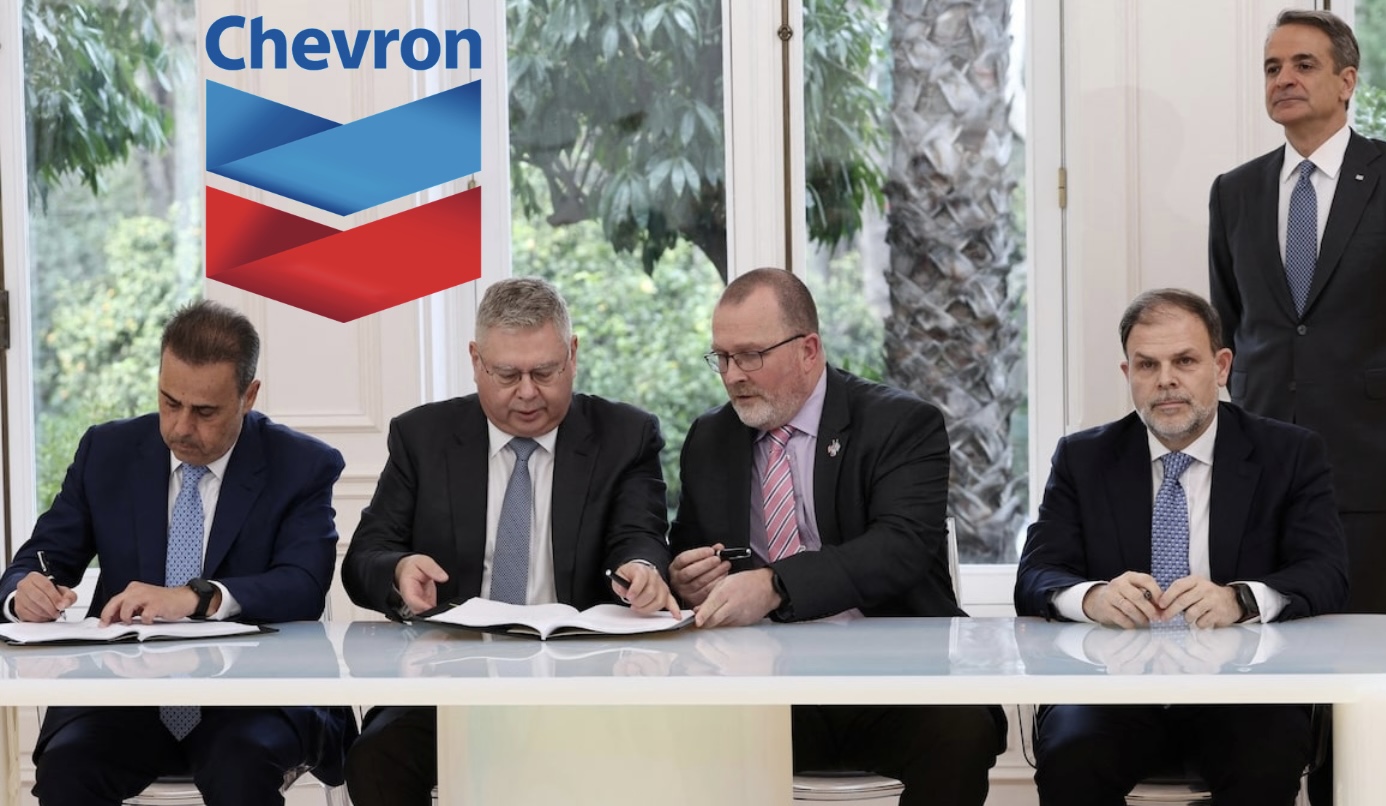
The contracts, signed in Athens in the presence of Prime Minister Kyriakos Mitsotakis, double the amount of Greek maritime territory available for exploration. The blocks span about 47,000 square kilometres south of the Peloponnese and the island of Crete.
This is the second major agreement involving an American energy giant in recent months, following a separate deal in which Exxon Mobil partnered with HELLENiQ ENERGY and Energean to explore another offshore block in western Greece.
The agreement comes as the European Union accelerates efforts to phase out energy imports from Russia following the 2022 invasion of Ukraine, which triggered global energy price shocks.
Greece, which currently has no domestic gas production and depends heavily on imports for electricity generation and household consumption, revived its hydrocarbon exploration drive after that crisis exposed vulnerabilities in Europe’s energy supply chain.
Greece’s Strategic Energy Ambitions
Athens is positioning itself as a gateway for U.S. liquefied natural gas entering Europe through the Vertical Gas Corridor, a transport route designed to carry gas from Greece into central Europe and Ukraine.
U.S. Ambassador to Greece Kimberly Guilfoyle said American LNG shipments through Greece are strengthening transatlantic alliances and could reshape Europe’s energy landscape for decades by providing a durable alternative to Russian gas.
The Greek parliament must still approve the lease agreements before seismic surveys can begin later in 2026. Under the terms, the consortium has up to five years to identify commercially recoverable gas deposits.
If viable reserves are found, test drilling would not begin until roughly 2030–2032, highlighting the long-term nature of offshore energy development.
Meanwhile, Exxon Mobil and HELLENiQ are already analysing seismic data from two additional deep-sea blocks south of Crete as they evaluate whether to proceed to drilling.