

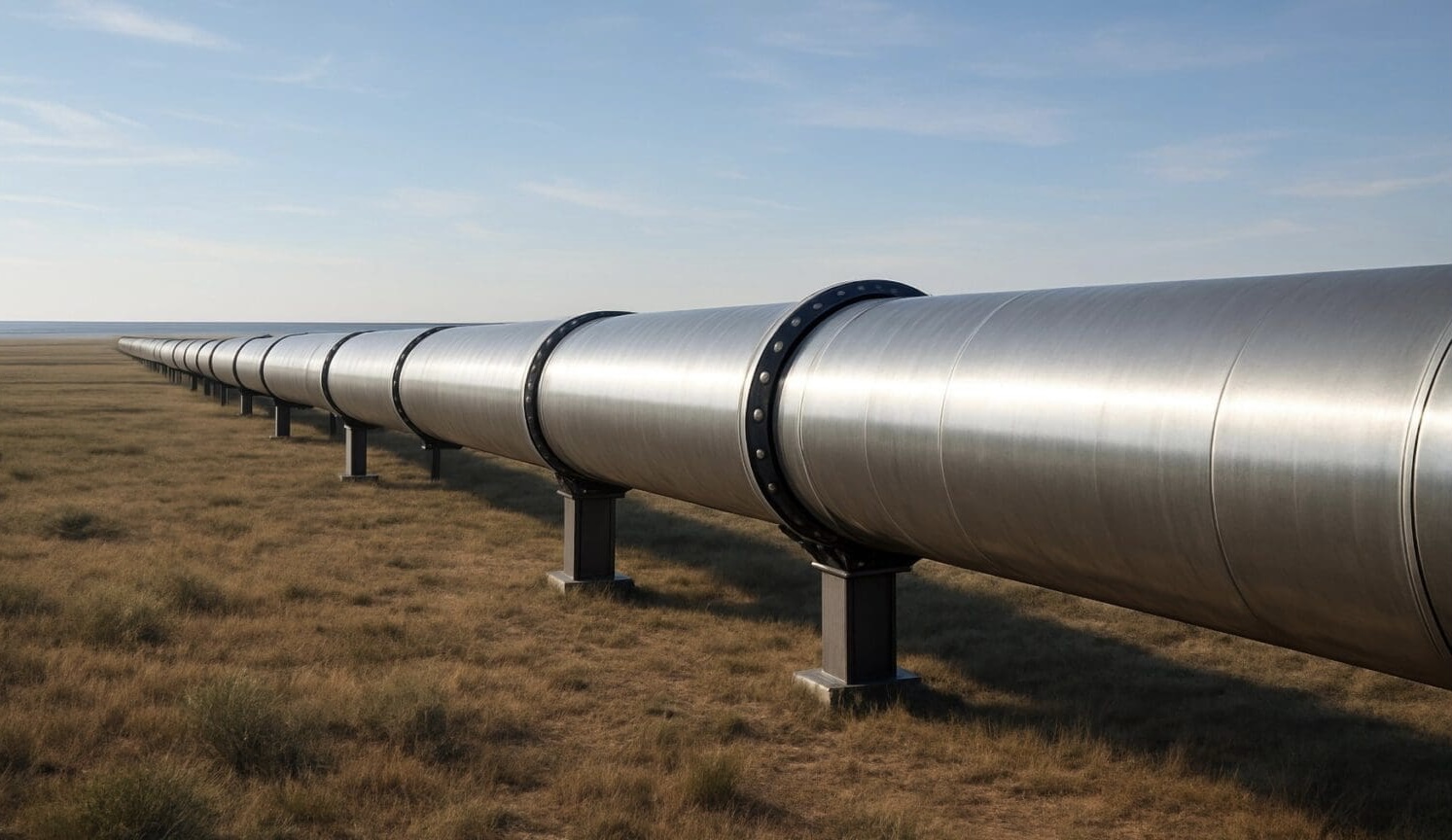
- Algeria and Niger agreed to resume construction of the trans-Saharan gas pipeline after repairing diplomatic ties.
- Sonatrach will lead the project to transport Nigerian gas to Europe via Niger and Algeria.
- The initiative is expected to boost regional integration, energy exports, and cross-border cooperation.
President Abdelmadjid Tebboune has confirmed that construction of the long-delayed trans-Saharan gas pipeline linking West Africa to Europe will resume after Ramadan, signaling renewed cooperation between Algeria and Niger following months of diplomatic strain.
The announcement came during a joint press conference in Algiers alongside Niger’s leader Abdourahamane Tchiani, marking a visible step toward restoring bilateral ties and advancing one of Africa’s most ambitious energy infrastructure projects.
The pipeline will be spearheaded by Sonatrach, Algeria’s state-owned energy firm, which is expected to begin laying sections of the line across Nigerien territory once work resumes.
The project is designed to transport natural gas from Nigeria through Niger and Algeria before delivering supplies to European markets, positioning North and West Africa as key players in global energy trade. Officials say the initiative is central to regional economic integration and long-term energy cooperation.
Diplomatic tensions had stalled progress
Work on the pipeline had slowed after relations between Algiers and Niamey deteriorated nearly a year ago. The dispute began when Niger, along with Mali and Burkina Faso, withdrew ambassadors over alleged airspace violations involving military drones. Algeria responded similarly, leading to about ten months of strained relations that Tebboune later described as abnormal.
Diplomatic normalization began recently with the return of ambassadors to both capitals and high-level talks between leaders, paving the way for renewed collaboration on infrastructure, security, and economic projects along their shared 950-kilometre border.
Beyond energy, both governments pledged to strengthen cooperation in areas such as military training, vocational development, and cross-border security. The pipeline forms part of a broader network of trans-Saharan initiatives, including major transport corridors intended to deepen economic links between North and West Africa.
For Algeria, restarting the project strengthens its ambition to become a major gas supplier to Europe while also stabilizing its southern frontier through economic partnerships. For Niger, participation promises transit revenue, investment inflows, and expanded infrastructure development.