KEY POINTS
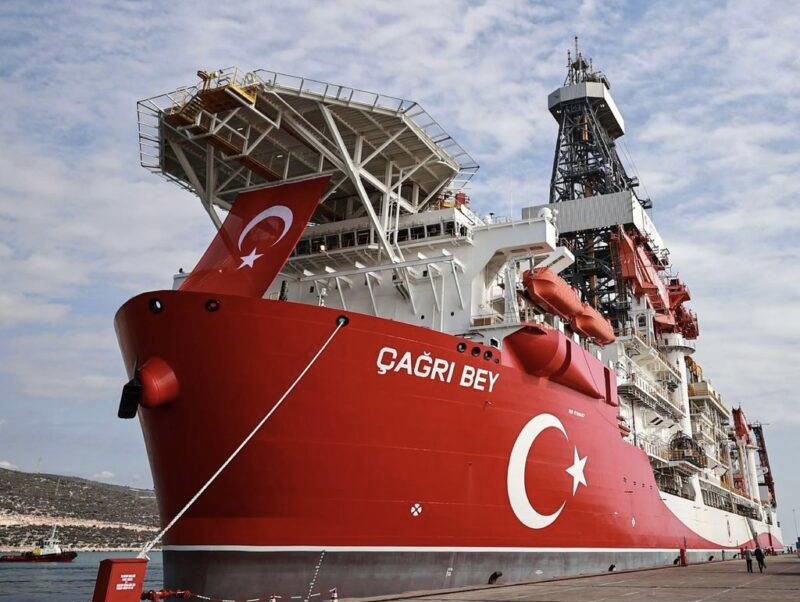
- Turkish drillship Cagri Bey has arrived at Somalia’s Curad-1 offshore well site, marking the country’s entry into active oil exploration.
- Transparency Somalia Initiative is calling for full public disclosure of petroleum agreements and revenue management structures.
- TPAO holds exclusive rights to three Somali offshore blocks, with critics flagging a 90 percent cost-recovery clause before profit sharing begins.
Turkey’s state-owned energy company has brought Somalia to the edge of its first offshore oil exploration, as the drillship Cagri Bey arrived this week at the Curad-1 well site roughly 370 kilometers off Mogadishu.
According to All Africa, the Transparency Somalia Initiative confirmed the vessel’s arrival, describing it as a decisive shift toward active oil production, and immediately called on the federal government to open its petroleum contracts to public scrutiny.
What the drilling involves
The Cagri Bey departed Mersin’s Tasucu Port on February 15, 2026, taking a 45-day route around the Cape of Good Hope because its 114-meter rig tower cannot clear the Suez Canal. The 228-meter South Korean-built ship is a seventh-generation ultra-deepwater drillship capable of reaching 12,000 meters.
It sailed under escort from three Turkish naval warships, the TCG Sancaktar, the TCG Gokova and the TCG Bafra, with roughly 180 personnel aboard. Turkish Petroleum Corporation, known as TPAO, holds exclusive exploration and production rights to three Somali offshore blocks under a July 2024 agreement.
Its seismic vessel Oruc Reis surveyed 4,465 square kilometers in late 2024, identifying Curad-1 as the first drilling target. Curad-1 sits at a water depth of about 7,500 meters. Estimated Somali offshore reserves have been put at 30 billion barrels, though commercial viability has not been independently confirmed.
Watchdog demands accountability
Transparency Somalia Initiative said natural resource wealth, without proper governance, tends to concentrate among a narrow group rather than reaching ordinary citizens. The watchdog called on the federal government to publicly disclose petroleum agreements, clarify the ownership structures of companies involved, and establish an open revenue management system.
Critics of the TPAO deal have long raised the same concerns. Reports indicate TPAO can recover up to 90 percent of operational costs before profit sharing begins, is exempt from signature bonuses and taxes in Somalia, and has stipulated that legal disputes go to Istanbul courts rather than international arbitration.
Somalia’s Parliamentary Natural Resources Committee has argued the original deal bypassed competitive bidding. Regional states, including Puntland and Jubaland, have also objected to being excluded from consultations.
Proponents argue Somalia lacks the capital and technology to pursue deep-water drilling independently, with a single well costing upward of $100 million. Turkey’s integrated role across logistics, security and drilling makes the partnership, contentious terms and all, the only viable path to discovering what lies beneath Somalia’s 3,333-kilometer coastline.