KEY POINTS
- Industry leaders and economists backed NNPC’s Technical Equity Partnership with two Chinese refinery firms.
- NNPC’s chief admitted the company lost internal capacity to run refineries profitably years ago.
- Critics including Atiku Abubakar questioned the Chinese firms’ technical credentials and financial strength.
Nigeria’s business leaders, energy experts, labor unions and economists have largely closed ranks behind the Nigerian National Petroleum Company’s new refinery partnership with two Chinese firms, even as prominent political voices demand the deal be suspended and scrutinized.
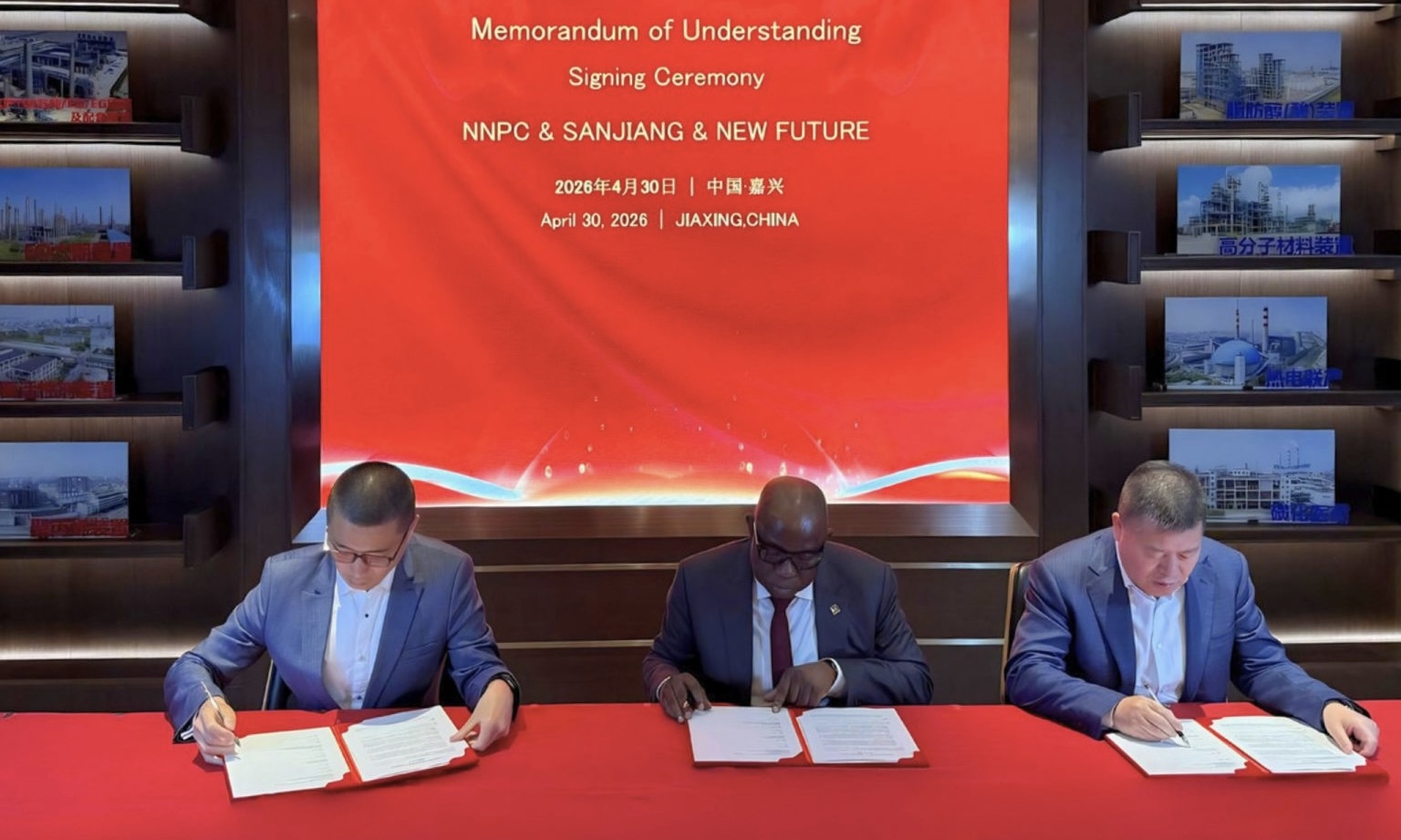
NNPC Limited signed a memorandum of understanding with Sanjiang Chemical Company Limited and Xingcheng (Fuzhou) Industrial Park Operation and Management Company Limited for the rehabilitation and commercial operation of Nigeria’s idle state refineries in Port Harcourt, Warri and Kaduna. The facilities carry a combined installed capacity of roughly 445,000 barrels per day but have remained largely dormant for years.
NNPC Group Chief Executive Bayo Ojulari made an unusually candid admission at an industry conference in Abuja. The company, he said, had lost the internal technical and operational depth required to run commercially viable refineries. Years of failed turnaround maintenance programs had drained public resources without delivering output. Under the new Technical Equity Partnership model, the Chinese firms would take on operational and technical responsibilities while NNPC retains strategic equity.
Why supporters say the deal makes sense
Former Shell executive and HSI Energies chief Chike Nwosu said every 200,000 barrels per day of new domestic refining capacity could meaningfully boost Nigeria’s GDP and ease foreign exchange pressure from fuel imports. Austin Avuru, founding managing director of Seplat Energy, said any buyer of the refineries would still need to rehabilitate them, making the criticism of the partnership largely beside the point.
Labor union NUPENG’s newly elected president, Salmon Oladiti, backed the deal while warning that Nigerians were exhausted by rehabilitation promises that spent public funds without lasting results. Institute of Professional Economists president Ken Ife praised the integrated petrochemical and industrial park elements embedded in the partnership structure.
Nigeria’s target, set by President Bola Tinubu, is to raise public-sector refining output to 500,000 barrels per day by 2030. NNPC said the Port Harcourt and Warri refineries would be upgraded to meet modern environmental and operational standards. The company also plans integrated gas-powered industrial hubs around refinery sites to stimulate broader manufacturing activity.
Critics push back hard
Former Vice President Atiku Abubakar called for immediate suspension of the MoU, questioning whether Sanjiang Chemical had meaningful experience in large-scale crude oil refining rather than petrochemicals and light hydrocarbon processing. He also cited reports of declining revenues and rising debt exposure at Sanjiang.
The Nigeria Employers’ Consultative Association demanded full disclosure of what happened to nearly $25 billion allegedly spent on previous rehabilitation programs, specifically questioning the $1.5 billion Port Harcourt refinery project approved in 2021 that delivered little measurable output.
Former President Olusegun Obasanjo argued the refineries would never function efficiently under government control and said the only sustainable model was an incorporated joint venture similar to Nigeria LNG, where government holds equity but competent private operators run the business. Notably, Obasanjo had previously sold the refineries to a Dangote-led consortium in 2003 before the deal was reversed by his successor.
NNPC insists the MoU is not yet a binding commercial agreement but a framework for negotiations, due diligence and evaluation of technical and financial terms.