KEY POINTS
- President Yoweri Museveni has endorsed a proposed East African regional refinery following talks with Aliko Dangote.
- The project aims to promote local refining, reduce crude oil exports, and strengthen regional energy integration across East Africa.
- Kenya is positioned as a key logistics hub, while the proposal has sparked mixed reactions over feasibility and governance concerns.
Ugandan President Yoweri Museveni has expressed strong support for a proposed East African regional oil refinery following discussions with Nigerian billionaire and industrialist Aliko Dangote, signalling renewed momentum for cross-border energy cooperation in the region.
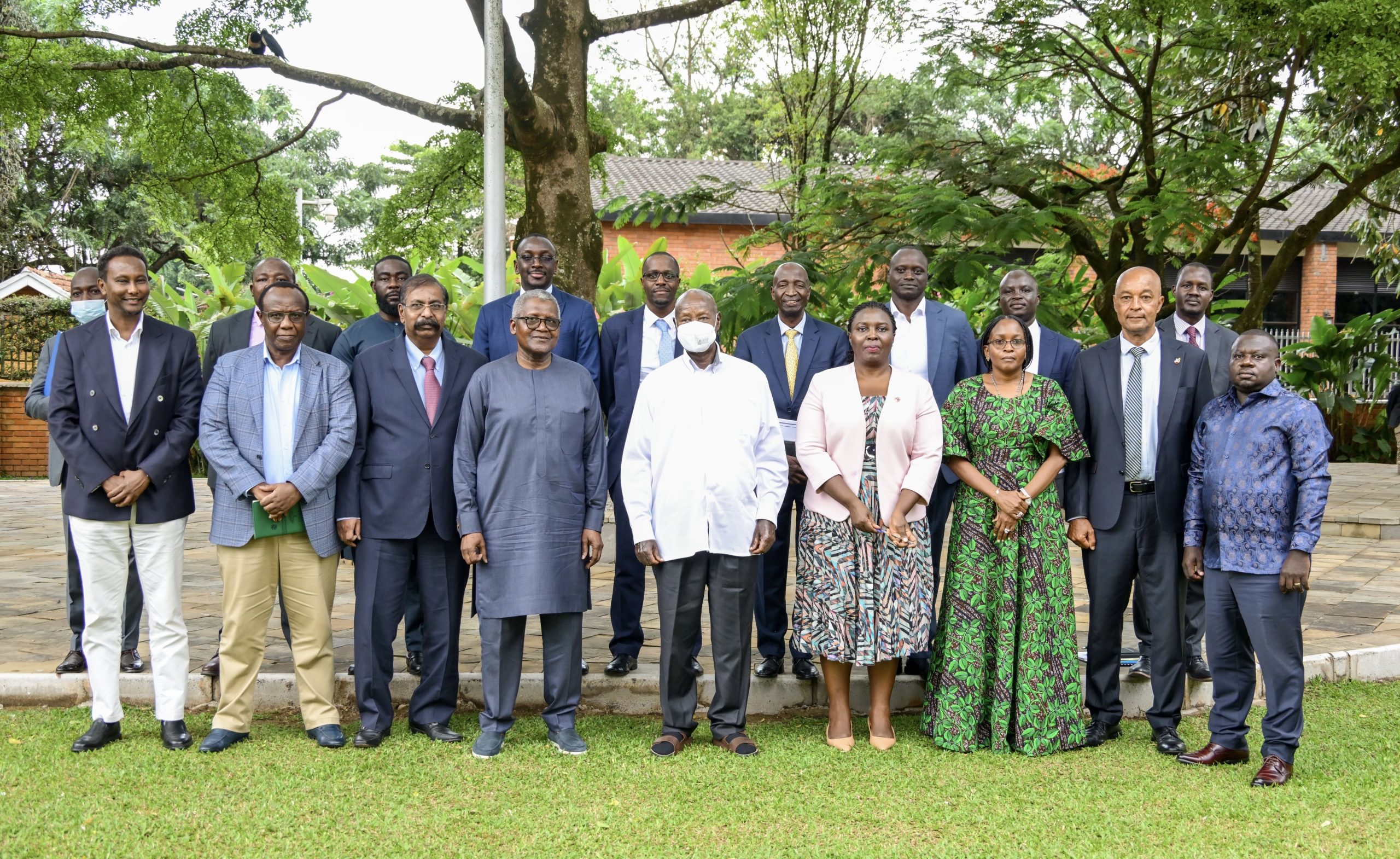
The meeting, held in Kampala, focused on developing a large-scale refinery project aimed at strengthening regional energy security, boosting industrial capacity, and reducing dependence on imported refined petroleum products.
Museveni said the initiative aligns with broader goals of African integration and shared prosperity, especially through value addition within the continent’s oil and gas sector.
The Ugandan president reiterated his long-standing position that African countries should prioritise refining crude oil locally rather than exporting raw resources and importing finished petroleum products at higher costs.
He argued that value addition within the region would ensure African countries retain more economic benefits from their natural resources while strengthening strategic energy independence.
“Without refining our oil, it would not make economic or strategic sense to simply export crude oil while others benefit from the finished products,” Museveni noted.
He added that greater cooperation among East African nations is necessary to move beyond fragmented markets and enable large-scale infrastructure projects that serve multiple economies.
Regional Cooperation at the Centre of Proposal
The proposed refinery project is expected to serve multiple East African countries under a shared industrial framework, rather than relying on individual national refining facilities alone.
Museveni stressed that regional integration would make such capital-intensive projects more viable and beneficial for the broader population.
He also confirmed that Uganda remains committed to its domestic energy development plans, including its planned refinery in Hoima, while still supporting the regional initiative.
“We cannot continue operating as fragmented and weak markets. If East Africa works together, such projects become more viable and beneficial to our people,” he said.
Kenya is emerging as a strategic hub in the proposed arrangement due to its established petroleum infrastructure, including the Port of Mombasa, fuel storage systems, and pipeline networks that serve several neighbouring countries.
These facilities already support fuel distribution to Uganda, Rwanda, South Sudan, and parts of eastern Democratic Republic of Congo, making Kenya a natural centre for regional energy logistics.
Industry stakeholders believe this infrastructure could play a critical role in supporting the proposed refinery and improving distribution efficiency across East Africa.
The proposal aligns with broader efforts by Aliko Dangote to expand energy investments beyond Nigeria, as African countries seek to reduce reliance on imported refined fuel.
However, the initiative has sparked mixed reactions online, with supporters praising its integration potential while critics question transparency, governance capacity, and the feasibility of running both domestic and regional refinery projects simultaneously.
Some commentators also raised concerns about equity structure and long-term economic benefits for participating countries.