KEY POINTS
- The Nigerian National Petroleum Company Limited is opposing Dangote Refinery’s court case, warning that restricting fuel imports could create a monopoly in Nigeria’s downstream sector.
- The dispute centers on import licences issued by the Nigerian Midstream and Downstream Petroleum Regulatory Authority and allegations of market sabotage and supply control.
- Marketers and industry groups support continued fuel imports, arguing that competition is essential for price stability, energy security, and consumer protection.
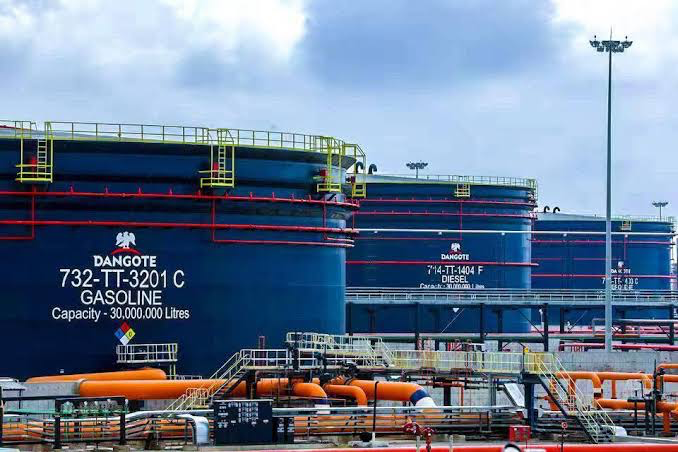
The Nigerian National Petroleum Company Limited, NNPC, has opposed the claims of the Dangote Petroleum Refinery in an ongoing legal dispute at the Federal High Court in Lagos, warning that granting the refinery’s demands could create a monopoly in Nigeria’s downstream petroleum sector.
In its counter-affidavit, the NNPC argued that petrol produced by the Dangote refinery is already sold at “significantly high and fluctuating market prices,” adding that allowing the refinery exclusive control over supply could harm competition and consumer welfare.
The state oil company urged the court to dismiss the suit, describing it as incompetent, premature, and an abuse of court process.
The case stems from a legal challenge filed by the Dangote Petroleum Refinery and Petrochemicals FZE against the issuance of fuel import licences to marketers and the NNPC by the Nigerian Midstream and Downstream Petroleum Regulatory Authority (Nigerian Midstream and Downstream Petroleum Regulatory Authority).
The refinery argues that continued issuance of import permits undermines its capacity to dominate domestic fuel supply, despite claims that it can meet a large share of Nigeria’s petrol demand.
Dangote also accused regulators and the NNPC of sabotaging its $20 billion investment by allegedly encouraging fuel imports while limiting crude oil supply to the refinery.
The refinery is asking the court to void import licences issued to marketers, insisting they contradict existing regulations and earlier court directives.
NNPC Defends Fuel Imports as Necessary for Energy Security
Responding to the allegations, the NNPC insisted that fuel imports remain essential for national energy security and price stability.
The company argued that Nigeria cannot rely on a single refinery, no matter how large, to meet its daily petroleum needs due to logistical challenges, distribution gaps, and the risk of supply disruptions.
It maintained that import licences are legally issued under the Petroleum Industry Act and are necessary to ensure continuous product availability across the country.
NNPC further warned that restricting imports could expose Nigeria to fuel shortages, price instability, and supply chain breakdowns.
A major argument raised by the NNPC is the risk of monopoly control if the court grants Dangote’s requests.
The company warned that removing import competition could allow a single operator to dominate the downstream sector, leading to price manipulation and reduced market flexibility.
According to NNPC, healthy competition is necessary to prevent “price exploitation” and ensure that consumers benefit from multiple supply sources.
Oil marketers also supported this position, arguing that competition helps reduce fuel prices and improves availability nationwide.
The Petroleum Products Retail Outlet Owners Association of Nigeria (PETROAN) backed the continuation of fuel imports, stating that a liberalised market structure is essential for stability and consumer protection.
The association argued that no single company should dominate the downstream petroleum sector, regardless of its refining capacity or investment size.
It further stressed that competition encourages efficiency, price moderation, and supply reliability.
Meanwhile, the Crude Oil Refineries Association of Nigeria (CORAN) expressed support for local refining investments but also highlighted the challenges facing domestic refiners, including crude supply uncertainty, logistics constraints, and regulatory risks.