KEY POINTS
- Ethiopia banned fossil fuel vehicle imports in early 2024, the world’s first such national policy.
- Over 100,000 of Ethiopia’s 1.2 million registered vehicles are now electric, targeting 500,000 by 2030.
- Ethiopia generates more than 96 percent of its electricity from renewable hydropower, making EVs genuinely clean.
Ethiopia did something no country had done before. In early 2024, it banned the import of gasoline and diesel vehicles entirely, betting that the move would cut fuel costs, clean its cities and accelerate a transport transformation built on one of Africa’s most powerful renewable energy resources.
Two years later, the bet is showing results. More than 100,000 of Ethiopia’s 1.2 million registered vehicles are now electric. Electric passenger cars represent more than 5 percent of the total fleet, a share on par with the European Union. The country is targeting 500,000 EVs on its roads by 2030.
The numbers are happening against a backdrop of real economic pressure. Ethiopia spent approximately $4.6 billion on fuel imports in 2023 and 2024, a staggering cost for one of the continent’s poorest nations. Conventional fuel prices more than tripled since 2022. The Iran war’s disruption of global oil markets gave the shift even more urgency, prompting the transport ministry to call for faster adoption alongside behavioral changes like carpooling and cycling.
What drivers are actually saving
Taxi driver Abdurahman Ali runs the numbers without hesitation. Before switching to his mint-colored Changan hatchback, he spent between 40,000 and 50,000 Ethiopian birr a month on fuel. Since switching to electric and charging at home, his monthly cost has dropped to around 5,000 birr. “That’s a huge difference,” he said.
Bus driver Shashe Asemare, who has been behind the wheel of one of Addis Ababa’s 100 new electric buses since 2025, noticed what changed immediately. “They don’t emit exhaust fumes or make that annoying noise,” she said. The buses serve 90,000 daily commuters on the city’s rapid transit line.
Ethiopia’s EV story has an advantage most countries cannot claim. More than 96 percent of its electricity comes from renewable hydropower, including the Grand Ethiopian Renaissance Dam, which has a capacity exceeding 5,000 megawatts. Every electric vehicle in Ethiopia is running on genuinely clean power.
The charging gap is the next problem
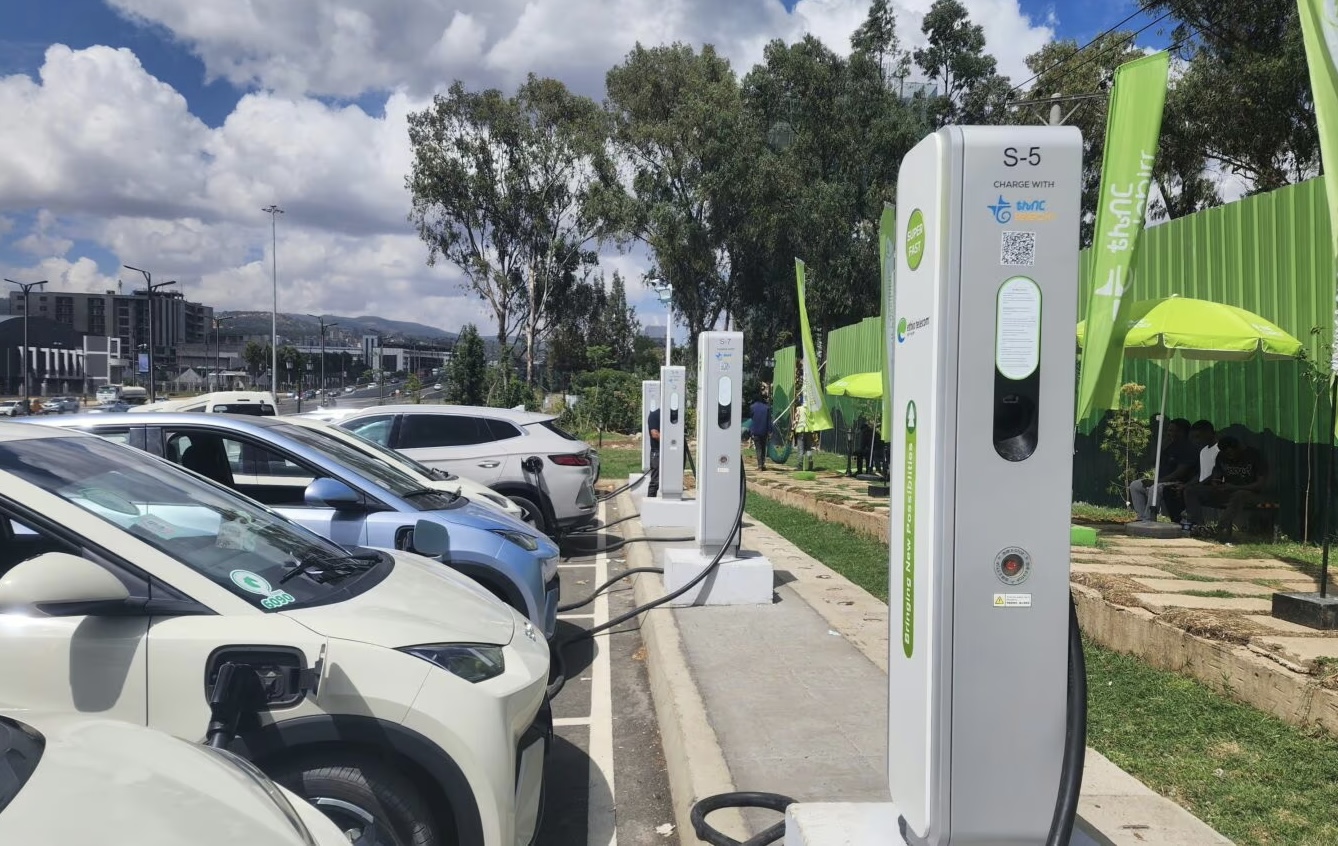
The infrastructure has not kept up with the fleet. About 500 charging stations serve the whole country, most of them in Addis Ababa. Abdurahman called on the government to expand the network urgently, saying charging is effectively unavailable outside the capital.
Private entrepreneurs have spotted the gap. Ezekiyas Dufera opened a 24-hour charging station in Addis Ababa earlier this year, complete with an app for pricing transparency. He acknowledged occasional power outages as an operational challenge but described the overall opportunity as “really great.”
The next target is Addis Ababa’s shared minibus taxi system, the backbone of the city’s public transport network comprising between 8,000 and 10,000 vehicles that carry over two-thirds of the city’s passengers every day. Electrifying that fleet would be the most consequential transport shift Ethiopia has attempted yet.