KEY POINTS
- GALA issued NAWEC a 10-day ultimatum on June 19, 2026 to restore power and water supply.
- Billions of dalasis and hundreds of millions in donor funds have failed to fix NAWEC’s service.
- GALA warned it will pursue lawful public action if NAWEC shows no measurable improvement within deadline.
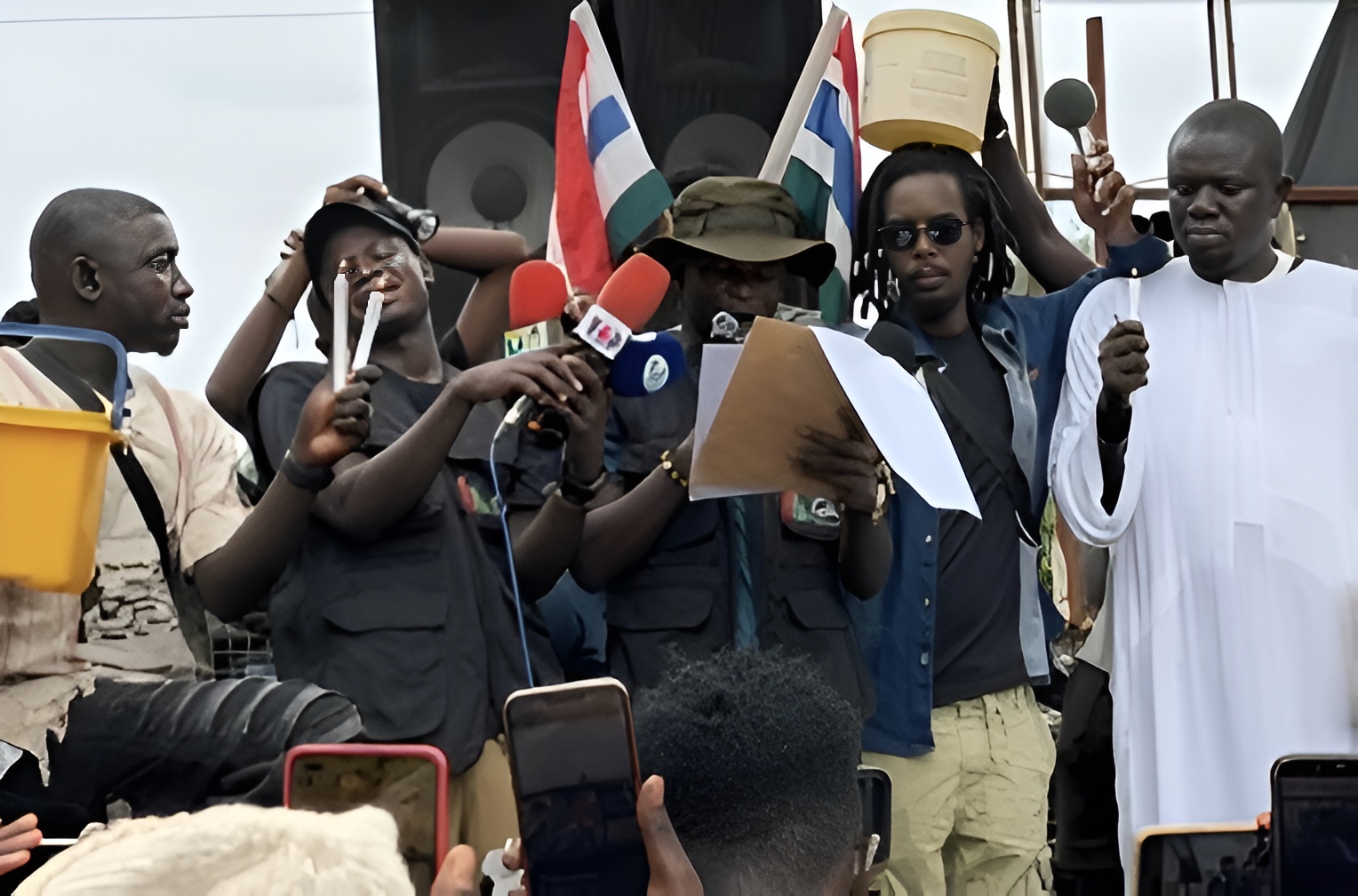
They came with torchlights, candles, empty buckets and electric irons.
Dozens of Gambians marched through Banjul on Friday, June 19, led by civil society group Gambians Against Looted Assets, known as GALA. The props they carried told the story of a country that has been living with recurring blackouts and water shortages for months. GALA used the protest to serve formal notice on the National Water and Electricity Company, NAWEC: fix this in 10 days or face further action.
“Families live in discomfort and uncertainty, businesses incur losses, students are deprived of conducive learning conditions, healthcare delivery is compromised, and economic activity is severely disrupted,” said Omar Saibo Camara, GALA spokesperson.
The ultimatum demands that NAWEC take all necessary measures to restore and normalize reliable electricity and water supply across The Gambia. Camara was direct about what the group is no longer willing to accept.
“We are not seeking further promises, excuses, timelines, or public relations statements. We are demanding tangible action and measurable results,” he said.
Billions spent, crisis deepening despite decade of investment
What makes GALA’s frustration sharper is the money trail. The group reviewed records from NAWEC, government sources and development partners showing that the period between 2017 and 2026 saw the largest investment in Gambia’s utility sector in the country’s history. Hundreds of millions of dollars in donor support flowed into the energy sector over that span.
The lights are still going out.
Camara attributed the failure not to a lack of resources but to persistent governance failures, poor planning, weak management and a lack of accountability. He cited audit reports, parliamentary proceedings and public inquiries that repeatedly flagged gaps in procurement, financial oversight and project implementation.
“Despite these findings, citizens continue to bear the burden while those responsible face little or no accountability,” he said.
GALA argued that access to electricity and clean water is a constitutional right, not a privilege. Citizens pay for the services, and the law obliges NAWEC to deliver them.
Consequences promised if no improvement is seen
Camara framed the ultimatum in clear legal terms. NAWEC, as a state-owned company managing national infrastructure, is bound by the Constitution, the Companies Act, the Public Finance Act and several other statutes. Citizens have both the right and the civic duty to hold it accountable when it fails.
“Gambians have shown extraordinary patience for decades,” Camara said. “But patience must not be mistaken for acceptance.”
GALA stated that if NAWEC fails to show concrete improvement within the 10-day period, the group will pursue all lawful, peaceful and constitutional means of public action to hold the utility and relevant authorities responsible.