

KEY POINTS
- Dangote refinery is helping drive plans for a West African fuel trading hub.
- Regulators want a regional benchmark to improve fuel price discovery.
- Better infrastructure and harmonised rules are needed to make the plan work.
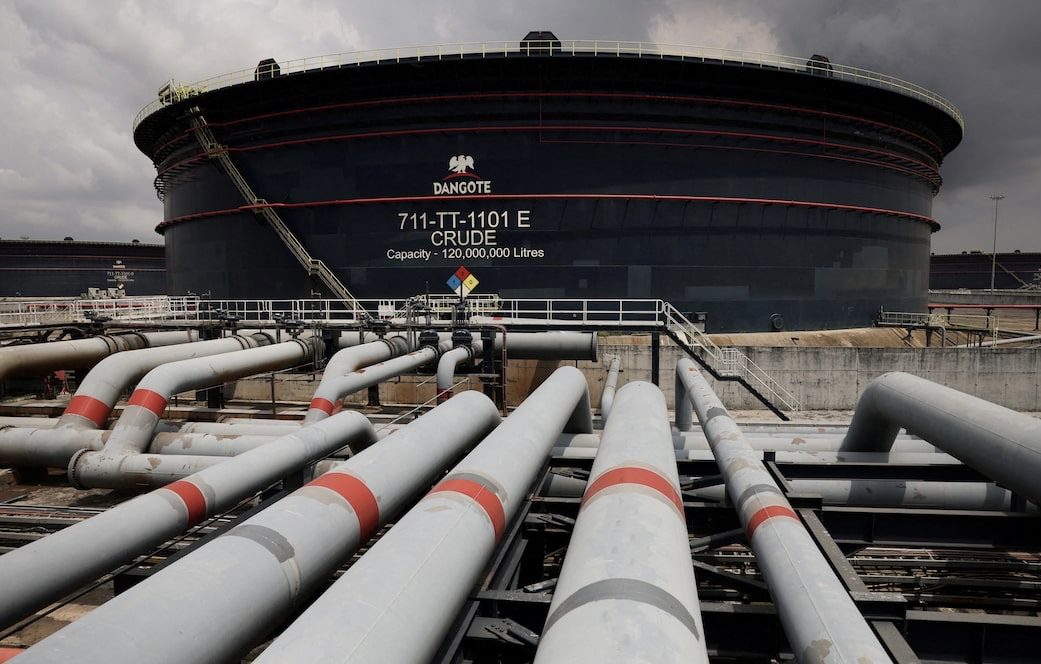
West African energy regulators are stepping up efforts to create a regional fuel pricing benchmark and trading hub, with Nigeria’s Dangote refinery emerging as a major factor behind the plan.
The initiative is aimed at giving West Africa a stronger role in determining fuel prices, improving regional fuel trade and reducing dependence on international benchmarks set outside the continent.
Regulators believe the growth of refining capacity in the region, particularly the 650,000 barrels-per-day Dangote refinery in Lagos, could provide the supply base needed to build a stronger regional fuel market.
The Dangote refinery began operations in 2024 and has increasingly become an important part of the fuel supply chain in West Africa.
The refinery’s large production capacity has changed the flow of refined petroleum products in the region and strengthened the argument for developing a market where African fuel prices can be determined based more on local and regional supply and demand.
Rabiu Umar, chief executive of Nigeria’s Midstream and Downstream Petroleum Regulatory Authority, said the refinery’s start-up was reshaping fuel supply chains across the region.
He said Africa should move beyond its traditional position as a price-taker in global petroleum markets and become a more credible centre for price discovery, trading, investment and value creation.
A major part of the plan is the development of a regional benchmark for refined petroleum products.
A benchmark would provide a recognised reference price for fuel traded within West Africa and could make it easier for buyers and sellers to negotiate transactions.
The initiative could also reduce the region’s reliance on foreign pricing references and give African market participants a greater role in determining the value of petroleum products.
The Nigerian regulator said West Africa has already made progress towards establishing a regional refined-products benchmark market.
It added that cooperation with S&P Global Commodity Insights has also increased as regulators and industry stakeholders work towards developing the market.
Regulators push for stronger regional trade
The proposed fuel trading hub would allow petroleum products to move more efficiently between countries in the region.
A stronger regional market could make it easier for countries with surplus fuel supplies to sell to neighbouring markets that have shortages.
This could improve fuel availability, strengthen competition and potentially reduce some of the costs associated with importing petroleum products from outside Africa.
However, regulators said several major challenges must still be addressed before West Africa can establish a credible regional trading centre. One of the biggest obstacles is inadequate infrastructure.
The regulator said West Africa would need significant investment in pipelines, storage facilities, marine logistics and digital trading systems to support a regional fuel market.
Pipelines would help move petroleum products between major supply and consumption centres, while adequate storage capacity would allow countries to manage supply more effectively.
Improved marine infrastructure would also be important for moving fuel between coastal markets and supporting international and regional trade.
Digital trading systems, meanwhile, would help improve the speed, transparency and efficiency of transactions.
West African countries are also being encouraged to harmonise their fuel standards, licensing requirements and trade regulations.
At present, differences in national regulations can make it more difficult and expensive for petroleum products to move across borders. Regulators warned that fragmented rules are increasing the cost of energy trade within the region.
A more unified regulatory system could make cross-border fuel transactions easier and encourage more companies to participate in the regional market.
Harmonised standards could also reduce delays at borders and help create a more predictable environment for fuel producers, traders and distributors.