

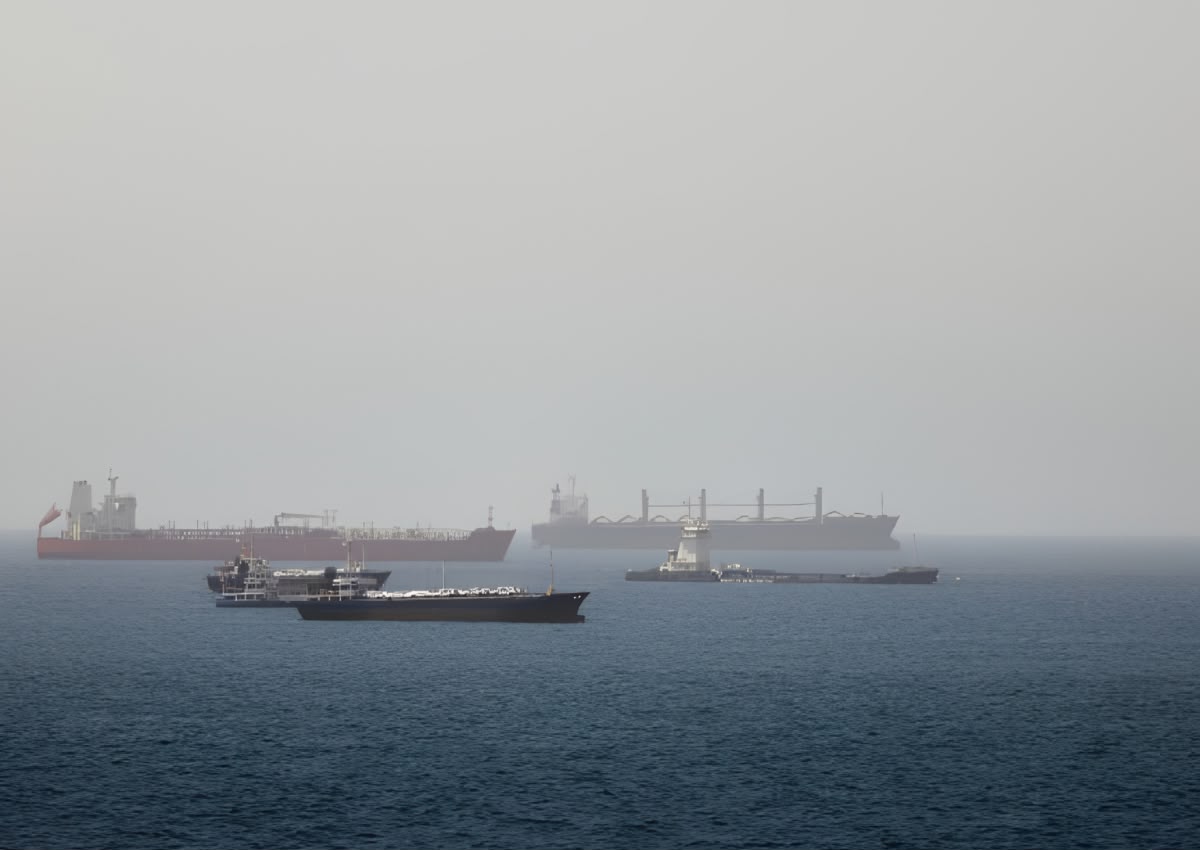
Oil prices fell more than 1% on Thursday as investors weighed attacks on shipping near the Strait of Hormuz against US talks on easing sanctions on some tankers to cut transport costs.
Brent crude futures fell $1.64, or 1.6%, to $104.42 a barrel in morning trade in Asia, while U.S. West Texas Intermediate futures dropped 98 cents, or 1%, to $94.11. Both reversed gains from the previous session.
Why oil prices retreat despite Hormuz attacks
Attacks on shipping near the strait have surged over the past 10 days. Maritime officials said a container ship and a dry bulk carrier sank after separate projectile strikes in the previous 24 hours. Shipping data earlier this week showed transits through the strait at their lowest in more than two months.
Houthi attacks on Riyadh airport also drew condemnation from Saudi Arabia, Turkey, Pakistan and Egypt. The International Monetary Fund has said a prolonged war and renewed disruptions pose the biggest risk to the Middle East.
What is holding prices back
Output is rising elsewhere. The International Energy Agency said Russia’s crude production rose by 65,000 barrels a day in September to 8.43 million barrels a day, while crude exports from Middle East Gulf producers rose by 4.4 million barrels a day to about 75% of prewar levels.
Phillip Nova’s head of market insights, Priyanka Sachdeva, said there is little concrete evidence of a near term peace deal, yet “oil continues to find its way to buyers” through alternative routes and logistical arrangements.
One analysis said the alternative routes have softened the blow of the disruption, at a price: higher costs and a system that remains fragile.
The Trump administration is considering letting oil that is otherwise legal move on ships that were previously sanctioned, including shadow fleet vessels that carry crude from countries such as Russia, Iran and Venezuela, a U.S. official said.
What traders watch next
Inventory data added little direction. Market sources citing American Petroleum Institute data said U.S. crude stocks fell by 11.1 million barrels in the week ended Oct. 9, far more than analysts expected, while gasoline stocks rose and distillate stocks fell.
Brent is about $2 below Monday’s settlement of $106.65, its highest since Sept. 15.
The move under discussion would target freight costs, not production, so it aims to lower delivered prices without adding a single barrel.
Critics in Washington have already objected to easing sanctions on Russian fuel. Trump defended that decision on Monday.
Traders are also watching Iran. Tehran’s top negotiator has said the strait will stay closed until Washington meets Iran’s conditions, and no deal is in sight.
Thursday’s decline reversed gains from Wednesday, a sign of how quickly sentiment is flipping between supply fear and supply relief.
The pattern of the past two weeks is clear. Every new supply source, whether Russian diesel, reserve releases or Gulf exports, pulls prices down, and every new attack on a ship pushes them back up. Until the Strait of Hormuz reopens, Brent is likely to keep trading in that broad range.