

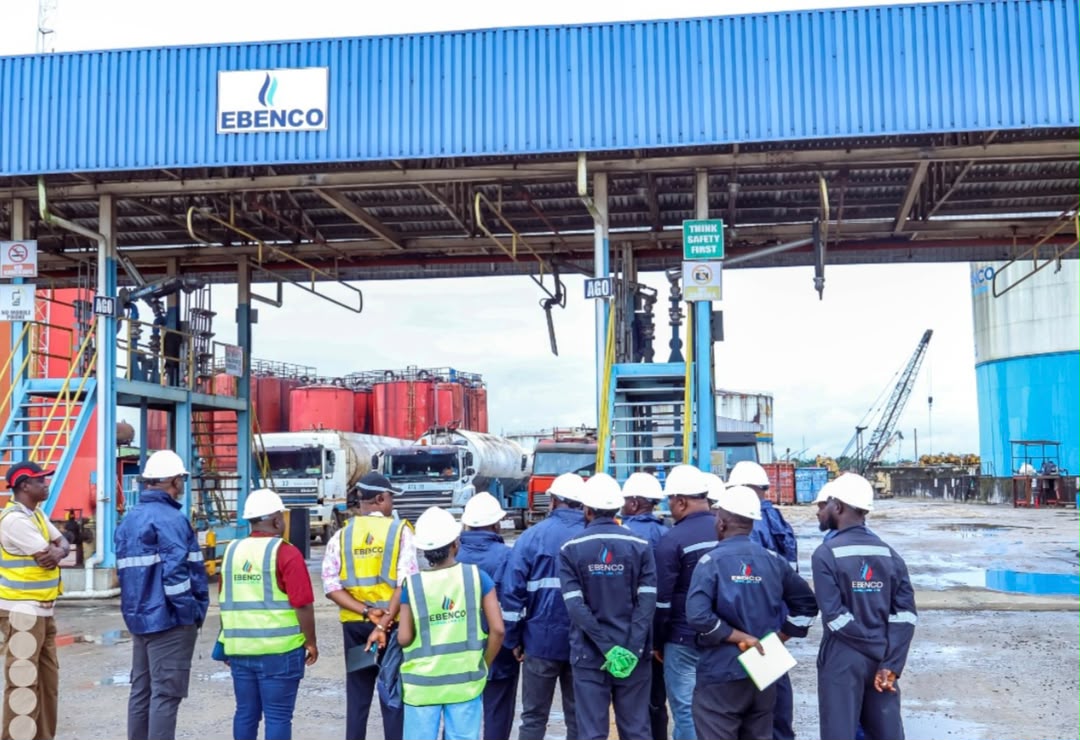
The Ebenco Refinery in Koko, Delta State, has moved a step closer to commissioning after Nigeria’s downstream regulator approved the introduction of hydrocarbons into the plant, which is designed to add 30,000 barrels a day to the country’s refining capacity.
Ebenco Global Link Limited said the Nigerian Midstream and Downstream Petroleum Regulatory Authority granted the approval after the modular refinery passed a safety audit required before start up.
What happens during commissioning
The refinery will now begin a 90 day reliability test, including a 72 hour non stop performance test, under the regulator’s monitoring. The company described the step as moving the plant from preparation into hydrocarbon introduction, commissioning and performance testing.
The regulator attached conditions. Ebenco must send daily reports on commissioning activities, operating performance and product quality, and must get prior approval before selling any product during commissioning. Any shutdown or safety incident must be reported with its cause and the corrective action taken.
Ebenco calls the plant Nigeria’s first fully locally fabricated refinery. Its chief executive, Ebenezer Oluwagbemiga, said earlier that operations would begin in phases, starting at 5,000 barrels a day before a full ramp up to 30,000.
Who is behind the project
Ebenco Global Link is an indigenous company with about 25 years in oil and gas. It began as a petroleum waste management business and now covers petroleum products, marine logistics, industrial gas and oil waste management.
The regulator granted it a license to establish a 30,000 barrel per stream day refinery in 2024. Minister of State for Petroleum Resources (Oil), Heineken Lokpobiri, later inspected the site and called the project a strong sign of renewed investor confidence in indigenous energy infrastructure.
What 30,000 barrels a day means
That is small next to the 650,000 barrel a day Dangote refinery, and about 5% of its size. But modular plants can be built faster, and the government has said local refineries like Ebenco’s offer a legal alternative to the illegal refining that has fed crude theft in the Niger Delta.
Access to crude is the question every modular refiner faces. Refiners’ group CORAN has said all domestic refiners, including smaller plants, must be able to get crude under the government’s forward sales plan, which has yet to set a date or price.
Ebenco has not said when commercial sales will start, and the 90 day test means output will stay limited at first. Refinery projects in Nigeria have a history of delays.
The company’s roadmap says it aims to complete phased construction and commissioning by the end of 2026 and expand by 2030 into a multi industrial complex linking refining, gas, waste to value processing and marine logistics.
If the test starts this week, the 90 day window would run to about mid January, assuming no interruptions.
Ebenco’s approval is a real step, but not the finish line. The refinery still has to prove it can run steadily for 90 days, sell its products legally and secure crude, and only then will it count as capacity Nigeria can rely on.