

KEY POINTS
- The Federal Government has commissioned four transmission substations in Kano, adding capacity to support electricity delivery across the state.
- The projects cover Walalambe, Kumbotso, Dakata and Dan-Agundi, with connections serving industrial, commercial and residential areas.
- Lee Group has been reconnected to the national grid after operating off-grid for more than 30 years.
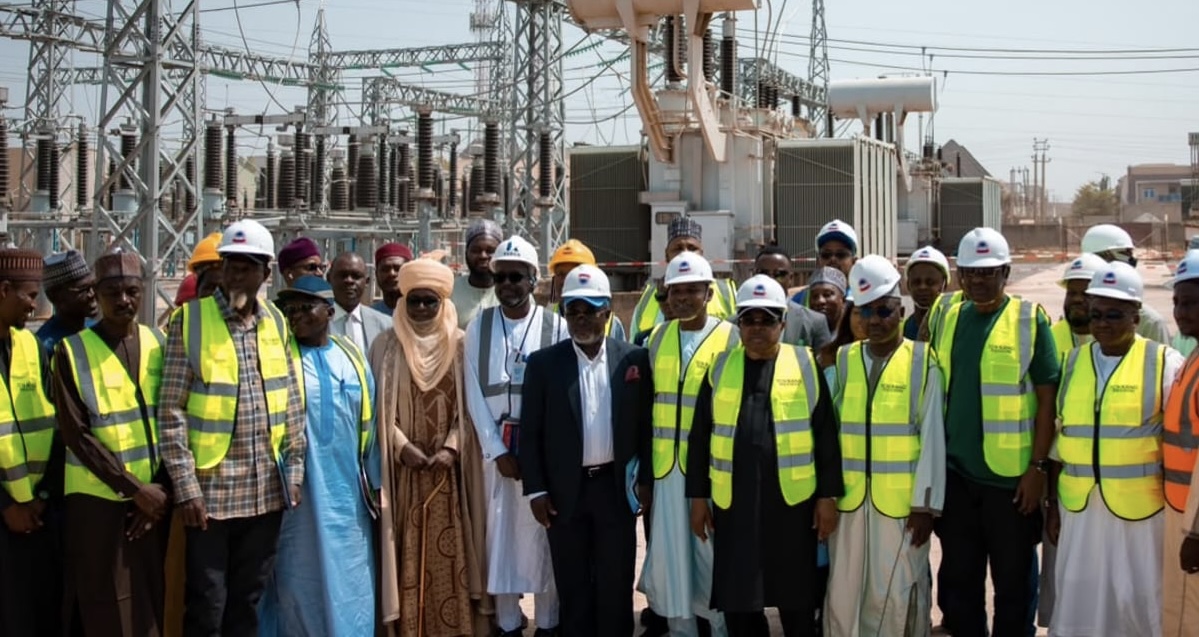
The Federal Government has added 544MW of wheeling capacity to the Kano power grid following the commissioning of four transmission substations across the state.
The projects were delivered by the Federal Ministry of Power through the Transmission Company of Nigeria (TCN), in partnership with the Kano State Government.
The substations are located at Walalambe, Kumbotso, Dakata and Dan-Agundi. According to the ministry, the investments are designed to strengthen bulk electricity transmission, ease pressure on overloaded substations and improve the network’s ability to meet previously unmet demand.
The projects are also expected to support electricity supply to factories, businesses and households as Kano seeks to meet the needs of its growing industrial and commercial sectors.
Capacity Expanded at Four Locations
The upgrades include new transformers and transmission facilities at the four sites.
At Walalambe, a new substation with an 80MW capacity was commissioned, equipped with two 40MVA transformers.
Kumbotso received 300MVA capacity at the 330kV level, alongside 100MVA transformers, according to the report. Dakata and Dan-Agundi each gained an additional 100MVA transformer at the 132kV level.
These facilities are intended to strengthen the transmission network and improve the movement of bulk electricity to distribution networks and consumers.
The ministry said the additional infrastructure would help relieve pressure on existing substations and create room for electricity demand that the network had previously been unable to accommodate.
It is important to distinguish between megawatts (MW), which measure electrical power, and megavolt-amperes (MVA), which measure apparent power. The ministry’s figures use both units to describe the projects.
Industrial Areas and Communities to Benefit
The new facilities are expected to improve electricity supply to several parts of Kano, including industrial and commercial districts.
At Walalambe, six outgoing feeders are expected to support supply to the Tokarawa Industrial Area, the Eastern Bypass, Maiduguri Road, Hadejia Road and neighbouring communities.
The improved transmission infrastructure could help businesses that depend on reliable electricity for production, processing, storage and other daily operations.
The projects are also expected to support residential consumers by strengthening the infrastructure serving communities across the state.
However, the additional transmission capacity does not automatically guarantee uninterrupted electricity for every customer. Actual supply will also depend on power generation, distribution network capacity and other operational factors across the electricity value chain.
Lee Group Reconnected After 30 Years Off-Grid
One of the notable developments announced alongside the commissioning is the reconnection of Lee Group, described as a major industrial enterprise in Kano, to the national grid.
The company had operated off-grid for more than 30 years.
Its reconnection could reduce its reliance on independent electricity arrangements, although the report did not disclose the financial implications or the expected change in its energy costs.
The ministry also said the fire-damaged Dan-Agundi substation had regained substantial capacity, allowing it to serve Kano ancient town, the Emir’s Palace and surrounding communities.
Restoring the facility’s capacity is expected to improve the network serving these areas and strengthen electricity infrastructure in parts of the state affected by the earlier damage.
FG Links Projects to Industrial Growth
The Federal Ministry of Power said the investments would provide stronger infrastructure for manufacturing, small businesses and job creation, while supporting improved household welfare.
Reliable electricity transmission is important to industrial development because businesses need dependable power infrastructure to operate equipment, maintain production schedules and manage operating costs.
The ministry described the projects as part of President Bola Ahmed Tinubu’s Renewed Hope Agenda and his administration’s efforts to reposition the power sector as a foundation for national development.
“Through these projects, we are turning infrastructure investment into economic opportunity across the country,” the ministry said.
The long-term impact will depend on how effectively the new facilities are integrated into the wider electricity network and whether sufficient power reaches the substations for onward distribution to consumers. Hassan-Aliero appealed to residents of Kebbi and other Nigerians to help protect transmission infrastructure from vandalism.
He urged community members to remain vigilant and report suspicious individuals or groups to the nearest security agency.
The TCN official warned that the collapse of a single transmission tower could lead to a blackout, affecting households, businesses and essential public services.
He noted that electricity disruptions could interfere with water supply, hospital operations and daily commercial activities.
The warning highlights how damage to electricity infrastructure can extend beyond the immediate location of an incident, affecting communities and services that depend on a stable power supply.