

KEY POINTS
- AfriForum challenges Eskom’s R30.3bn annual profit amid rising tariffs.
- The organisation questions a proposed R58bn in additional revenue.
- It demands explanations on bonuses, project costs and solar-user charges
South African civil rights organisation AfriForum has called on state-owned power utility Eskom to reduce the financial burden on electricity consumers following its announcement of a R30.3 billion profit for the 2025/2026 financial year.
The organisation argued that consumers should begin benefiting from Eskom’s improved financial position after years of rising electricity tariffs and power supply disruptions.
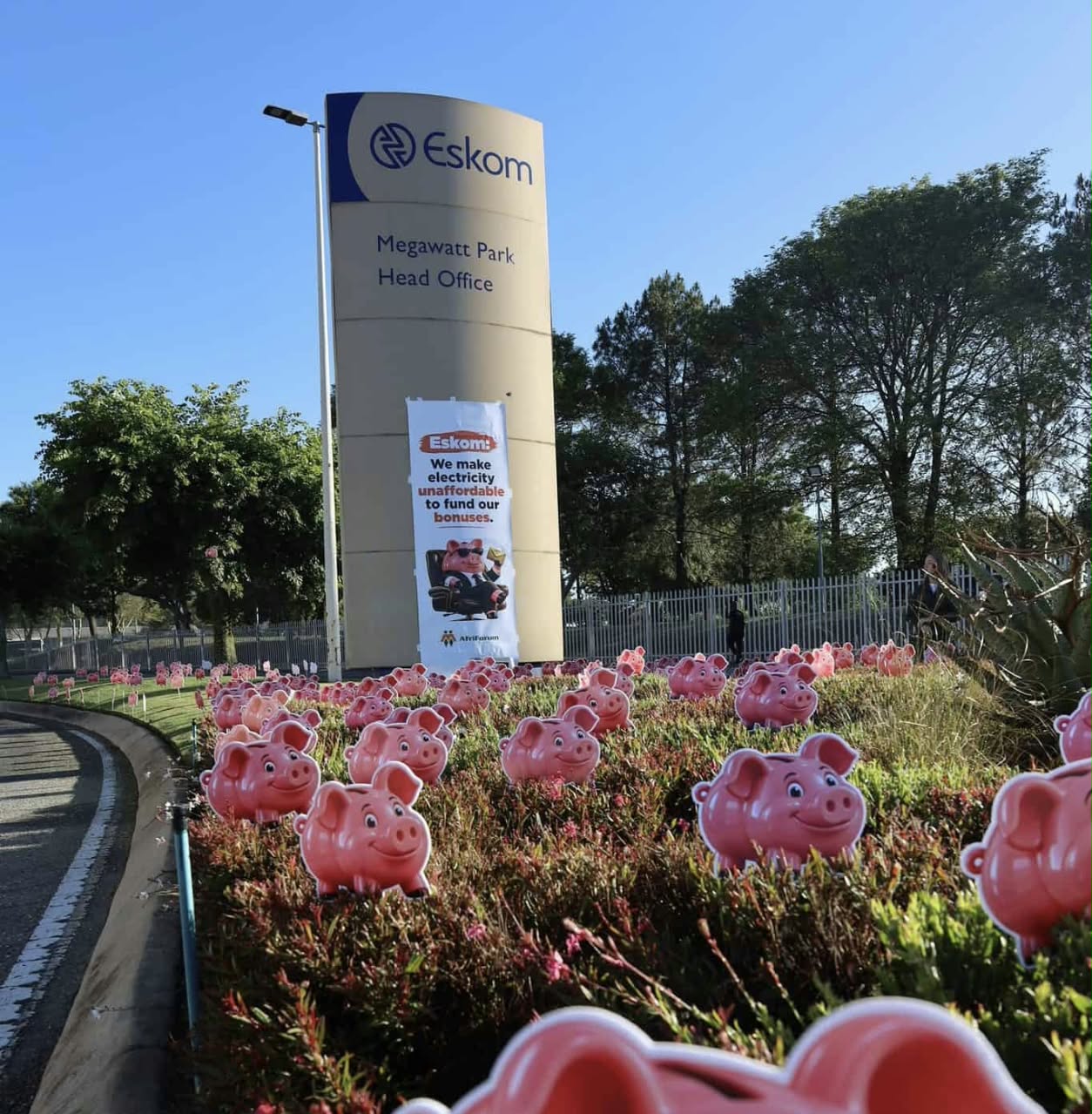
AfriForum made the demand during a protest at Eskom’s head office on October 29, 2026, where it criticised the utility’s electricity pricing, financial decisions and management practices.
The organisation also delivered a symbolic piggy bank to Eskom General Manager Amos Mboweni, alongside a memorandum outlining five major objections to the utility’s financial and pricing policies.
According to AfriForum, the memorandum represents the concerns of its more than 300,000 members and 750 South Africans who signed its petition against rising electricity tariffs.
Consumers demand relief from rising tariffs
AfriForum’s Advisor for Local Government Affairs, Deidré Steffens, said households had been forced to reduce spending on basic necessities to cope with increasing electricity costs.
She argued that it was unfair for consumers to continue shouldering higher bills while Eskom reports substantial profits and awards bonuses to management.
The organisation said the utility should focus on ensuring that its financial recovery translates into lower costs and improved value for electricity users rather than pursuing additional revenue.
AfriForum also questioned Eskom’s continued efforts to secure approximately R58 billion in additional allowable revenue through an ongoing legal dispute involving the utility, the organisation and the National Energy Regulator of South Africa (Nersa).
It asked why Eskom was seeking further revenue from consumers despite reporting a significant annual profit.
Medupi and Kusile cost overruns questioned
The memorandum also raised concerns about cost overruns associated with the Medupi and Kusile power station projects.
AfriForum argued that the massive expenditure on the two projects, combined with Eskom’s continued reliance on ageing infrastructure, raised questions about the utility’s long-term planning and the affordability of electricity.
The organisation also criticised increasing fixed electricity charges imposed on some users of solar power systems.
It said many households and businesses had invested substantial amounts in alternative energy sources after experiencing years of unreliable electricity supply. AfriForum argued that additional fixed charges could further increase the financial pressure on consumers who had spent their own money to reduce dependence on the national grid.
Steffens said consumers had already borne significant costs arising from Eskom’s past operational challenges, including expenses associated with alternative power solutions.
She called on the utility to explain when its improved financial position would begin delivering tangible benefits to the people paying for electricity.
AfriForum seeks written explanations
AfriForum formally requested comprehensive written responses from Eskom to the five demands contained in its memorandum.
The demands cover explanations of the utility’s financial performance, the proposed additional R58 billion in allowable revenue, management bonuses, cost overruns at major power projects, long-term infrastructure planning and fixed electricity charges affecting solar power users.
The organisation maintained that consumers’ financial resources were limited and called for greater accountability in Eskom’s financial decisions.
It said the utility should demonstrate how its improved finances would translate into more affordable electricity rather than continuing to rely on consumers to strengthen its revenue position.
Eskom’s response to the memorandum was not included in AfriForum’s statement.