

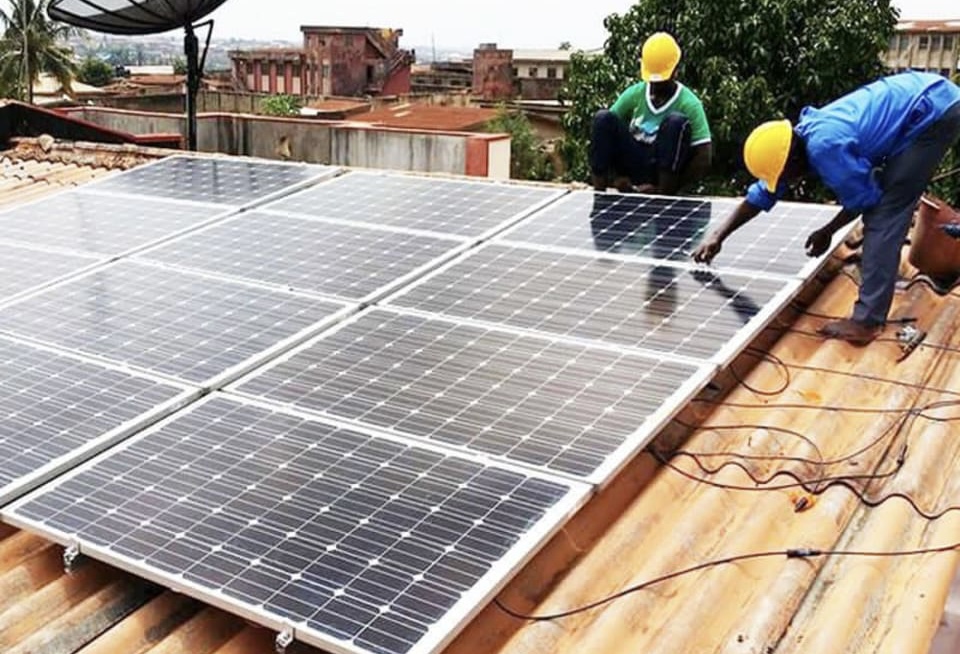
Nigerians turn to solar in growing numbers as the national grid falters, tariffs rise and generator fuel stays costly, turning what was once a backup choice into a main source of power for many homes and businesses.
The grid collapsed twice in January alone, on Jan. 23 and Jan. 27, and more than 16 times in 2024 and 2025, according to one industry review. By March, it was supplying about 3,940 megawatts to more than 220 million people, BusinessDay reported.
How big the solar shift is
Nigeria installed more than 800 megawatts of new solar capacity in 2025, a 141% jump from the year before, and about 96% of it was off grid, according to a report that calls Nigeria Africa’s second largest solar market.
One analysis says small scale solar capacity now exceeds the power the grid supplies, and that additions in 2026 already match 2024 and 2025 combined. Bloomberg NEF projects Nigeria’s cumulative solar capacity, currently around 6 gigawatts, could reach 87 gigawatts by 2035.
Even the Presidential Villa has turned to solar, BusinessDay reported, a sign of how far confidence in grid power has fallen. Abba Abubakar Aliyu, managing director of the Rural Electrification Agency, called renewable energy a strategic alternative for millions of Nigerians.
Why households are switching
Fuel is a big reason. Petrol generators were long the default, but prices jumped after the 2023 removal of the petrol subsidy, and Felicity Solar says its Nigerian sales rose 250% that year.
Rising grid tariffs add to the pull. Businesses use solar to lock in energy costs and protect revenue, stock and equipment from outages, according to solar developers cited in a September report.
In Abuja, Ise Tony said he switched to solar more than a year ago after years of poor supply. With solar, he said, he knows what to expect “regardless of what happens to the grid.”
Music producer Somik Chris Ikesom told DW that solar means he no longer needs a generator about 80% of the time. Before, he described the public supply as “whenever it comes, we use.”
The cost barrier
The same DW report said the high upfront cost of solar remains out of reach for most Nigerians, with limited financing and policy uncertainty slowing adoption. Many households and small businesses are choosing between power and no power, not between generators and solar.
That is where finance matters. The Nigeria Sovereign Investment Authority and Africa50 launched a $300 million fund last month to finance mini grids and standalone solar for underserved communities and businesses.
Policy is moving too. Vice President Kashim Shettima urged states this month to build their own electricity markets under the Electricity Act 2023, which lets states regulate power within their borders.
Solar is no cure for a weak national grid. Distribution companies reported total losses of 36.23% in the second quarter, and customers who can leave the grid may leave the poorest to pay for a system serving fewer paying people. The solar boom shows what Nigerians want, not how everyone gets it.