

KEY POINTS
- TotalEnergies and Conoil Producing discovered new hydrocarbon deposits at OML 136 offshore western Nigeria.
- The Agge-3B.T1 well encountered gas-bearing reservoirs with a combined thickness exceeding 150 metres.
- A production test recorded 21 million cubic feet of gas per day, with further development studies ongoing.
Total Exploration and Production Nigeria Limited and Conoil Producing Limited have made a fresh hydrocarbon discovery in the central section of Oil Mining Lease (OML) 136, offshore western Nigeria.
The discovery was made through the Agge-3B.T1 well, an undrilled compartment of the Agge structure, located in water depths of approximately 140 metres.
The well was drilled to a total depth of 2,710 metres and encountered several gas-bearing reservoirs with a combined gross thickness of more than 150 metres, according to a statement issued by Total’s Manager of External Communications, Fred Ohwahwa.
The discovery could support Nigeria’s efforts to increase its hydrocarbon production capacity and strengthen the development of its offshore oil and gas resources.
Well test records 21 million cubic feet of gas daily
A production test conducted on the lower intervals of the well recorded a flow rate of 21 million cubic feet of gas per day through a 36/64-inch choke.
The companies are conducting further studies to determine the development options for the Agge-3B.T1 well alongside other discoveries on the block.
Total Exploration and Production Nigeria holds a 40 per cent stake in the OML 136 licence, while Conoil Producing Limited owns the remaining 60 per cent and operates the block.
The discovery adds to the companies’ exploration activities in Nigeria’s offshore oil and gas industry, where gas resources remain important for domestic energy supply, industrial development and export opportunities.
Total highlights local employment and Nigerian expertise
Total said the discovery would further support its community development efforts through its operations and strengthen its commitment to using Nigerian resources and local expertise beyond regulatory requirements.
The company cited its Akpo project, which began production in 2009, as an example of its contribution to local employment and skills development in the country’s oil and gas sector.
The Akpo development has generated more than 11 million man-hours in Nigeria, with Total projecting that the project would deliver up to 15 million man-hours by the time of completion.
The company also said its Usan project was expected to generate approximately 60 per cent of its planned man-hours in Nigeria.
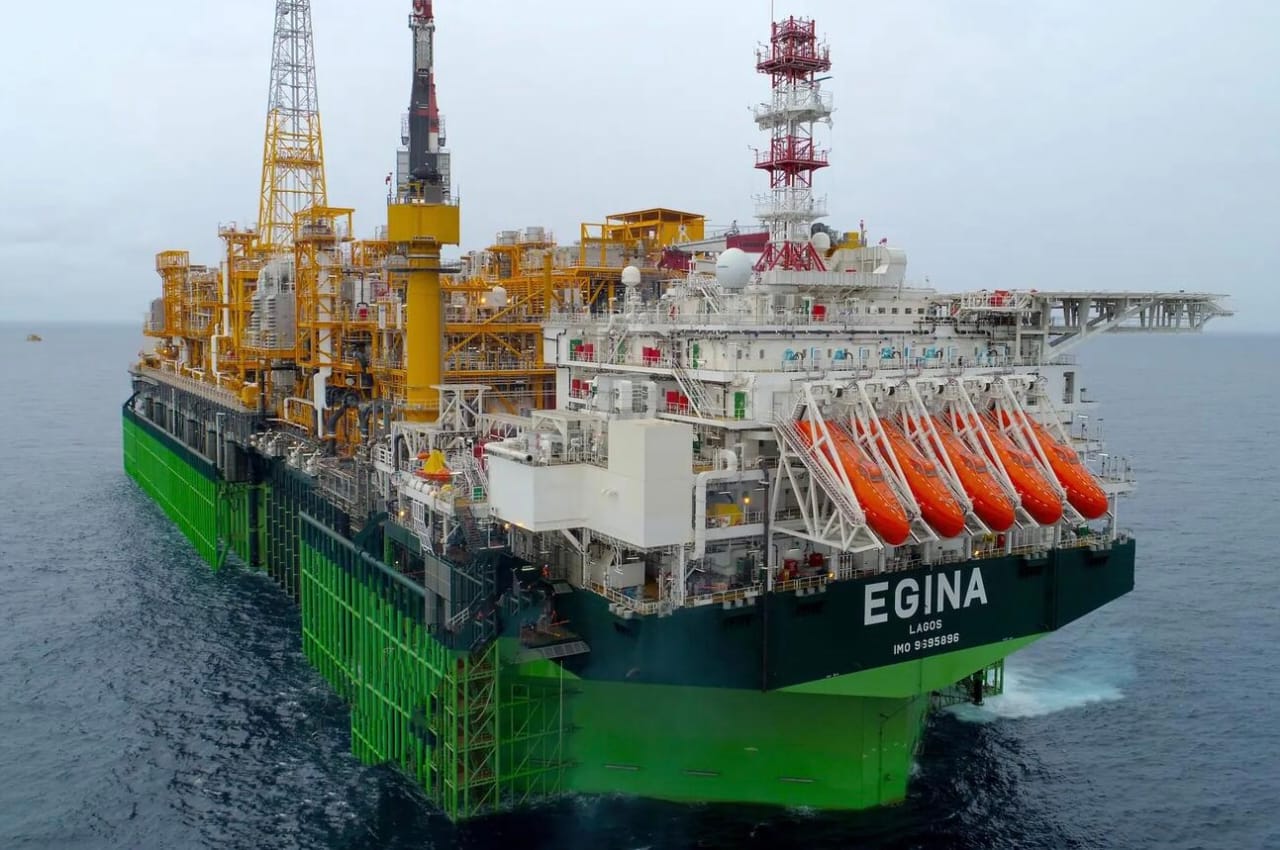
Meanwhile, basic engineering studies for the Egina field on OML 130 were being carried out in Nigeria, as Total continued efforts to develop the capabilities of local companies involved in deep offshore projects.
Total’s operations across Nigeria
Total has operated in Nigeria’s oil and gas exploration and production industry for nearly five decades.
Its operated production activities include OML 58, 99, 100 and 102, where it works in partnership with the Nigerian National Petroleum Company Limited (NNPC). Its major fields include Obagi, Obite, Amenam-Kpono, Ofon and Odudu.
The company also operates OML 130, which hosts the Akpo deepwater development that began production in March 2009.
Total has additional interests in non-operated ventures, including the NNPC, Shell Petroleum Development Company, TotalEnergies and Nigerian Agip Oil Company joint venture, in which it holds a 10 per cent interest, as well as the SNEPCO joint venture, which includes the Bonga field, where it owns 12.5 per cent.
Total maintains interest in Nigeria’s gas industry
Beyond oil production, Total remains a major player in Nigeria’s gas industry, targeting both domestic and international markets.
The company holds a 15 per cent interest in Nigeria LNG and also promotes the Brass LNG project, in which it has a 17 per cent stake.
The latest discovery at OML 136 could provide additional opportunities for gas development, although further studies are required to determine the project’s commercial and development prospects.