

KEY POINTS
- President Cyril Ramaphosa says reforms involving Eskom, railways and ports are aimed at improving efficiency, not selling state assets.
- Government plans to bring in private-sector investment and expertise while retaining ownership of strategic infrastructure.
- Private companies may operate certain railway lines, including the iron ore route, under arrangements that keep ownership with the state.
South African President Cyril Ramaphosa has defended the government’s reforms of state-owned enterprises (SOEs), insisting that efforts to restructure Eskom, Transnet and other public infrastructure are not aimed at privatisation.
Speaking before the National Council of Provinces (NCOP) on Tuesday, Ramaphosa said the government was seeking to improve efficiency, attract investment and strengthen the performance of public institutions without selling state assets.
He was responding to questions from NCOP member Makuduele Mampuru, who raised concerns about the restructuring of Eskom and the growing involvement of private companies in ports and freight rail operations.
Mampuru questioned whether the government’s Operation Vulindlela reforms were effectively privatising key public services, warning that greater private-sector participation could increase costs for consumers, particularly low-income households already struggling with unemployment and rising service charges.
He also asked Ramaphosa to guarantee that the involvement of private companies in electricity, railway and municipal services would not result in higher prices for ordinary South Africans.
Government says reforms are about efficiency
Ramaphosa rejected the suggestion that Operation Vulindlela was a programme to sell off state-owned companies or infrastructure.
He said the reforms were intended to improve the performance of public assets by bringing together government, businesses and labour to address inefficiencies across the economy.
The second phase of Operation Vulindlela, which began in 2025, builds on earlier efforts to address energy constraints, improve access to infrastructure and modernise visa systems.
The programme has expanded to tackle structural challenges affecting economic growth, municipal performance and living standards.
Ramaphosa said private-sector participation would help introduce investment and expertise needed to improve infrastructure operations, while ownership of strategic assets would remain with the government.
Eskom restructuring will not involve asset sales
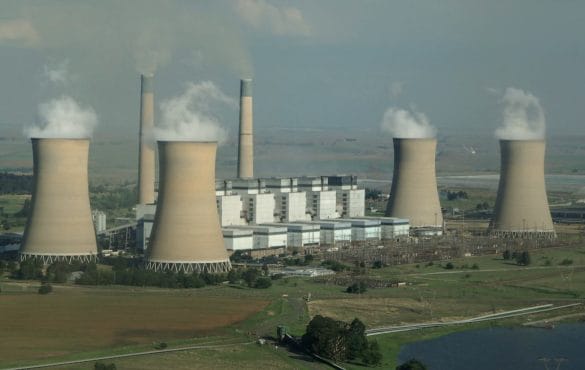
The president also rejected claims that Eskom’s restructuring amounted to the unbundling and sale of the electricity utility.
He said the government was separating certain operational responsibilities to allow electricity generation and transmission to function more effectively, rather than selling off parts of the company.
Under the proposed structure, Eskom would focus on electricity generation, while an independent state-owned Transmission System Operator would manage the transmission network.
Other electricity producers, including private companies operating renewable energy projects, would be able to generate electricity alongside Eskom and supply power to the national grid.
Ramaphosa said electricity generation, transmission and distribution infrastructure would remain under state ownership, including facilities operated by municipalities.
He said the objective was to make existing public assets more productive, attract investment and create more jobs.
Private companies may operate railway lines
On freight rail, Ramaphosa said the government was looking to allow private companies to operate selected railway lines and invest in infrastructure that the state currently lacks sufficient funding to upgrade.
He cited the iron ore railway line as an example, saying a private operator could invest in and manage the route while the government retained ownership.
According to the president, the arrangement would allow the state to benefit from improved railway operations, increased investment and potential tax revenue without transferring ownership of the infrastructure.
Ramaphosa said the railway would remain publicly owned, even if a private company was responsible for operating it.
The reforms form part of the government’s broader efforts to improve South Africa’s electricity supply, freight transportation and port infrastructure, while encouraging private investment in sectors that have faced operational and financial challenges.