

KEY POINTS
- Chevron offers a higher dividend yield of 3.17%, compared with Exxon Mobil’s 2.69%.
- Exxon has increased its dividend for 44 consecutive years, while Chevron has recorded 39 consecutive annual increases.
- Exxon maintained dividend increases during the 2014-2016 oil downturn, while Chevron kept its payout flat in 2015 and 2016.
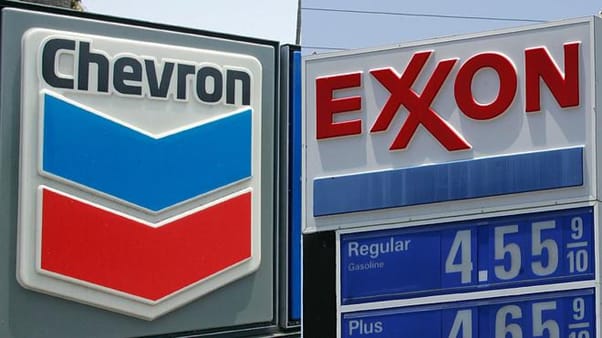
Chevron currently offers a higher dividend payout than Exxon Mobil, but Exxon appears better positioned to maintain and grow its dividend over the long term, according to a comparison of the two oil companies.
Both stocks have declined over the past month, with Exxon falling 12.77% to $158.79 and Chevron dropping 9.24% to $209.85. The decline has renewed interest in their dividend performance, particularly among investors looking for reliable income during retirement.
Chevron Offers a Higher Dividend Yield
Chevron currently has a dividend yield of 3.17%, compared with Exxon Mobil’s 2.69%. Chevron’s annualised forward dividend stands at $7.12 per share, while Exxon’s is $4.28.
Chevron also has a higher free cash flow yield of 4.12%, compared with Exxon’s 3.69%. Free cash flow represents the money a company retains after covering its operating expenses and capital investments, including spending on new wells and other projects. It is an important source of funding for dividend payments.
The two companies trade at similar forward earnings multiples of approximately 13 times, meaning investors pay roughly the same valuation relative to expected earnings while receiving a higher dividend yield from Chevron.
Exxon Has a Longer Record of Dividend Increases
Exxon recently raised its quarterly dividend to $1.07 per share, marking its 44th consecutive year of annual dividend increases. Chevron has recorded 39 consecutive years of dividend growth.
Exxon’s record has been particularly notable during periods of oil market weakness. Between 2014 and 2016, when oil prices fell sharply, Exxon continued increasing its quarterly dividend from $0.69 to $0.73 and then $0.75.
Chevron, however, maintained its quarterly dividend at $1.07 in both 2015 and 2016, without increasing it during those two years.
Exxon Maintained Its Dividend During the 2020 Crisis
Exxon also maintained its dividend during the 2020 oil market crisis, despite recording a loss of $23.25 billion for the year. The company paid $14.87 billion in dividends during the period, relying partly on its balance sheet to sustain shareholder payments.
Chevron has also strengthened its dividend in recent years, increasing its quarterly payout from $1.29 in 2020 to $1.78, demonstrating its commitment to returning cash to shareholders.
Exxon Emphasises Long-Term Dividend Growth
Exxon Chief Executive Officer Darren Woods has reiterated the company’s commitment to protecting its dividend, saying the company would not cut its payout.
The comparison suggests Chevron currently provides investors with more immediate dividend income, while Exxon has a longer record of annual increases and a history of maintaining dividend growth through major oil market downturns.
For retirement-focused investors, the choice between the two companies may therefore depend on whether they prioritise a higher current income or a longer record of dividend growth and resilience during market downturns.