KEY POINTS
- Libya targets 1.6 million bpd in oil production by 2025.
- NOC integrates advanced technologies to drive growth and attract investment.
- OPEC highlights Libya’s crucial role in global energy markets.
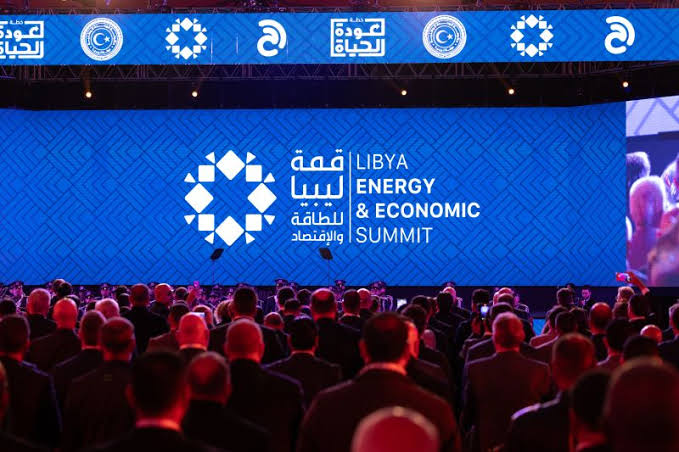
Libya’s energy ambitions took center stage at the 2025 Libya Energy & Economic Summit (LEES), where government and industry leaders outlined plans to boost oil production to 1.6 million barrels per day (bpd) by year’s end.
Prime Minister Abdulhamid Al-Dbeibeh highlighted Libya’s progress since 2021, noting that oil production has nearly doubled to 1.4 million bpd as of January 2025.
“Our commitment extends beyond hydrocarbons to include decarbonization efforts, such as planting one million trees,” Al-Dbeibeh said during his opening remarks. The summit highlighted Libya’s commitment to stabilize its energy sector and maintain a strong relationship with various countries; besides including sustainability solutions.
Libya’s energy vision drives international collaboration
Minister of Oil & Gas, Dr Khalifa Abdulsadek, discussed on the opportunities Libya has in leading the development of the energy sector around the world taking into account the position of the country and its resources.
In particular, he spoke about measures for the reduction of carbon dioxide emissions, expansion of gas exports, and strengthening international partnerships.
According to Social News, Massoud M. Suleman, Acting Chairman of Libya’s National Oil Corporation (NOC), highlighted the adoption of advanced technologies to enhance production and attract foreign investment.
“We have incorporated innovative solutions to propel our vision,” Suleman added that NOC’s partnership with Deloitte seeks to enhance its transparency and meet overall strategic energy objectives.
OPEC lauds Libya’s pivotal role in global energy markets
OPEC Secretary General Haitham Al Ghais further appreciated Libya’s effort and role with the organization besides its influence on the international oil market.
Addressing the summit for the first time, Al Ghais stressed the importance of hydrocarbons during the energy transition, noting OPEC+ strategies to boost production capacity from 24 percent to 50 percent. .
Thus, LEES 2025 gave Libya an opportunity to explain its advancement in terms of energy and prospects for cooperation with international counterparts.
This summit reiterated Libya’s commitment to providing for the country’s energy needs while at the same time giving its best shot to the global energy supply.