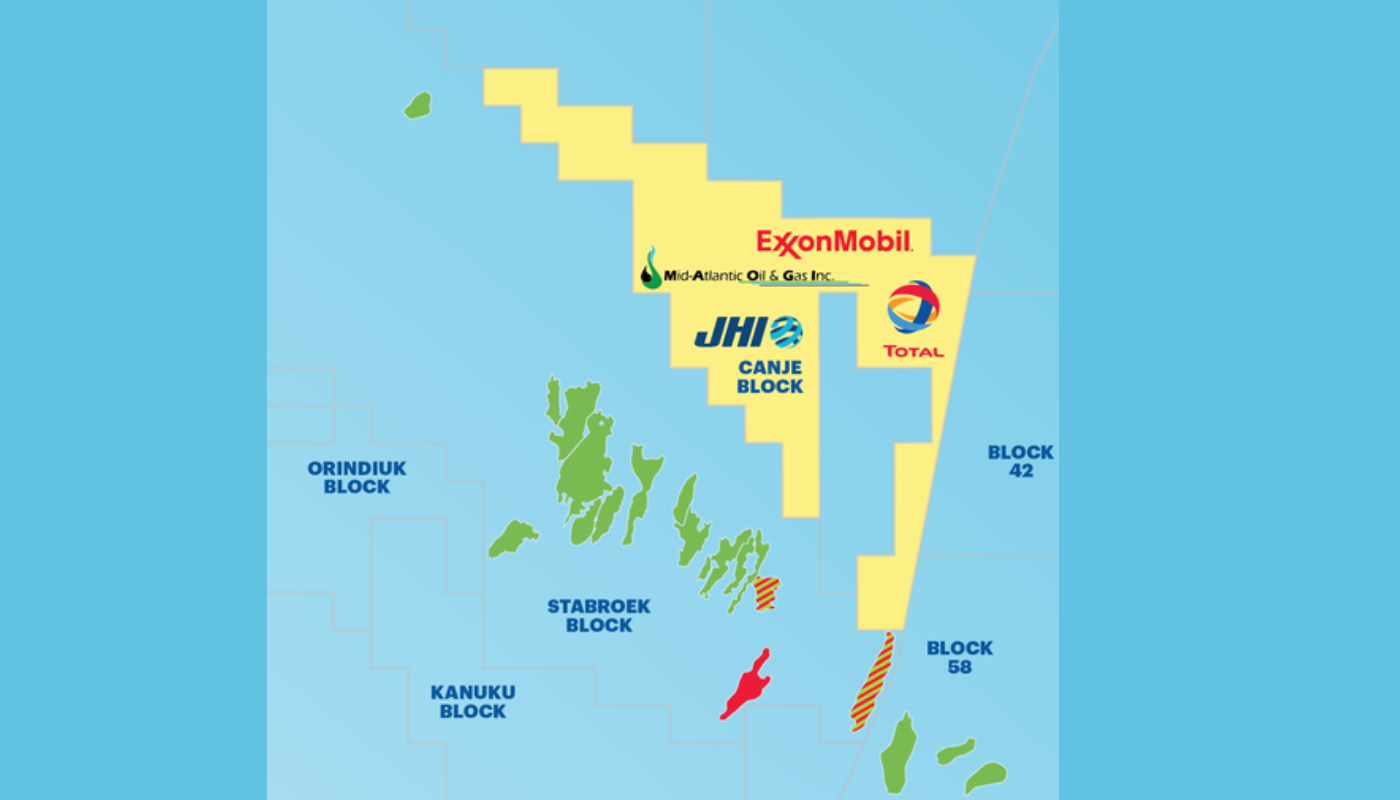
- ExxonMobil’s exploration licence for the Canje Block expires March 4, 2026, and may revert to the Guyanese government.
- Three exploration wells drilled in the block failed to produce commercial discoveries, prompting relinquishment.
- The returned acreage could be offered to new investors as Guyana seeks to expand offshore exploration.
The exploration licence held by ExxonMobil for the Canje offshore block is set to expire on March 4, 2026, according to officials from the Ministry of Natural Resources in Guyana, marking a critical decision point for the energy major as the government prepares to reclaim the acreage if no renewal application is submitted.
Natural Resources Minister Vickram Bharrat confirmed the timeline, noting that the licence is approaching its termination date and will automatically revert to state control if it lapses.
The Canje Block is operated by ExxonMobil with a 35 percent stake, while TotalEnergies holds an equal share, and smaller partners JHI Associates and Mid-Atlantic Oil & Gas control 17.5 percent and 12.5 percent respectively, illustrating the collaborative nature of deepwater exploration ventures where financial risk and technical expertise are shared among multiple firms.
Exploration campaign fails to deliver commercial discovery
ExxonMobil drilled three exploration wells within the block, known as Bulletwood-1, Jabillo-1, and Sapote-1, but none yielded commercially viable hydrocarbon discoveries, a key factor behind the expected relinquishment because offshore licences typically require operators to demonstrate proven resources before moving into development phases.
Without such findings, companies often return acreage to host governments rather than continue investing in prospects with uncertain geological potential.
Officials indicated that ExxonMobil would be permitted to reapply if it wishes to retain rights to the block, suggesting that while the licence is expiring, the door remains open for future participation under a new agreement should the company decide to pursue additional geological studies or reassess the basin’s potential.
The anticipated return of the block to state control will increase the pool of offshore acreage available for licensing as Guyana continues efforts to attract exploration activity beyond its most productive zones, a strategy aimed at broadening investment inflows, diversifying discoveries, and sustaining momentum in one of the world’s fastest-growing oil frontiers.