KEY POINTS
- Nigeria has become a net gasoline exporter for the first time, driven by the Dangote Refinery’s near full-capacity operations.
- Europe is increasingly relying on Nigerian jet fuel exports amid supply shortages and high refining margins.
- Growth is tempered by challenges including high shipping costs, crude supply instability, and policy uncertainties.
Nigeria has officially become a net exporter of gasoline for the first time, marking a major turnaround for a country long dependent on fuel imports despite being a top crude oil producer.
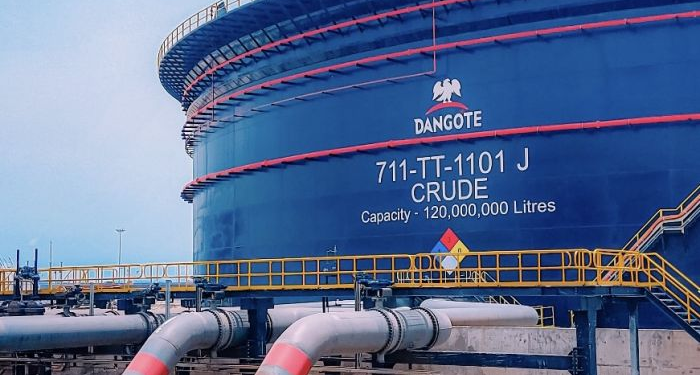
This milestone is largely driven by the Dangote Refinery, which operated close to full capacity in March. Gasoline exports climbed to about 55,000 barrels per day (b/d), while imports dropped to roughly 40,000 b/d, the lowest level recorded in a decade.
Single Refinery Dominates Nigeria’s Downstream Sector
The transformation of Nigeria’s refining landscape is centered entirely on the Dangote facility, as state-owned refineries remain inactive due to longstanding operational and structural challenges.
Running at about 94% capacity, the refinery produced enough gasoline to meet domestic demand, with surplus volumes exported across Africa.
Countries such as Ivory Coast, the Democratic Republic of Congo, and Mozambique have become key buyers.
Beyond gasoline, Nigeria is emerging as a significant exporter of jet fuel, particularly to Europe, where supply shortages persist.
In March alone, exports reached around 100,000 b/d, far exceeding local demand. European markets, including France, Spain, and the UK, absorbed nearly half of these shipments amid low inventories and high refining margins.
Despite strong export performance, the refinery faces several constraints. High freight costs, unstable crude supply, and reliance on imported feedstock continue to limit expansion into global markets.