KEY POINTS
- NECA is calling for the privatisation of the Port Harcourt and Warri refineries after over $25 billion spent on failed rehabilitation efforts.
- The group criticised repeated Turnaround Maintenance programmes, saying they have not produced sustained refinery output since 2010.
- Concerns were raised over a new NNPC–China partnership, with NECA demanding transparency and stronger accountability in refinery management.
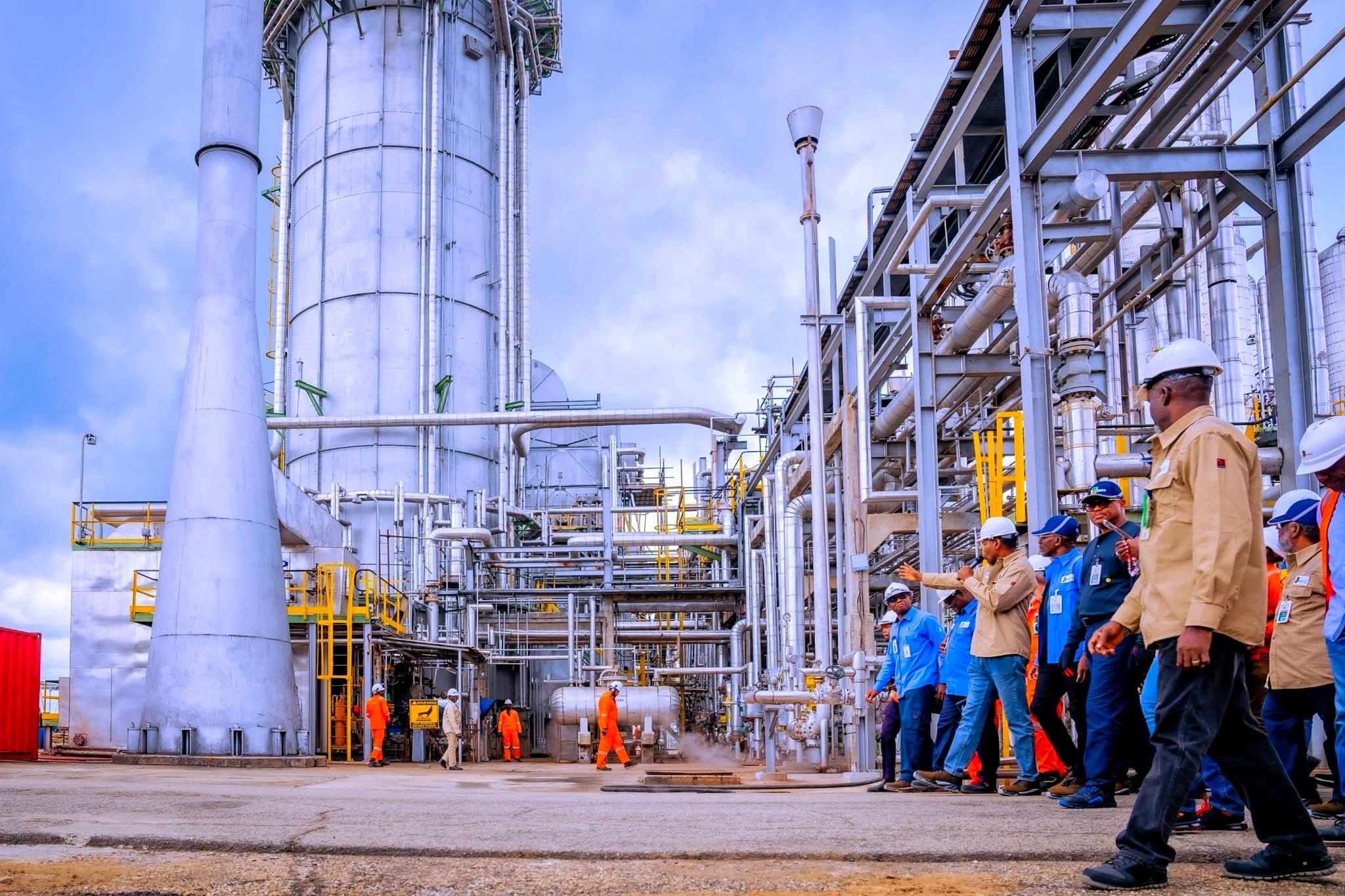
The Nigerian Employers’ Consultative Association, NECA, has renewed calls for the privatisation of the Port Harcourt and Warri refineries, arguing that decades of government-led rehabilitation efforts, reportedly costing over $25 billion, have failed to produce functional and reliable refining capacity.
In a strong position statement, the employers’ group said Nigeria’s repeated Turnaround Maintenance (TAM) programmes have become a cycle of waste, with massive financial commitments yielding little to no sustained output from the state-owned refineries.
NECA’s Director-General, Adewale-Smatt Oyerinde, criticised what he described as a long-running pattern of failed refinery rehabilitation projects, insisting that the facilities remain largely non-operational despite multiple rounds of funding between 2010 and 2023.
He noted that the government reportedly spent over N11 trillion (about $25 billion) on refinery repairs, maintenance, and upgrade programmes within the period, yet the Port Harcourt and Warri refineries continue to struggle with reliability and production output.
Oyerinde also pointed to the controversial $1.5 billion rehabilitation of the Port Harcourt refinery in 2021, describing it as emblematic of Nigeria’s recurring refinery failures. Despite official claims that the facility would reach up to 90 percent capacity by 2026, he said there has been no evidence of consistent, sustainable production.
Renewed China Partnership Raises Questions Over Transparency
The criticism comes shortly after the Nigerian National Petroleum Company Limited (NNPC) signed a Memorandum of Understanding (MoU) with Chinese firms Sanjiang Chemical Company Limited and Xingcheng Industrial Park Operation and Management Company in April 2026. The agreement is aimed at restarting, completing, and expanding the Port Harcourt and Warri refineries under a “technical equity partnership” model.
Under this arrangement, the Chinese partners are expected to provide technical expertise and operational support, and possibly investment, to revive the long-stalled assets and improve efficiency across the refinery complexes.
However, NECA argues that the new deal raises serious concerns about transparency and accountability, especially given the scale of previous investments that failed to deliver results.
Oyerinde questioned the rationale behind entering another partnership without clear public disclosure of past audit outcomes and performance assessments of earlier rehabilitation projects.
He stressed that Nigerian businesses have borne the brunt of prolonged refinery failures through high production costs, foreign exchange pressures from fuel imports, and job losses linked to energy insecurity.
According to him, continued reliance on government-led turnaround maintenance programmes has become unsustainable, warning that further opaque agreements could repeat past failures if structural reforms are not implemented.
NECA maintains that privatisation remains the most viable solution to end decades of inefficiency, arguing that private-sector management would introduce stronger accountability, efficiency, and investment discipline into Nigeria’s downstream petroleum sector.