KEY POINTS
- Rwanda and the US signed a civil nuclear cooperation MoU in Kigali on May 19, 2026.
- The deal covers energy security, nuclear safety, nonproliferation and peaceful nuclear technology use.
- Rwanda is exploring nuclear energy, including small modular reactors, to power its industrial growth.
Rwanda and the United States have signed a civil nuclear cooperation agreement, marking one of the most significant energy partnerships the East African country has struck in recent years as it pursues a long-term strategy to diversify its electricity supply.
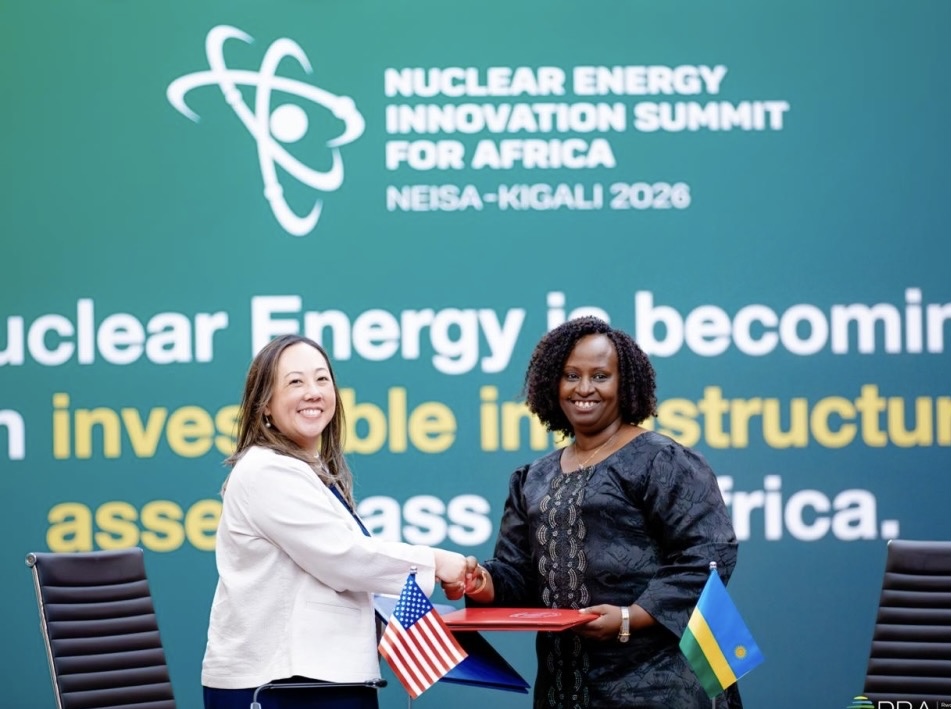
The Memorandum of Understanding on Strategic Civil Nuclear Cooperation was signed in Kigali on Tuesday, May 19, on the sidelines of the second Nuclear Energy Innovation Summit for Africa. Rwanda’s Minister of State for Foreign Affairs and International Cooperation, Usta Kayitesi, signed on behalf of Rwanda. Renee Sonderman, Acting Principal Deputy Assistant Secretary in the US Department of State Bureau of Arms Control and Nonproliferation, signed for the United States.
The agreement arrives as Rwanda works to close a persistent electricity gap that continues to constrain industrial expansion and economic ambition across the country.
What the deal covers
The MoU expands cooperation in civil nuclear energy, with a focus on developing reliable and secure energy systems. It reinforces commitments to nuclear safety, security and nonproliferation standards, and opens new areas of technical and strategic collaboration between the two countries in the peaceful use of nuclear technology.
Rwanda has been one of the more deliberate African nations in its approach to nuclear energy, signaling interest in small modular reactors as a technology suited to its geography and grid scale. The country’s energy ministry has framed nuclear as a complement to existing hydropower and solar capacity, not a replacement.
Rwanda’s push for a diversified energy mix
The signing took place at the Nuclear Energy Innovation Summit for Africa, now in its second year, which has emerged as a key platform pushing the continent’s nuclear energy conversation beyond policy and into procurement and partnership.
Rwanda’s energy strategy has grown more ambitious in recent years, driven by targets tied to industrial zone development, urban expansion and digital infrastructure growth. Nuclear energy offers something renewables alone cannot guarantee: stable baseload power available around the clock regardless of weather conditions.
The US has been a consistent partner in Africa’s nuclear conversations, using civilian nuclear cooperation agreements as both an energy and a geopolitical tool to shape how the continent’s growing power sector develops over the coming decades.