

KEY POINTS
- West Africa’s fuel imports fell sharply as Dangote Refinery scaled up production and displaced imported petroleum products.
- Shipping routes are being reshaped, with major declines in tanker demand on traditional Europe–Africa corridors.
- Nigeria is transitioning from a major importer to a growing regional exporter of refined petroleum products.
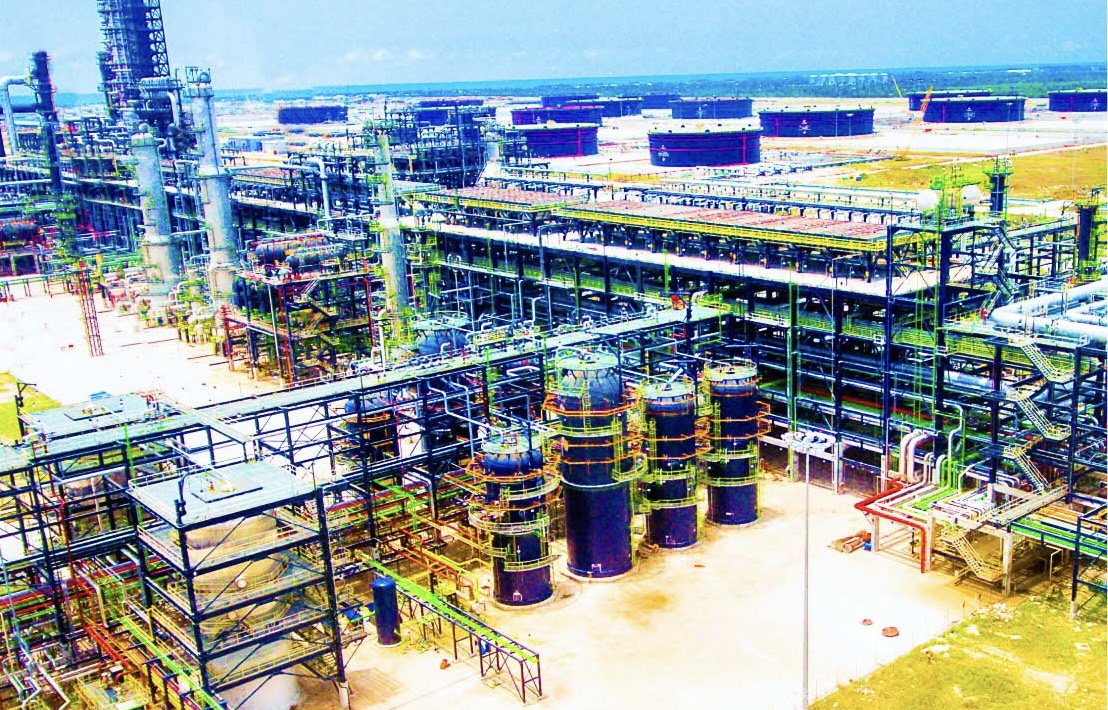
The rapid expansion of the Dangote Petroleum Refinery has significantly reduced West Africa’s reliance on imported refined petroleum products, reshaping regional energy trade flows and shipping patterns.
New data from S&P Global Commodities at Sea shows that imports of clean petroleum products into West Africa fell steeply from 997,000 barrels per day in April to 765,000 barrels per day in May 2026 — a 23% monthly decline.
Shipping analysts say this shift is directly tied to increased output from the 650,000-barrel-per-day Nigerian refinery, which is now displacing imports across multiple West African markets.
Tankers Face Declining Demand and Changing Routes
According to the Baltic and International Maritime Council (BIMCO), regional imports dropped even further in some estimates—by as much as 44%—as the refinery’s production scaled up.
Together, these accounted for more than half of total losses in shipping demand across the Atlantic fuel trade.
However, medium-range (MR) tankers have been less affected. Their tonne-miles fell by only 4% year-on-year, partly because new supply routes from the Americas helped offset lost European shipments.
Historically, the Rotterdam-to-Lagos corridor was one of the busiest fuel routes into West Africa. But that trade is now weakening rapidly as domestic refining capacity in Nigeria expands.
Analysts estimate Nigerian clean product imports have already fallen by 39% year-on-year, sharply reducing demand for long-haul shipping.
As a result, key storage hubs such as Lomé in Togo are also under pressure, with experts warning they may lose their strategic role in regional fuel distribution.
With operations reaching full capacity in early 2026, the Dangote Petroleum Refinery is now supplying about 80% of Nigeria’s domestic gasoline needs and exporting surplus products across the region.
Fuel shipments are increasingly moving from Lagos to Ghana, Togo, Côte d’Ivoire, and even destinations outside Africa, including Europe, South Korea, and the United States.
This shift has replaced long-haul imports with shorter “shuttle” voyages within West Africa—trips that increase shipping frequency but reduce overall tonne-mile demand.