

KEY POINTS
- Gas will start flowing from Australia’s Beetaloo basin to Darwin next month, testing shale ambitions.
- Tamboran will pump 40 terajoules a day at first and targets over 1 billion cubic feet daily within a decade.
- US and Japanese investment has arrived, but old, hard rock and missing infrastructure make scale and cost-cutting crucial.
Gas will start flowing next month from Australia’s Beetaloo basin to Darwin, 500 kilometres north, in a debut that developers hope launches a US-style shale boom.
According to Geoscience Australia, the basin holds 7 trillion cubic feet of gas, which fuels hopes it can power Northern Territory data centres and feed liquefied natural gas exports to Asia. However, the project faces steep hurdles, from billion-dollar pipelines to policies that push data centres toward renewables and force LNG plants to reserve 20 percent of gas for local use.
Modest first flows, big long-term hopes
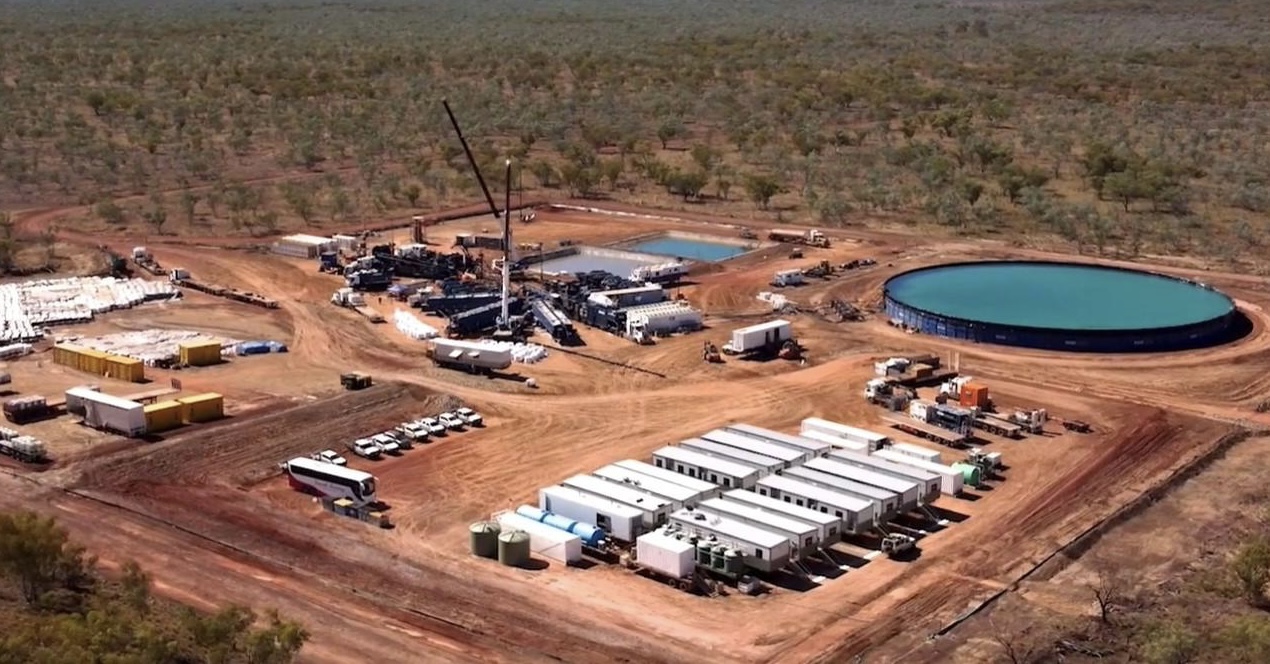
Tamboran Resources will pump an initial 40 terajoules a day from its Shenandoah project next month, and Beetaloo Energy will add 15 terajoules later this year. Moreover, those modest volumes will cover Darwin’s daily demand and show operators how fast a well’s output declines.
Still, the ambition runs far larger. Chief executive Todd Abbott, who joined from a US shale producer, said Tamboran expects to pump more than 1 billion cubic feet a day within a decade, enough to lift Australia’s LNG export capacity by 9 percent. Consequently, backers see the Beetaloo as a potential new engine for the world’s second-largest LNG exporter.
Old rocks, foreign money and scale
The Beetaloo draws comparison with the US Marcellus shale, yet at 1.3 billion years old its rock is far harder and more compacted. Furthermore, analysts note that no one has developed the play conventionally, so it lacks infrastructure, and Tamboran and its partners have already spent A$1 billion on drilling.
Because the basin needs deep pockets, US and Japanese money has arrived: Liberty Energy supplies drilling services, and Japan’s Inpex took a stake in Beetaloo acreage. In addition, developers plan to cut costs with locally produced fracking sand, which Beetaloo Energy says could save A$5 million a well. Therefore, scale and relentless efficiency will decide whether the shale dream pays off.