KEY POINTS
- Petrol prices have risen to N1,310–N1,400 per litre across parts of Nigeria after Dangote’s third increase in eight days.
- Dangote says the hikes reflect the cost of crude purchased earlier, rather than current international crude prices.
- Marketers warn that continued price volatility is making business planning difficult and increasing pressure on consumers.
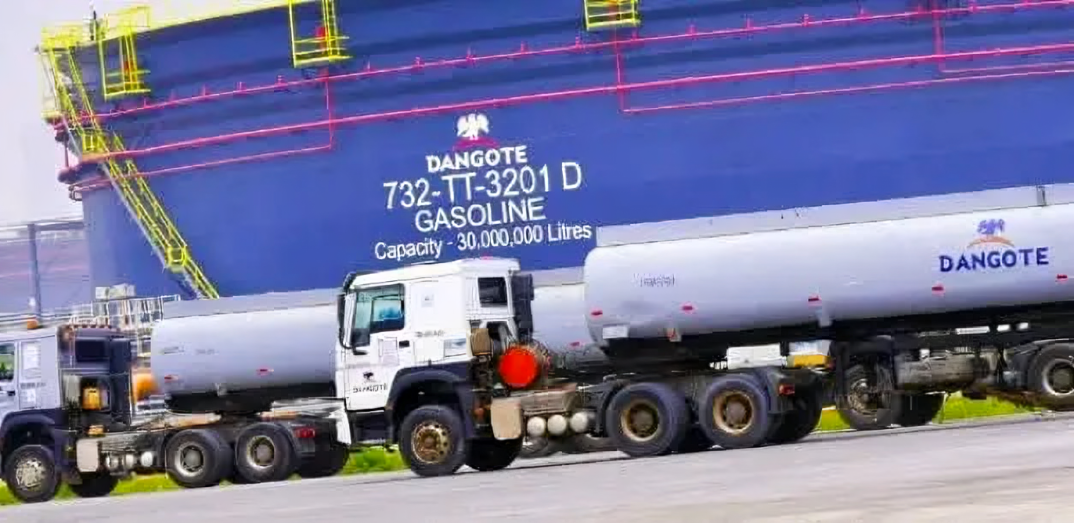
Petrol prices are edging towards N1,400 per litre in parts of Nigeria following another increase in the ex-depot price of Premium Motor Spirit (PMS) by the Dangote Petroleum Refinery.
The latest adjustment has pushed petrol prices to about N1,310 per litre in Lagos and Ogun states, while consumers in northern and other distant parts of the country are paying N1,350 or more. In some locations, pump prices are now approaching N1,400 per litre.
The development comes amid renewed debate over the relationship between international crude oil prices and the prices of refined petroleum products in Nigeria.
The Dangote refinery increased its PMS gantry price by N65 per litre on August 29, raising it from N1,200 to N1,265 per litre
It was the third price adjustment by the refinery within eight days.
The refinery had first raised its gantry price from N1,165 to N1,185 per litre on August 21. Five days later, another N15 increase took the price to N1,200 per litre, effective August 26.
With the latest N65 increase, the refinery’s gantry price has risen by N100 per litre in just eight days, representing an increase of approximately 8.6 per cent.
The refinery also increased its coastal PMS price from N1,582,380 to N1,669,545 per metric tonne. Following the latest adjustment, Dangote directed customers to return their existing Authorisations to Collect for repricing, after which new volume contracts would be issued to enable loading to resume.
The refinery has defended the repeated increases, arguing that the current international crude oil price cannot be used as the sole basis for determining the price of petrol produced from crude already purchased and stored.
A senior Dangote refinery executive, who spoke anonymously because he was not authorised to speak publicly, explained that there is often a considerable time gap between the purchase of crude oil and its eventual arrival at the refinery.
According to the executive, crude procurement involves several stages, including negotiating and completing the purchase, securing a loading window, chartering a vessel, loading the crude, transporting it to Nigeria and obtaining a berth before the cargo can finally be discharged into the refinery’s storage tanks.
The refinery therefore argues that crude being processed today may have been purchased when international oil prices were considerably higher than current market levels.
It also pointed to the significant volumes of crude already held in its storage tanks, saying some of the inventory may have been acquired at higher prices.
The refinery’s position is that immediately reducing petrol prices whenever international crude benchmarks fall could result in the company selling products manufactured from higher-cost crude at prices based on cheaper replacement crude.
Petrol prices vary across the country
The latest increase is already being reflected at filling stations. Consumers in Lagos and Ogun are reportedly paying around N1,310 per litre, while prices in northern states and other locations farther from the refinery have risen to N1,350 or more.
The geographical differences are partly linked to the cost of transporting petrol from the coastal refinery and distribution depots to markets across the country.
Transportation, logistics and other distribution expenses add to the cost of petrol as the product moves farther away from the refinery.
The price pressure has also strengthened calls for wider distribution arrangements, including Dangote Refinery’s plan to extend its free fuel distribution scheme across the country. The latest petrol price increases have attracted attention because they occurred even as international crude prices were declining.
According to the report, Brent crude closed at about $88 per barrel, while West Texas Intermediate stood at roughly $83 per barrel on Friday, representing a decline of about five per cent.
However, the Dangote refinery executive maintained that daily movements in crude benchmarks do not immediately translate into changes in the cost of crude already purchased by the refinery.
The issue has become more significant amid continuing geopolitical tensions involving Iran and the United States and uncertainty surrounding crude shipments through the Strait of Hormuz.
Dangote Refinery also imports part of its crude feedstock. Reuters reported on August 26 that between 30 and 40 per cent of the refinery’s crude supply was being imported. Petroleum marketers have expressed concern about the rapid changes in the price of petrol, saying the volatility is making it increasingly difficult to plan their businesses.
The National Publicity Secretary of the Independent Petroleum Marketers Association of Nigeria, Chinedu Ukadike, said marketers were dealing with a combination of international crude prices, government policies and exchange-rate movements.
He noted that marketers were not refiners and therefore had little control over the factors determining the cost of petroleum products.
Ukadike acknowledged that Dangote Refinery had previously reduced its petrol prices when international market conditions improved. However, he said the latest volatility had made it difficult for marketers to accurately structure their businesses and plan their operations.
He further warned that prolonged tensions between Iran and the United States could result in greater instability in petrol prices.