

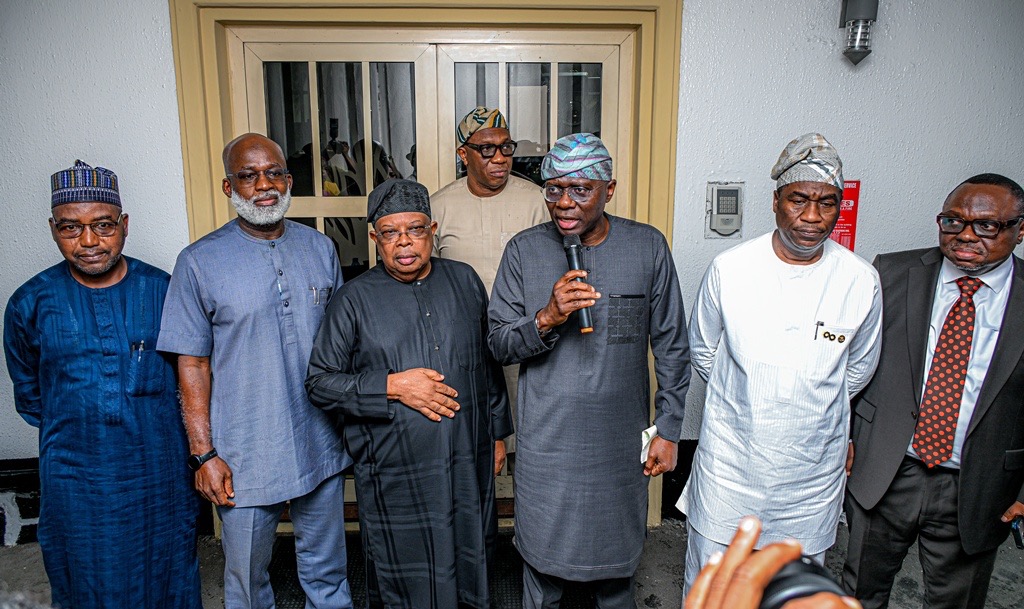
The federal government and Lagos State have agreed to work together on a 24/7 Energy Zones pilot, a plan to give homes, businesses and factories in Nigeria’s commercial capital steadier electricity.
Power Minister Joseph Tegbe and Gov. Babajide Sanwo-Olu agreed on the approach Monday during a technical session at the Lagos House in Marina. President Bola Tinubu approved the pilot. Lagos is the first test case, and the plan is to extend it later to the Abuja, Kaduna and Kano corridor and the Enugu and Port Harcourt corridor.
Tegbe said the Lagos axis alone accounts for roughly 40% to 50% of Nigeria’s electricity demand, which is why the government is starting there.
What the 24/7 Energy Zones plan involves
Tegbe said his ministry has secured commitments from the distribution companies along the Lagos corridor to take more electricity from the grid and deliver more reliable supply. To turn the agreement into action, the government set up a joint technical committee with members from the regulator, the grid operator, the transmission company, the Rural Electrification Agency and Lagos State agencies. It will report to a steering committee chaired by the governor and co chaired by the minister.
The idea grew out of a closed door meeting last week between Tegbe and the heads of several distribution companies. He told them the bottleneck is not only generation and transmission, but also how much power the distributors take up and pass on to customers. Energy zones, he said, could unlock commercial and industrial demand and improve the companies’ revenue and collection performance.
The numbers behind the problem
That diagnosis matches the latest regulator data. The distribution companies’ average offtake fell 3.4% in the second quarter, and their combined losses stood at 36.23%.
What is still unknown
The zones remain largely a plan. Commentators note that the government has not yet published the capacity needed, a timetable or the infrastructure spending required to guarantee 24 hour supply. Tegbe has said previously that every part of Nigeria will have constant power by 2027.
Whether Lagos residents see the difference will depend on what the new committee delivers, and how fast.