KEY POINTS
- NMDPRA sealed MRS and Stageoil stations in Port Harcourt for under-dispensing.
- Another station was ordered to recalibrate its pump after over-dispensing was detected.
- NMDPRA signed an MoU with Bureau Veritas and Ace Energy Group to improve fuel testing and quality assurance.
The Nigerian Midstream and Downstream Petroleum Regulatory Authority, NMDPRA, has sealed two filling stations in Port Harcourt, Rivers State, for dispensing less fuel than motorists paid for during a routine inspection.
The affected outlets are MRS Filling Station on Azikiwe Road and Stageoil Filling Station along Aba Road. The regulator said the action followed checks on fuel quantity, product quality and safety standards at retail outlets.
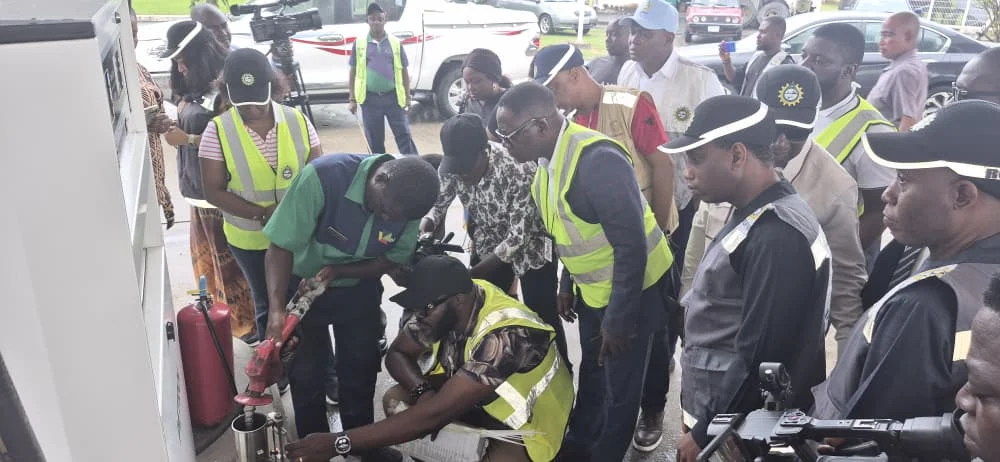
The exercise is part of efforts to protect consumers and ensure filling stations comply with Nigeria’s petroleum regulations. The NMDPRA’s Executive Director of Health, Safety, Environment and Community, Dr Mustapha Lamorde, led the inspection team.
He said the surveillance exercise focused on three key areas: whether motorists received the quantity of fuel they paid for, whether the products met national quality standards, and whether filling stations operated safely.
The team inspected petroleum products including Premium Motor Spirit (PMS), commonly known as petrol, Automotive Gas Oil (AGO), or diesel, and Dual-Purpose Kerosene (DPK).
According to Lamorde, officials randomly collected product samples for on-the-spot screening to determine whether they met the required specifications.
The authority discovered that some outlets were dispensing less fuel than customers paid for. It consequently sealed the affected stations and said further regulatory action, including sanctions, would follow. The inspection also uncovered a separate case of over-dispensing at another filling station.
Lamorde said the operator was directed to stop selling fuel and recalibrate its dispensing pump before resuming operations.
Although under-dispensing deprives motorists of the quantity they pay for, over-dispensing can also indicate that a pump is not properly calibrated. The regulator’s intervention is intended to ensure that dispensing equipment measures fuel accurately.
Stations found to be complying with the rules were encouraged to maintain the required standards.
Other outlets inspected included the NNPCL Mega Filling Station at Lagos Bus Stop in the old Port Harcourt Township, Reinoil, TotalEnergies and an NNPC filling station in Trans Amadi.
Regulator promises nationwide enforcement
Lamorde said the surveillance programme was continuing, with NMDPRA field officers deployed across the country to monitor petroleum retail outlets.
He assured motorists in Rivers State and other parts of Nigeria that the authority would continue to enforce regulations and sanction operators found violating them.
The regulator also urged members of the public to report suspected cases of under-dispensing, poor fuel quality and other breaches through its official communication channels.
The authority said its broader objective was to ensure consumers receive the quantity and quality of petroleum products they pay for, while protecting their vehicles, health and the environment.
The inspection came as the NMDPRA signed a tripartite memorandum of understanding aimed at improving petroleum product testing, quality assurance and laboratory development in Nigeria.
The agreement was signed at the authority’s office in Port Harcourt by Lamorde, representing NMDPRA Chief Executive Mallam Rabiu Umar; Daniel Wilbert, managing director of Bureau Veritas; and Christopher Nwokolo, group chief executive officer of Ace Energy Group.
The partnership is expected to strengthen the industry’s capacity to test petroleum products and verify that they meet required quality standards.
Improved testing and laboratory capabilities could support the regulator’s monitoring activities and help identify products that fail to meet national specifications.
The NMDPRA’s enforcement actions and its partnership on product testing form part of efforts to improve compliance across Nigeria’s petroleum supply chain and protect consumers at the pump.