

KEY POINTS
- Federal Government commissions six substations in Kano and Katsina states.
- Four Kano substations contribute 544MW, while two Katsina facilities add 96MW.
- Improved transmission capacity is expected to help deliver available electricity to consumers.
The Federal Government has commissioned 640 megawatts (MW) of electricity transmission capacity and six new substations in Kano and Katsina states as part of efforts to strengthen Nigeria’s power infrastructure.
The projects comprise four substations in Kano State, located at Walalambe, Kumbotso, Dakata and Dan-Agundi, which collectively provide 544MW of additional transmission capacity.
The remaining facilities are two substations in Kankia Local Government Area of Katsina State, each rated at 60 megavolt-amperes (MVA). Together, the Katsina facilities contribute another 96MW, bringing the total additional capacity announced by the government to 640MW.
The Ministry of Power disclosed the development in a statement issued over the weekend, saying the projects would strengthen the network’s ability to evacuate and deliver available electricity to distribution companies and consumers.
The projects are intended to address constraints in the transmission network, which have limited the amount of electricity that can be delivered from the national grid to end users.
New Substations to Support Katsina Electricity Supply
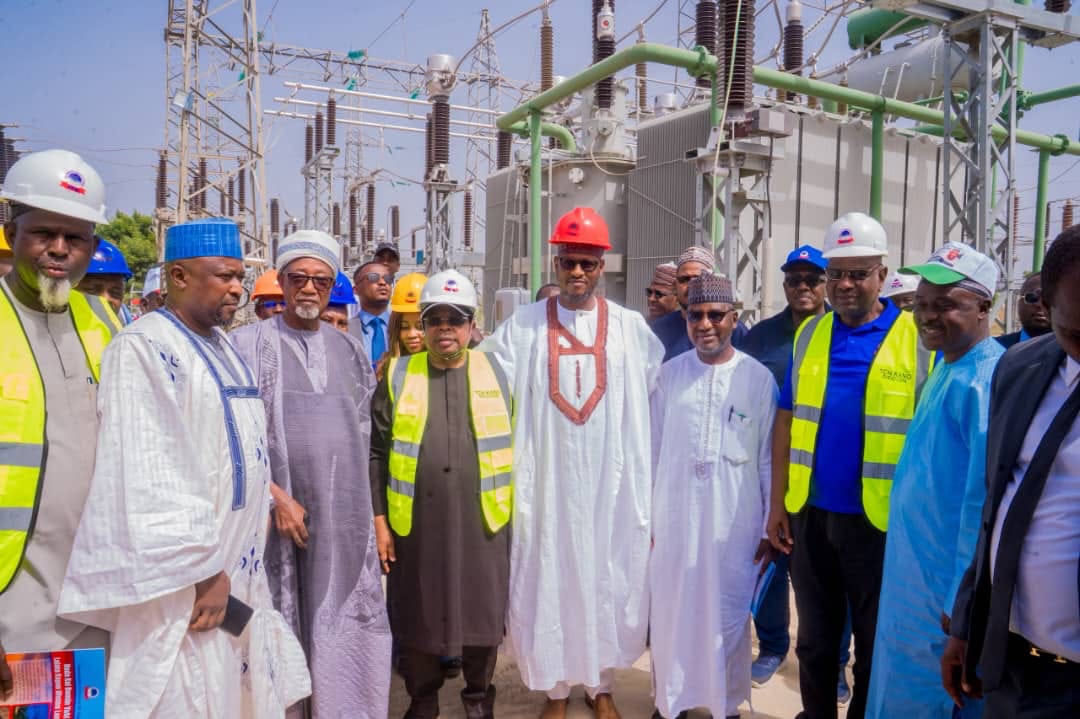
Speaking at the commissioning of the Kankia substations, Minister of Power Joseph Tegbe said the projects demonstrated President Bola Tinubu’s commitment to improving Nigeria’s electricity infrastructure.
Tegbe said the government recognised that economic growth and business expansion depended on dependable infrastructure, including a more effective electricity network.
He added that investment in the power sector could provide a stronger foundation for job creation, commercial activities and wider economic development.
The Kankia facilities comprise two 60 MVA substations operating at 132/33 kilovolts (kV). They are designed to strengthen the transmission network serving Katsina State and neighbouring areas.
According to the minister, the infrastructure would improve the network’s ability to distribute available electricity, potentially supporting businesses, households and public services.
He also called on residents to protect the facilities from vandalism and other activities that could disrupt electricity infrastructure. Tegbe urged members of the public to report suspicious activities to the Transmission Company of Nigeria (TCN) or relevant security agencies.
Katsina Governor Welcomes Infrastructure Investment
Katsina State Governor Dikko Umaru Radda described the project as an important investment in the state’s electricity infrastructure.
Radda said improved electricity supply could support industrial development, strengthen economic activity and improve the delivery of public services.
He commended President Tinubu, the Federal Ministry of Power and TCN for completing the project.
The commissioning forms part of broader efforts to improve the performance of Nigeria’s electricity transmission network, where infrastructure limitations have constrained the delivery of available power to distribution companies.
More Transmission Capacity Does Not Guarantee More Generation
Although the additional capacity is expected to improve electricity delivery, the projects do not directly increase the amount of electricity generated by power plants.
Their impact on supply will depend partly on how much electricity generating stations can produce and the ability of distribution networks to deliver that power to homes and businesses.
The distinction is important because improvements in transmission infrastructure alone cannot resolve every challenge affecting electricity supply.
However, strengthening the network could reduce transmission bottlenecks and make it easier to move available electricity to areas served by the new facilities.
The latest commissioning therefore represents an infrastructure upgrade, with the actual benefits to consumers depending on electricity generation, transmission performance and the capacity of downstream distribution networks.