KEY POINTS
• Iraq has sharply cut oil production because the Strait of Hormuz closure has stopped exports and tankers from reaching ports.
• Major oilfields including Rumaila, West Qurna 2 and Maysan have already reduced output, with deeper cuts looming.
• The disruption is driving storage to capacity and pushing global energy prices higher.
BAGHDAD Iraq’s oil industry is now cutting output after weeks of growing pressure on export routes. Ship traffic through the Strait of Hormuz has all but stopped as conflict in the Middle East disrupts shipping, leaving tankers unable to reach southern ports and storage tanks steadily filling up.
With no clear sign of relief, Iraqi officials have begun to pull back production at some of the country’s biggest oilfields.
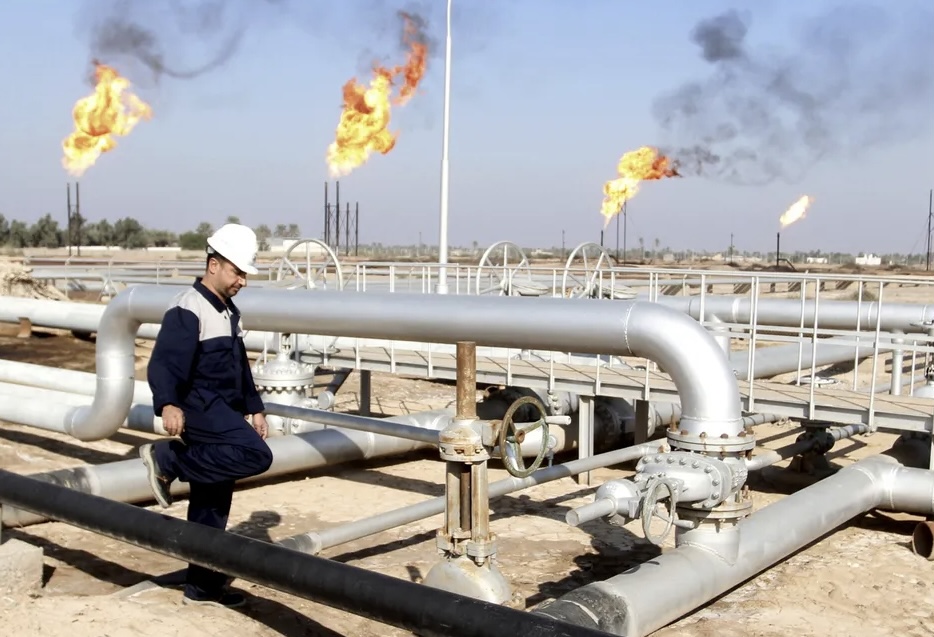
Iraq has already trimmed nearly 1.5 million barrels per day from its oil output. Supplies from the Rumaila field, the country’s largest, were cut by about 700,000 barrels per day.
West Qurna 2 and the Maysan field also saw big reductions. Officials say these measures could expand to more than 3 million barrels per day in coming days if vessels remain stranded and storage runs out of room.
State-owned refineries continue to operate, and the oil ministry says domestic fuel needs will be covered even as exports dry up. But with exports blocked, there is nowhere to send much of Iraq’s crude, forcing producers to slow or halt wells that normally feed overseas markets.
Storage tanks hit critical levels
The closure of the Hormuz passage, a vital artery for about 20 percent of global oil and natural gas flows, has triggered a logistics bottleneck.
Shipowners are reluctant to send tankers into waters perceived as unsafe, and insurers have tightened war risk coverage, pushing many operators to hold off on voyages. As a result, stockpiles at Iraq’s southern ports have ballooned to near capacity.
Global energy markets have reacted. Brent crude prices climbed in early trading this week, reflecting supply fears as the trans‑Gulf route remains blocked.
Natural gas prices also jumped in Europe and Asia. Analysts warn that prolonged disruption could have broader implications for energy security and inflation in energy‑dependent economies.
The current supply squeeze is tied to heightened hostilities involving the United States, Israel and Iran, which have made shipping through Hormuz perilous.
Attacks on tankers and energy infrastructure in the broader Gulf have contributed to the freeze. Analysts say even short interruptions in the strait’s operation can ripple through global markets because alternate routes are limited and slower.