KEY POINTS
- Dangote refinery imported $3.74bn crude in 2025, highlighting Nigeria’s oil supply paradox.
- Refined fuel imports dropped nearly 29%, while refined product exports reached $5.85bn.
- Nigeria’s current account surplus fell to $14.04bn amid rising imports and external payment pressures.
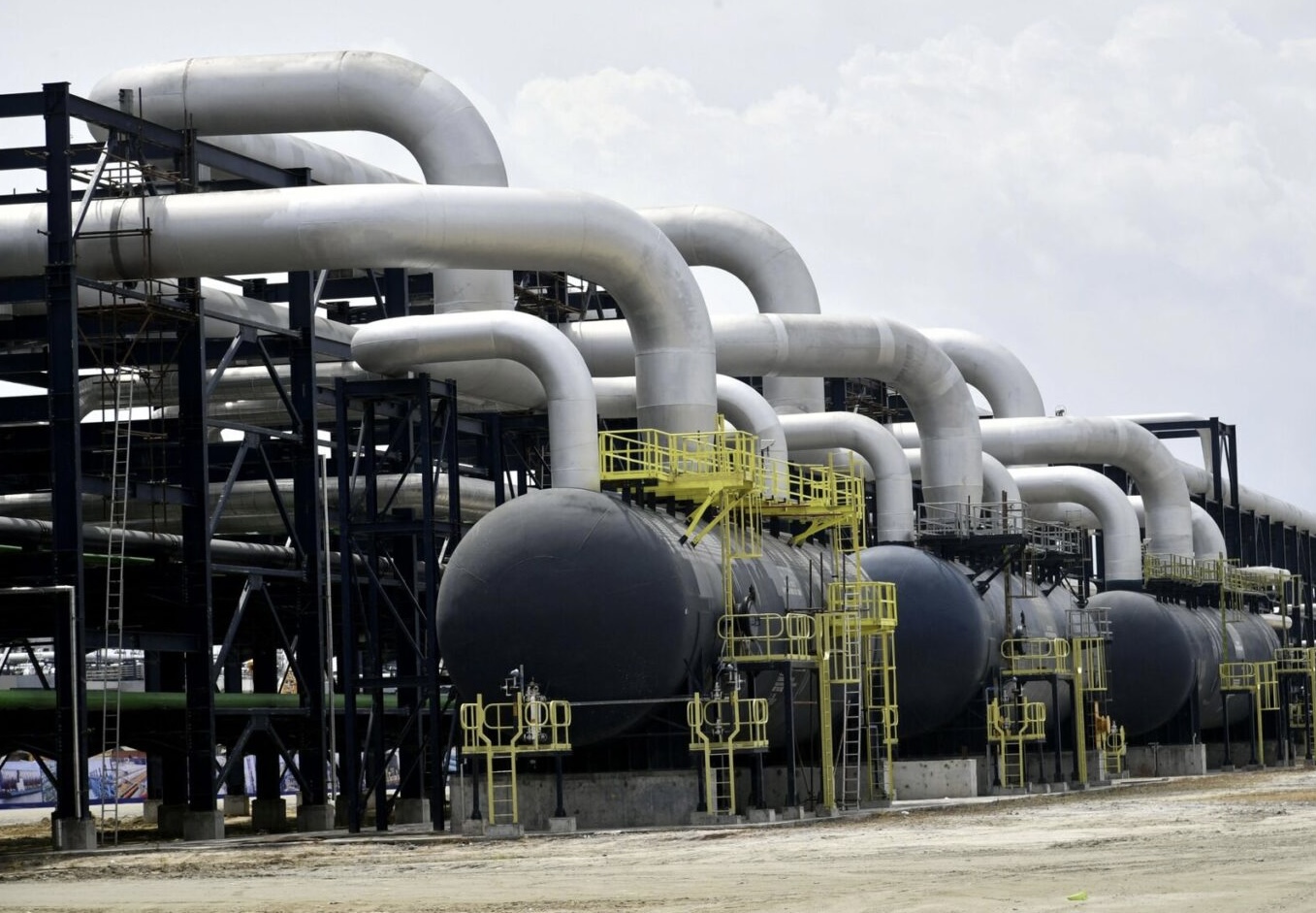
Nigeria’s external trade profile experienced a significant shift in 2025, as the Dangote Petroleum Refinery imported crude oil worth $3.74 billion, according to the Central Bank of Nigeria (CBN).
The disclosure, contained in the apex bank’s Balance of Payments report, highlights a paradox within Nigeria’s oil sector: a major crude-producing nation increasingly importing crude to meet domestic refining needs.
The imports played a notable role in shaping the country’s current account position for the year.
The report showed that Nigeria’s crude oil export earnings declined significantly, dropping from $36.85 billion in 2024 to $31.54 billion in 2025, a 14.41 percent decrease.
However, this decline was partly offset by increased domestic refining activity. The Dangote refinery exported refined petroleum products valued at $5.85 billion, signaling a gradual shift from crude exports to value-added petroleum products.
Additionally, gas exports to other countries improved, further supporting Nigeria’s external earnings.
Fuel import bill drops sharply amid local refining boost
One of the most notable impacts of the refinery’s operations was a reduction in Nigeria’s dependence on imported fuel.
Imports of refined petroleum products fell sharply by 28.88 percent, from $14.06 billion in 2024 to $10.00 billion in 2025. This reflects improved local supply and aligns with ongoing efforts to strengthen domestic refining capacity.
Overall oil-related imports also declined, indicating early gains from Nigeria’s push toward self-sufficiency in refined fuel production.
Despite improvements in the oil segment, Nigeria’s non-oil imports rose from $25.74 billion to $29.24 billion, marking a 13.60 percent increase year-on-year. This growth underscores sustained demand for foreign goods and services.
At the same time, external financial obligations intensified. Net outflows for services increased to $14.58 billion, driven by higher spending on transportation, travel, and insurance.
Similarly, primary income outflows surged by 60.88 percent to $9.09 billion, largely due to increased dividend payouts and interest payments to foreign investors.
Nigeria recorded a current account surplus of $14.04 billion in 2025. While this represents a decline from $19.03 billion in 2024, it is still significantly higher than the $6.42 billion recorded in 2023.
The drop from 2024 levels reflects structural adjustments in the oil sector, particularly the importation of crude for domestic refining.
Meanwhile, the goods account remained positive, rising to $14.51 billion from $13.17 billion in 2024, supported by refined product exports and broader trade performance improvements.