KEY POINTS
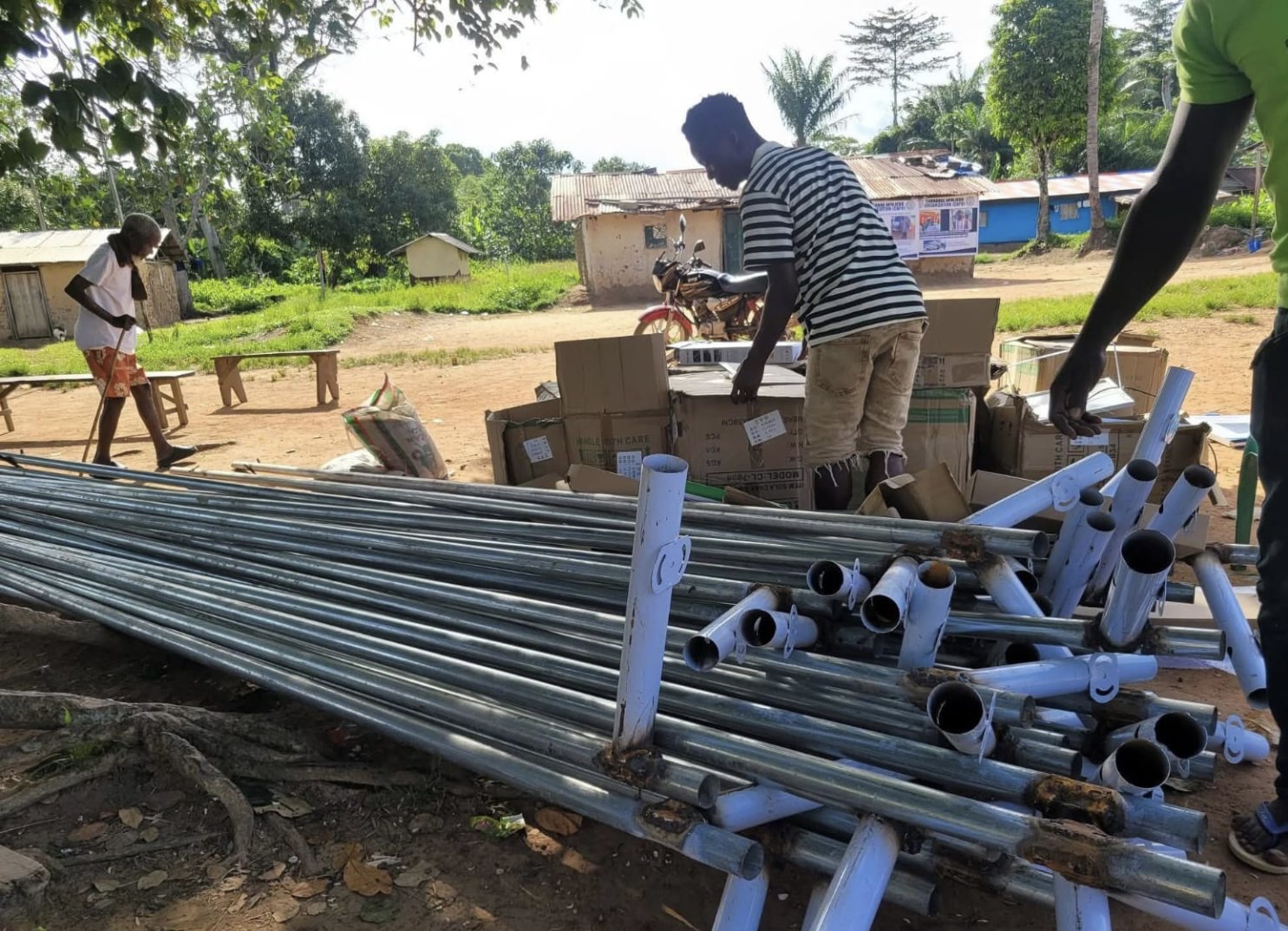
- CAPO has launched Phase 1 of a solar electrification project covering eight Carbadae communities in Sinoe County.
- Pyne Town received the most solar lights, with 45 units distributed during the first phase rollout.
- A second phase will expand the initiative to cover all communities across the Carbadae area.
A community organization in Sinoe County has taken rural electrification into its own hands. The Carbadae Apoliebo Organization launched the first phase of a solar lighting project this week, distributing solar-powered lights across eight towns and villages in the Carbadae area of Wacaba Statutory District and pairing the rollout with books and educational materials for students.
CAPO Executive Chairman Sennay Carlor III and Co-Chairman Alphonso B. Cole led the initiative. The official launch included a donation ceremony in Chebior Town, where residents received solar lights, school supplies and books. Residents described the gesture as a meaningful step toward community growth.
Carlor said the project was introduced to address three specific problems: limited electricity access, poor nighttime security and barriers to learning that students face without reliable light.
Communities and what they received
Eight communities received solar lights in the first phase. Pyne Town received the most, with 45 units. Gblayee Town received eight. Miles 48 Community and Shadee Town each received four. Barduway Town received three. Tacti Village, Butt Nacky Village and Sanquine Junction each received two.
The turnover ceremony took place in Shadee Town, where Carlor reaffirmed CAPO’s commitment to supporting development across Carbadae’s communities in District 3 of Sinoe County. He acknowledged Crayton Old Man Duncan as a key contributor whose support helped the first phase succeed despite logistical and financial challenges.
What comes next
Carlor confirmed that a second phase is already in planning and will expand the solar lighting project to cover all communities in the Carbadae area. He urged residents to actively support their communities’ development and back the work of government and elected leaders.
Wacaba Statutory District Superintendent Kwekue Queeley praised CAPO for what he called a timely and impactful intervention. Residents, youth groups, women leaders and traditional authorities all welcomed the rollout, describing it as a milestone for rural transformation in the district.
The initiative reflects a growing pattern of diaspora and community-led organizations stepping into infrastructure gaps in rural Liberia where government reach remains limited.