KEY POINTS
- SADC ministers agreed Southern Africa must mobilize pension funds and diaspora capital for regional development.
- Ministers are exploring joint SADC investment in Angola’s Lobito refinery as a regional energy resilience move.
- A proposed Borrowers Club would allow African countries to collectively engage international creditors together.
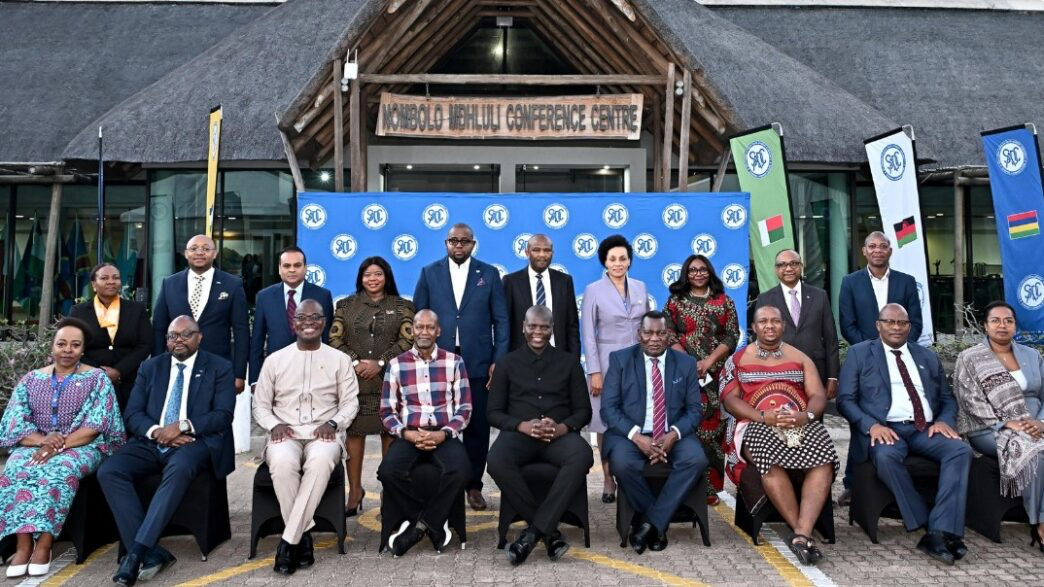
Southern Africa’s foreign ministers left a retreat in Kruger National Park last week with a message that cut through the usual diplomatic language. Stop looking outside. The money is already here.
SADC Executive Secretary Elias Magosi delivered that message plainly at a media briefing following the SADC Ministers of Foreign Affairs Retreat held at Skukuza. Ministers acknowledged that pension funds, insurance funds, private equity and diaspora savings from across the region are being invested externally instead of financing development within Southern Africa.
“There are resources that are plenty within our space, your pension funds, your insurance funds, your private equities, including even funds that are sitting in the diaspora that can actually be brought back into our region,” Magosi said. “It’s not every time that when we do projects, when we do activities that require funding, that we should always be looking outside.”
The region has a combined population of close to 400 million people. Magosi said that context should reshape how member states think about energy. Angola and Mozambique’s oil and gas resources, he argued, should be treated as regional strategic assets rather than national resources.
Energy and the Lobito refinery
South Africa’s International Relations Minister Ronald Lamola revealed that ministers are actively exploring collective SADC investment in Angola’s Lobito refinery project. The initiative would pool member states’ energy and finance ministries into a coordinated regional push. “We have also encouraged our ministers of energy and finance to look into the possibility of SADC countries joining hands to invest in the Lobito refinery,” Lamola said.
Energy security was not the only pressure point at the retreat. Ministers also agreed on a Borrowers Club concept that would bring African countries together to engage international financial institutions collectively on debt and interest burdens. The African Development Bank and AUDA-NEPAD are both part of those discussions.
Migration, economics and the border question
Lamola addressed anti-immigration pressures in South Africa directly, linking them to the broader regional economic challenge. He said most irregular migration in Southern Africa is economically driven, and that job creation through stronger growth in Zimbabwe, Mozambique and South Africa would reduce migration pressure more effectively than border crackdowns.
“We are dealing mostly with economic migrants, so we need the economy of Zimbabwe to grow, we need the economy of South Africa to grow, we need the economy of Mozambique to grow,” he said.
Ministers also discussed agriculture cooperation, particularly collective vaccine production to address Foot and Mouth Disease outbreaks that have damaged exports and small-scale farming across member states. Cross-border special economic zones and expanded regional integration were also flagged as tools for stimulating job creation across the bloc.