

KEY POINTS
- Ghana’s renewable energy capacity stands at 280MW, roughly 5 percent of the national energy mix.
- LMI Holdings is developing a 1,000MW solar park at Dawa Industrial Enclave targeting completion by 2030.
- An $85 million program will deploy solar to 70,000 people in remote and island communities.
Ghana’s government wants 7 percent of its national energy mix to come from renewables by 2027. It currently sits at 5 percent, with about 280 megawatts of renewable capacity installed. The gap does not sound dramatic. Closing it is going to take everything the country can mobilize.
Energy and Green Transition Minister John Abdulai Jinapor has made the strategic case clearly: solar offers Ghana a cleaner and cheaper long-term alternative to expensive thermal generation. What follows from that argument is now playing out across the country in public projects, private investment and community installations.
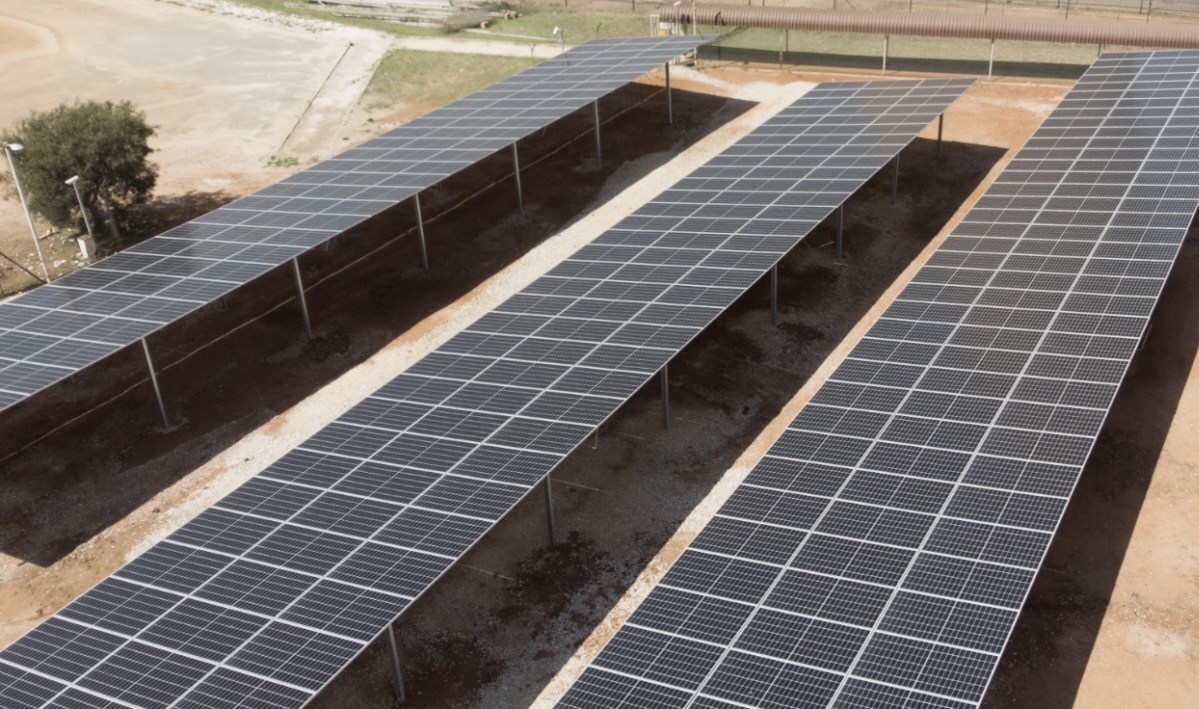
The Bui Power Authority has emerged as the most active public developer in the current wave. Its 5-megawatt floating solar installation on the Black Volta River, the first of its kind in Ghana, is already running with plans to scale it to 65 megawatts. A 40-megawatt land-based plant in the Bono Region is also operational. The most significant addition is the Galgu Solar Plant in Yendi, Northern Region. The 50-megawatt facility, built with First Sky Limited at a cost of $59 million, feeds directly into the national grid.
Private capital entering at a different scale
The private sector is moving at an entirely different order of magnitude. LMI Holdings is developing the Dawa Industrial Enclave Solar Park targeting 1,000 megawatts by 2030. The International Finance Corporation has approved a $100 million facility for the first 150-megawatt phase, with 100 megawatts due by October 2026. LMI already operates what the IFC describes as Africa’s largest single rooftop solar installation, a 16.82-megawatt facility at the Tema Free Zones Enclave, built to cut emissions by around 10,000 tonnes of CO2 equivalent annually.
The Volta River Authority has taken a parallel route, building a portfolio of smaller plants across Ghana’s north, from the 2.5-megawatt Navrongo facility, Ghana’s first utility-scale solar plant, to a 13-megawatt installation in Kaleo and a 30-megawatt floating project under development at the Kpong Hydro Reservoir.
Reaching communities the grid has never served
An $85 million program backed by the African Development Fund, the Climate Investment Funds, the Swiss government and Ghana is targeting more than 70,000 people in remote and island communities. The Ghana Scaling-Up Renewable Energy Programme will deploy 12,000 net-metered solar systems for households, establish 35 mini-grids for 47 island communities and supply 1,450 solar home systems for off-grid households. Solar power will also reach 750 small businesses, 400 schools and 200 health centers.
Benjamin Boakye of the Africa Centre for Energy Policy welcomes the direction but raises a structural concern. Expanding capacity is not enough, he argues, if Ghana keeps importing hardware rather than building local manufacturing. Without transmission investment and domestic industry, he warns, Ghana risks building a solar sector permanently dependent on others to sustain it.