

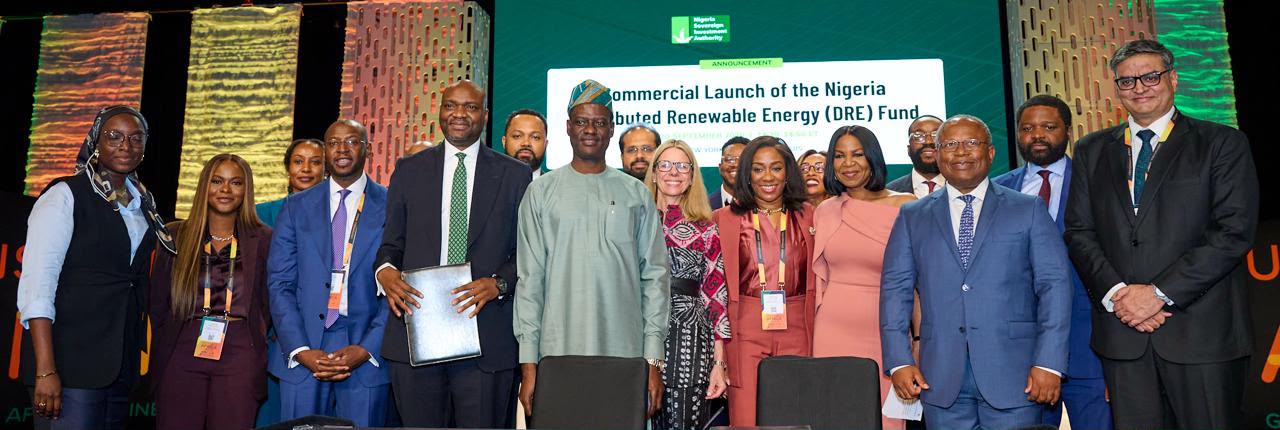
The Nigeria Sovereign Investment Authority and Africa50 have launched a $300 million distributed renewable energy fund to finance mini grids and standalone solar systems for communities and businesses the national grid does not reach or serve well.
The Nigeria Distributed Renewable Energy Fund reached its commercial launch on the sidelines of the 81st United Nations General Assembly in New York in September, which organizers described as a shift from designing the fund to putting money to work.
Who is behind the fund
NSIA and Africa50 will co manage it, with Sustainable Energy for All providing leadership on energy access. The World Bank and the International Solar Alliance are also involved, according to reports.
NSIA’s managing director, Aminu Umar-Sadiq, called the launch a signal to markets, investors and governments that the sector is “investable, credible and ready to operate at scale.”
Alain Ebobissé, Africa50’s group chief executive, said the partnership combines NSIA’s knowledge of the Nigerian market with Africa50’s investment and fund management skills and the technical expertise of its partners.
Ashish Khanna, director general of the International Solar Alliance, called the fund a landmark initiative within Mission 300, the World Bank and African Development Bank program that aims to connect 300 million Africans to electricity by 2030.
What the money is for
The fund will invest in mini grids, which serve a village or business cluster, and standalone solar systems for homes, shops and farms. It also aims to help African distributed renewable energy companies grow.
Yusuf Umar, chief executive of the Renewables Investment Platform for Limitless Energy, known as RIPLE and launched by NSIA, said closing Nigeria’s energy gap needs financing structures that can deliver viable solutions at scale, and that better energy access can also support health care, education and economic inclusion.
The need is large. A speaker at an electricity event in Abuja this month said more than 90 million Nigerians still lack reliable electricity, forcing homes and businesses to rely on costly self generation.
Questions the fund still faces
Mini grids and solar systems work only if customers can pay and projects can earn a return. Tariffs, currency swings, project permits and the arrival of the main grid can all change the economics of a small power project.
Reports on the launch did not name any first investments or say how the $300 million is split among investors.
States are also being urged to act. Vice President Kashim Shettima urged them this week to build their own electricity markets under the Electricity Act 2023, and distributed energy is one way those markets could grow.
Nigeria’s distribution companies reported total losses of 36.23% in the second quarter, according to the regulator, which shows how hard it is for the national grid to deliver and collect payment.
Investors see the case for distributed power: it can reach customers the grid does not, and it can be financed project by project. The fund’s test is whether it turns $300 million of capital into working mini grids and solar systems that people can afford to keep running.