KEY POINTS
- South Africa’s deputy minister urged Nigeria and South Africa to build cross-border energy infrastructure.
- Over 60 South African companies have invested $7.80 billion in Nigeria, creating 11,537 jobs since 2003.
- Africa’s combined economic output is projected to hit $3.32 trillion in 2026, per IMF projections.
South Africa and Nigeria have the pieces to build something significant together on energy. The question, experts said this week in Lagos, is whether both countries will move fast enough to make it happen.
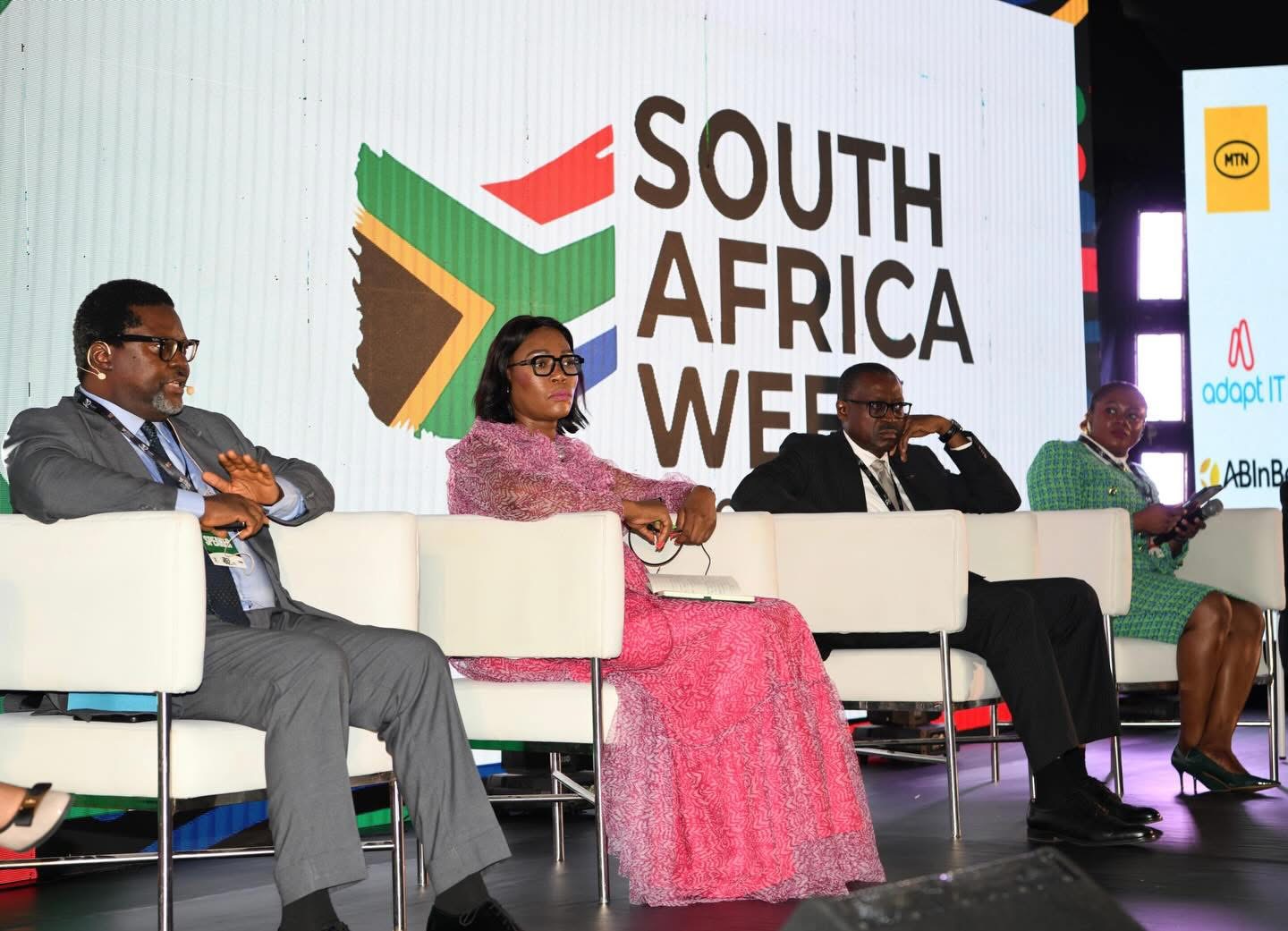
The call came at the 4th South Africa Week in Lagos, themed around repositioning and promoting energy investment between the two nations. South Africa’s Deputy Minister of International Relations and Cooperation, Thandi Moraka, set the tone. She described both countries as powerhouses with the capacity to drive sustainable development and regional integration through deliberate energy collaboration.
The backdrop is not abstract. Middle East tensions have disrupted global energy markets, and Africa is feeling the pressure on costs and supply. Moraka said the answer lies closer to home.
“We need to both work towards possessing abundant renewable sources, with Nigeria with its solar potential and South Africa with its wind and solar capabilities that can be harnessed to diversify energy resources,” she said.
What the collaboration should look like
Moraka called for energy diplomacy anchored in the African Union agenda, using the African Continental Free Trade Area to harmonize regulations, reduce trade barriers and establish regional trade corridors for equipment, technology and expertise.
She pointed to the Dangote Refinery as proof that Africa can build at scale. She urged industry players to replicate that model and use routes like the Cape of Good Hope to supply the SADC region with locally produced energy products.
Acting South African Consul-General in Nigeria Kgothatso Xulu reinforced the case for deeper continental collaboration in oil and gas, renewable energy and electricity. She called for infrastructure development and skills transfer to drive regional growth.
What the numbers say
The business case for the Nigeria-South Africa energy corridor is already visible in trade data. Calvin Phume, Director of Africa Bilateral Economic Relations at South Africa’s Department of Trade, Industry and Competition, said more than 60 South African companies have invested an estimated $7.80 billion in Nigeria, creating 11,537 jobs between 2003 and March 2026.
Neconde Energy Managing Director Chichi Emenike cited IMF projections showing Africa’s combined output hitting $3.32 trillion in 2026, with South Africa leading at $443.64 billion and Nigeria third at $334 billion. Both countries, she said, face energy shortages and policy uncertainty that continue to rattle investors.
Petrolex Chairperson Segun Adebutu said the opportunity is real but unlocking it demands clarity in the investment environment, commercially viable participation and a sharp focus on execution. “The real challenge is moving projects efficiently from concept to production,” he said.