

KEY POINTS
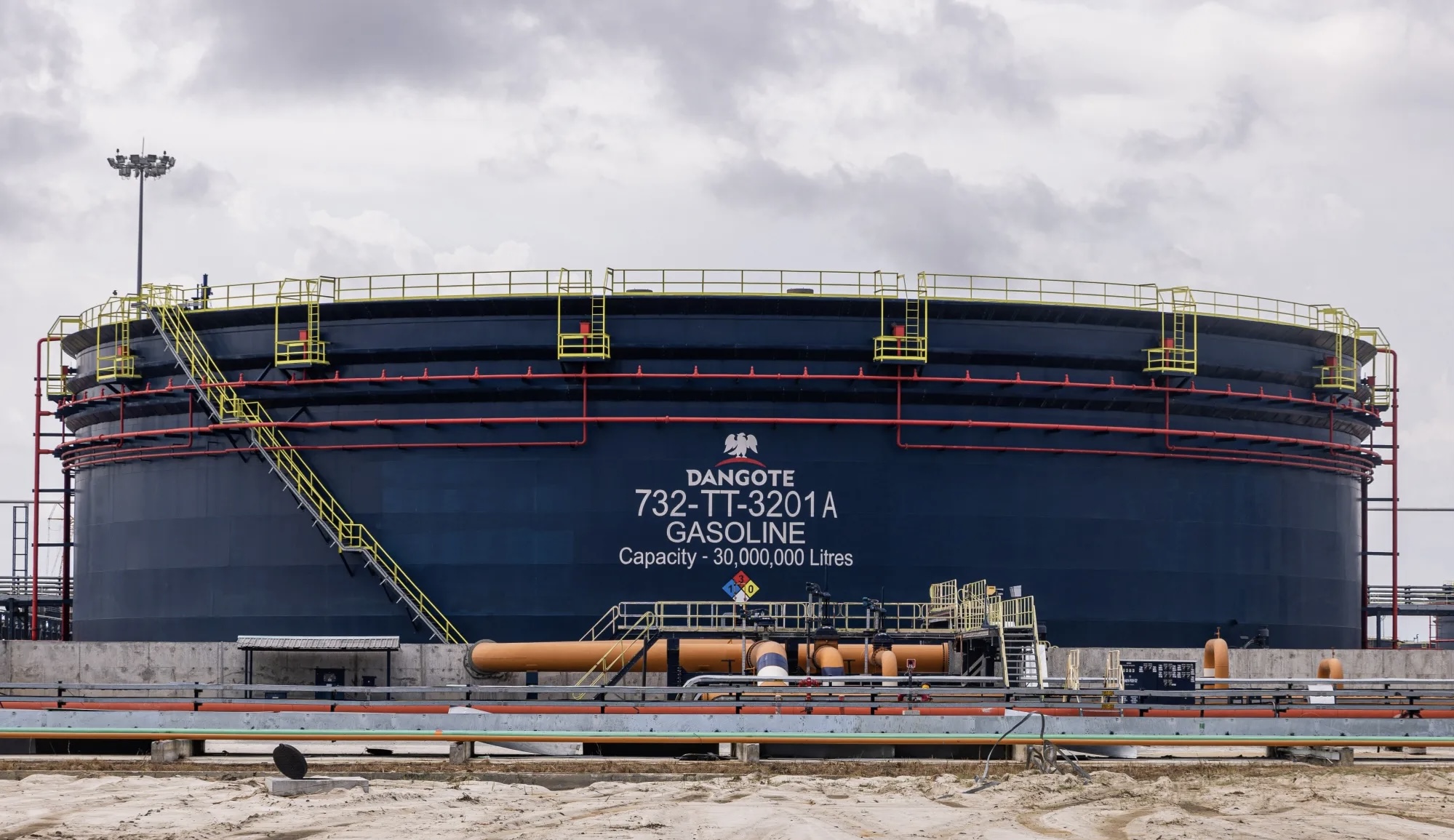
- Dangote Refinery says imported petrol made up about 43 percent of Nigeria’s July supply, forcing it to consider exporting excess stock.
- The refinery blames continued import licences for poor visibility, calling indefinite excess inventory commercially unsustainable.
- Regulator data show daily petrol imports jumped to 18.1 million litres in June from 5.9 million in May, as domestic supply fell.
Dangote Refinery has warned that it may raise petrol exports as surging imports cloud domestic demand and make production and inventory planning increasingly difficult.
The refinery said imported Premium Motor Spirit accounted for about 43 percent of petrol supplied to the Nigerian market in July, even though it can meet and exceed local demand on its own. Moreover, it said the continued issuance of import licences has cut visibility over future supply, which makes holding large domestic stocks commercially hard.
Excess stocks force exports abroad
According to the refinery, it has kept adequate reserves for Nigerian consumers since it began operations, backed by heavy investment in storage, logistics and working capital. However, it said holding excess inventory indefinitely has become unsustainable, since it cannot gauge how much imported petrol will enter the market.
Consequently, the company said any petrol the domestic market cannot absorb must move to regional and international buyers. Furthermore, it stressed that rising exports do not signal an inability to supply Nigeria, but rather a response to excess stocks created by import uncertainty. Therefore, it framed the export push as a way to avoid needless storage and financing costs.
Warning over an import paradox
Additionally, the refinery said poor transparency around expected import volumes piles on carrying and financing costs while making it harder to match output to real consumption. As a result, it warned of a paradox in which Nigeria holds enough refining capacity yet still faces disruptions because refiners cannot forecast demand.
Nevertheless, the company rejected any claim that bigger exports meant it was leaving the Nigerian market, insisting it remains committed to steady nationwide supply. Meanwhile, it cautioned that future shortages caused by import distortions should not fall on Dangote, and it urged greater coordination and policies that back local refining.
The warning follows a sharp swing in the numbers. Specifically, regulator data showed average daily PMS imports jumped to 18.1 million litres in June from 5.9 million in May, while domestic daily supply fell to 32.5 million litres from 41.5 million. Ultimately, total daily receipts rose to 50.6 million litres from 47.4 million, renewing questions over whether growing capacity is cutting import reliance.