

KEY POINTS
- AIIB has agreed to provide Turkey with a record $1.6 billion climate policy financing package.
- Turkey estimates it needs an additional $68 billion in climate investment by 2030.
- The programme includes renewable energy expansion, emissions reporting and climate resilience measures.
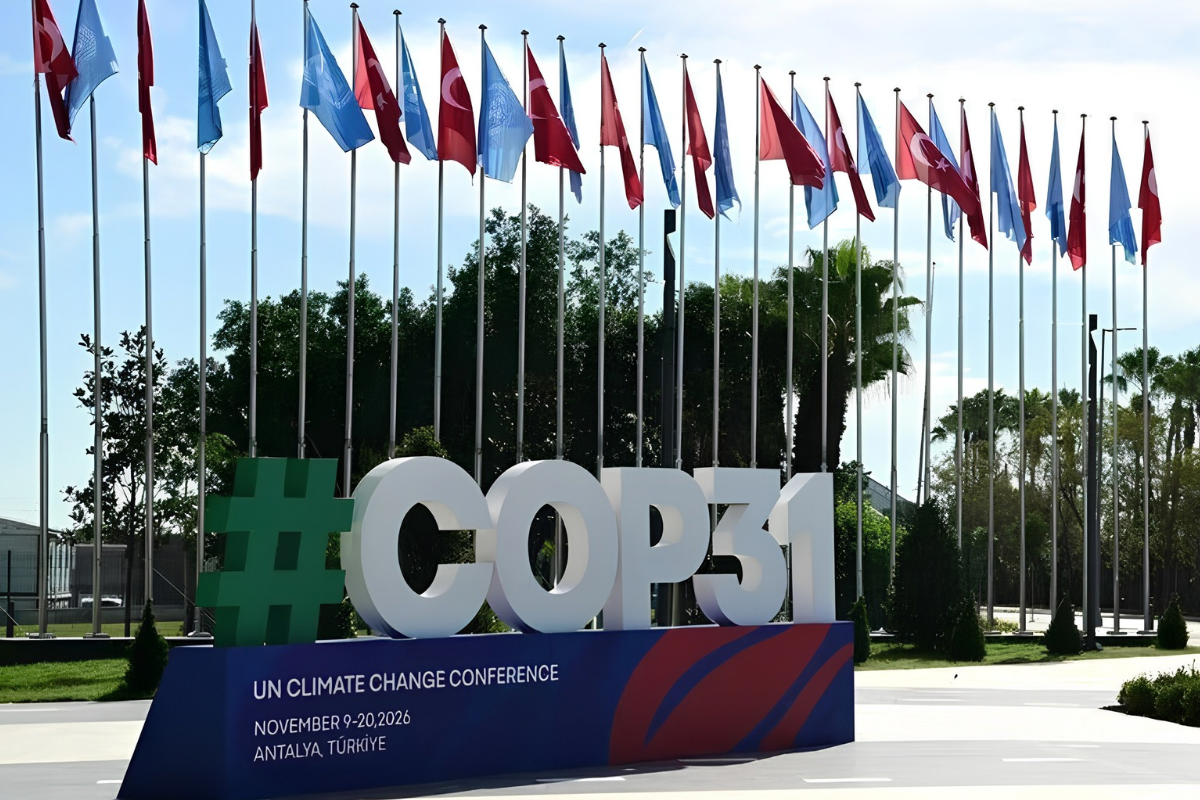
Turkey has secured a record $1.6 billion climate financing agreement from the Asian Infrastructure Investment Bank (AIIB) to support policy reforms aimed at accelerating its climate ambitions and attracting additional investment. The agreement was announced on Thursday, Nov. 12, during the COP31 climate conference in Antalya, where international leaders and financial institutions are discussing measures to address climate change.
According to Reuters, the financing represents AIIB’s largest climate policy-based package to date. Turkey, a founding member of the bank, estimates that it needs an additional $68 billion in climate investment by 2030. About half of that amount is expected to come from private investors.
The new agreement will support reforms covering fiscal policy, financial regulation and sectoral planning. It will also help the country implement its Climate Law and pursue its emissions reduction targets. Turkey has set an interim emissions target for 2035 and aims to achieve net-zero emissions by 2053.
Renewable energy and emissions reforms
The financing will support several initiatives, including the expansion of sustainable finance, faster decarbonisation and stronger climate resilience. One major priority is the development of Turkey’s emerging emissions trading scheme. The system will allow companies in high-emitting industries to trade emissions allowances, creating financial incentives for businesses to reduce pollution.
Meanwhile, the programme has established targets for industrial emissions reporting and renewable energy development. At least 180 industrial facilities are expected to report baseline emissions under the scheme by April 2027. The programme also targets production licences for 1,800 megawatts of wind and solar capacity by early 2027.
These measures could also benefit Turkish exporters, particularly manufacturers of steel and cement selling into European markets. This is because a domestic carbon pricing system could help companies account for emissions costs under the European Union’s carbon border levy.
Agriculture and climate resilience
Beyond industrial reforms, the financing programme will support climate adaptation in agriculture and environmental protection. It aims to help 225,000 farmers in water-stressed areas transition to crops that require less water by 2028.
In addition, Turkey plans to designate 50,000 hectares of land as carbon sinks by the same year, allowing the areas to absorb and store atmospheric carbon. The investment comes as Turkey faces growing environmental pressures, including drought, extreme heat, water scarcity, wildfires and urban flooding.
AIIB Chief Investment Officer Konstantin Limitovskiy said the bank looked forward to supporting Turkey in achieving its climate ambitions. The agreement adds to AIIB’s expanding climate finance portfolio. The bank recorded $7.47 billion in total climate financing in 2025.