KEY POINTS
- Brent crude climbed above $113 as Gulf conflict fears raised concerns about inflation and global recession risks.
- European stocks and the Dow rose, while Asian markets fell amid surging energy and commodity prices.
- Aluminium neared four-year highs and analysts warned oil could hit $150 if the Strait of Hormuz disruption continues.
Oil prices continued to rise as investors monitored the ongoing Gulf conflict, which has heightened fears of inflation and global economic slowdown.
European markets and a major Wall Street index edged higher after earlier declines in Asia, reflecting cautious but mixed investor sentiment.
Strikes and air attacks on Middle Eastern producers pushed aluminium prices higher, adding to broader commodity inflation pressures.
European equities recovered after early weakness
European equities recovered after early weakness. The pan-European STOXX 600 and the FTSEurofirst 300 both moved higher, while on Wall Street the Dow Jones Industrial Average gained 0.34 percent. However, the S&P 500 slipped 0.21 percent and the Nasdaq Composite declined 0.55 percent.
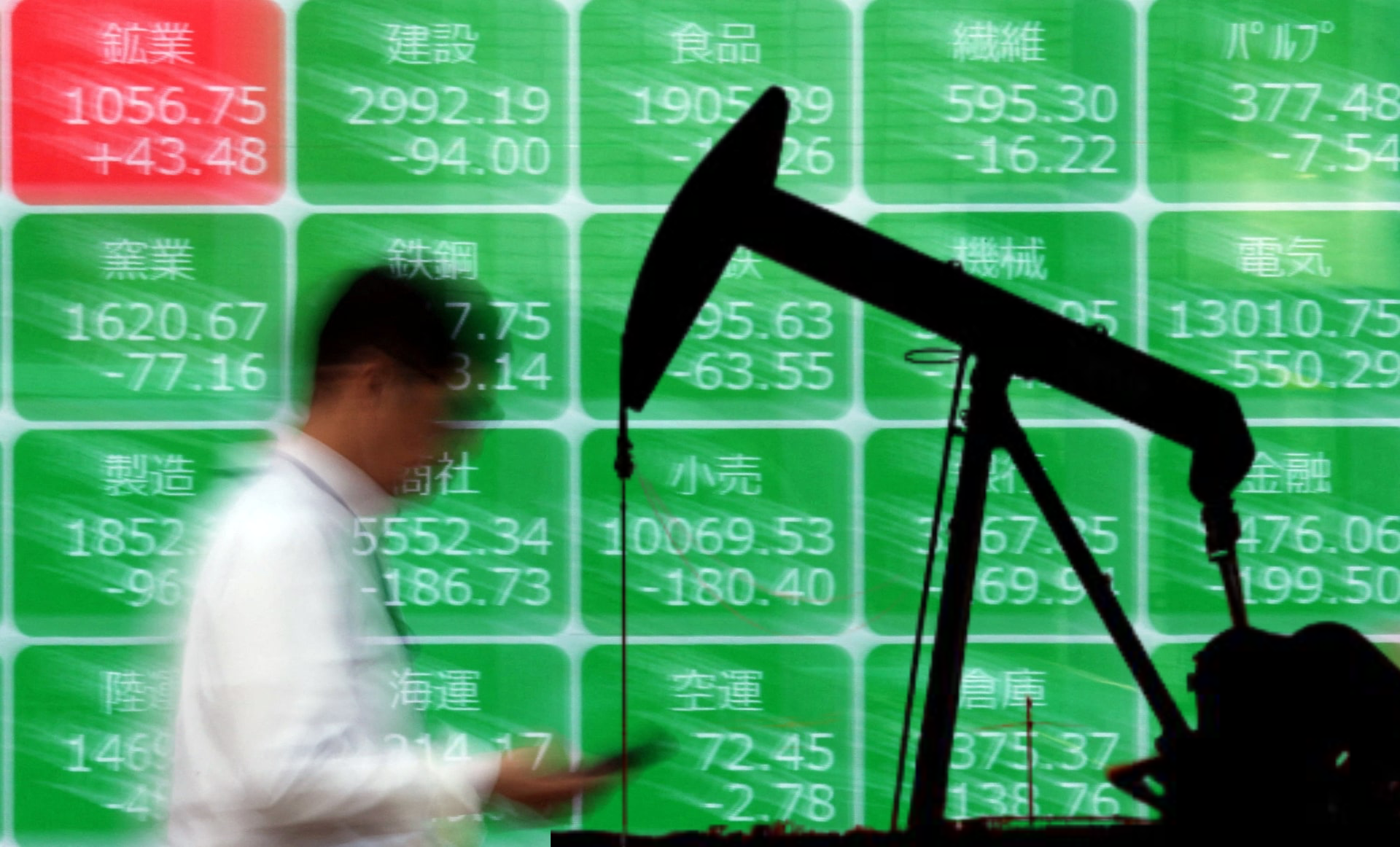
Asian markets were hit harder by the rising energy costs. MSCI’s broad Asia-Pacific index outside Japan fell 1.96 percent, while Japan’s Nikkei dropped 2.79 percent as investors worried about supply disruptions and higher fuel costs.
Safe-haven demand pushed U.S. Treasury prices higher, sending yields lower across the curve. The yield on the benchmark 10-year Treasury note fell to 4.346 percent, while the two-year yield declined to 3.832 percent.
Meanwhile, Germany reported rising inflation in March, driven largely by surging energy prices. Economists warned that further increases could follow if oil supply disruptions persist.
Commodity markets also reacted strongly. Aluminium prices surged close to four-year highs after airstrikes targeted major Middle Eastern producers.
The broader energy shock has already pushed up prices for gas, fertiliser, plastics, aviation fuel and shipping costs, with knock-on effects expected for food and pharmaceuticals.