KEY POINTS
- Japan offered South Africa a yen loan to back its energy transition away from coal.
- Japan’s ammonia co-firing technology blends ammonia with coal to reduce greenhouse gas emissions significantly.
- South Africa remains heavily coal-dependent, generating most of its electricity from the fossil fuel.
Japan is not waiting on South Africa’s energy transition. It is showing up with money and technology to shape it.
The Japanese government plans to fast-track talks with South Africa on a yen-denominated energy loan, with the offer delivered during a visit by Foreign Minister Toshimitsu Motegi. Japanese diplomatic officials confirmed the loan would be used by South Africa to advance its own energy transition goals, though the size has not been disclosed.
Alongside the financing, Japan is pushing a specific technology: ammonia co-firing, a method that blends ammonia with coal during power generation to reduce carbon emissions. The pitch is deliberately calibrated to South Africa’s reality. The country generates most of its electricity from coal, ranks among the world’s most carbon-intensive power producers, and cannot realistically walk away from its coal infrastructure overnight.
What ammonia co-firing actually does
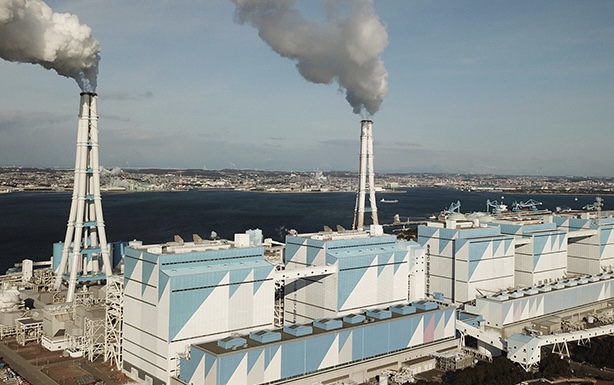
The technology does not replace coal. It displaces a portion of it. Japan demonstrated 20 percent ammonia co-firing at its Hekinan Thermal Power Plant, substituting one-fifth of coal fuel with ammonia, and reported good results ahead of commercial operations.
The appeal to countries like South Africa is straightforward: existing coal plants can be retrofitted rather than decommissioned, reducing emissions without the cost and disruption of rebuilding the grid from scratch. Japan has framed this approach as a bridge technology, one that buys time while renewables are scaled up.
Critics push back hard on that framing. Energy analysts argue that ammonia co-firing promotes uncertain future technology options with limited feasibility while delaying the policy actions needed to phase out coal entirely, and that the approach is inconsistent with pathways to keep global temperature rise below 1.5 degrees Celsius.
Japan’s broader strategy
The offer to South Africa fits a larger pattern. Japan has established the Asia Zero-Emissions Community framework, under which it supports partner countries in adopting Japanese energy transition solutions, particularly coal co-firing technologies, as part of its broader GX green transformation strategy.
Japan is not purely altruistic here. Exporting ammonia co-firing technology opens markets for its industrial and energy companies at a moment when domestic coal demand is declining. South Africa, with its large coal fleet and pressing need for investment, is exactly the kind of partner Japan is targeting.
The yen loan, if finalized, would add a financial dimension to what Japan hopes becomes a long-term energy partnership. Details on loan terms, conditions and the specific projects it would fund are still being worked out between the two governments.