KEY POINTS
- Liberia’s first solar farm covers 40,000 panels and adds 20 megawatts to the national grid.
- The World Bank-funded project raises Liberia’s energy generation capacity by 15 percent overall.
- Planned expansions include an extra 10 megawatts of solar and six megawatts of battery storage.
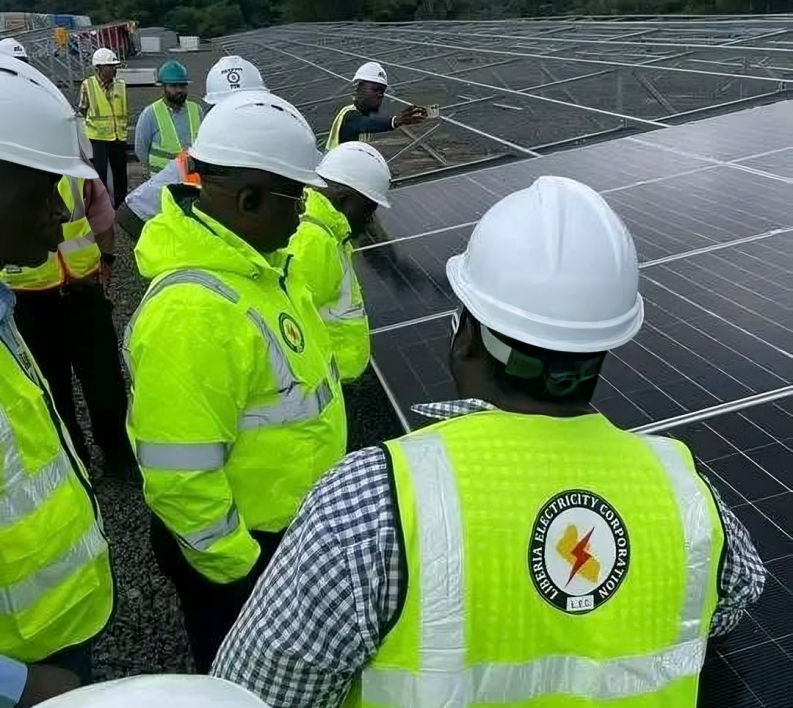
Nearly 40,000 solar panels now line the rocky ground at Mount Coffee in Lower Montserrado County, and they are already working.
Liberia’s first-ever utility-scale solar farm is feeding electricity into the national grid ahead of its full commissioning, a milestone that project managers say demonstrates what is possible when financing and political will align in a country that has long struggled to keep the lights on.
The 20-megawatt facility is funded by the World Bank under its Regional Emergency Solar Power Intervention project, known as RESPITE, a $311 million regional program covering Chad, Liberia, Sierra Leone and Togo. Each of the farm’s panels produces 710 watts. Fifty-two inverters push that output into substations that connect directly to the grid. Crushed rocks spread across the site trap and redistribute heat to improve generation efficiency.
A project built to close a seasonal gap
The farm was designed with a specific problem in mind. Mount Coffee’s hydropower plant, which anchors Liberia’s electricity supply, loses capacity during the dry season as water levels fall. The solar farm fills that gap.
Construction started in October 2024. The original cost estimate was $15.8 million. Infrastructure and operational additions pushed that figure to $21.5 million. The facility is now expected to raise Liberia’s total energy generation capacity by 15 percent, while cutting dependence on diesel and heavy fuel generators.
Dominic Gono, the RESPITE project manager, said the opportunity is real but requires sustained effort. “All we need is to muster the courage and work hard for it to happen,” he said.
What comes next
Plans are already in place to expand the solar component by an additional 10 megawatts and add six megawatts of battery storage. A 42-megawatt expansion of Mount Coffee’s hydropower capacity is also on the table, alongside a 150- to 200-megawatt upstream hydropower project on the St. Paul River.
World Bank Managing Director Paschal Donohoe visited the site in March and called it a model for future energy partnerships on the continent. Liberia has committed to adding 150 megawatts of clean energy under its Nationally Determined Contributions, and officials say this project is the clearest proof yet that the target is within reach.