

KEY POINTS
- Eskom warns Grid Reform could weaken its finances and unsettle lenders.
- The utility wants transmission assets retained temporarily while an independent operator runs the grid.
- Eskom’s transmission assets are valued at about R110bn, while municipalities owe it roughly R119bn.
Eskom has warned that South Africa’s ongoing Grid Reform could weaken the state-owned power utility’s finances and unsettle lenders if the government transfers its transmission assets to a separate company before addressing the utility’s outstanding financial obligations.
Eskom’s board supports the creation of an independent transmission system operator (ITSO) to oversee the wholesale electricity market and ensure fair access to the national grid. However, it wants the government to delay the transfer of ownership of the transmission infrastructure until key financial and legal concerns have been resolved.
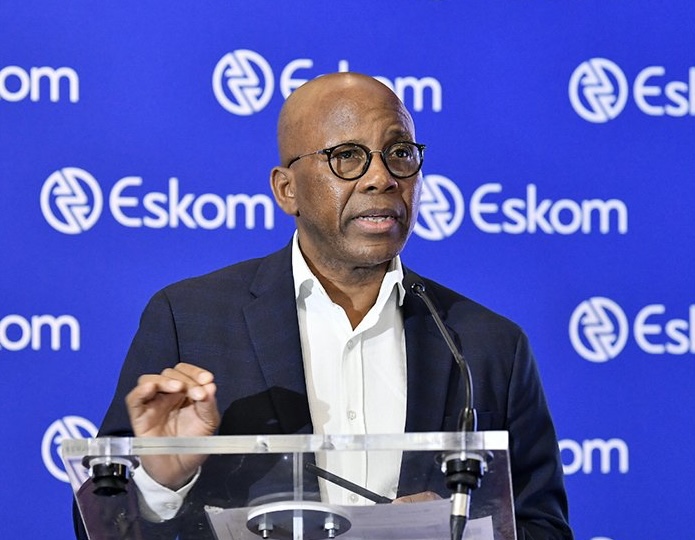
Eskom Chairperson Mteto Nyati said the sequence in which the Grid Reform is implemented will be critical to preventing unintended consequences for the utility, its creditors and the wider electricity market.
Nyati said Eskom’s preferred approach would be to establish an independent transmission system operator that can function separately from the utility before transferring ownership of the transmission infrastructure.
Under this approach, the ITSO would initially operate independently while Eskom retains ownership of the transmission assets during an interim period.
Only after the utility’s financial concerns and other outstanding obligations have been resolved would ownership of the assets potentially be transferred.
Nyati argued that this sequencing would allow the Grid Reform to proceed without immediately putting Eskom’s balance sheet, lending arrangements and credit position under additional pressure.
The Eskom chairperson warned that transferring the assets prematurely could activate change-of-control provisions contained in some of the utility’s lending agreements.
The transaction could also create accounting complications and unsettle bondholders, potentially adding further financial pressure to an organisation that remains heavily indebted.
Transmission assets worth about R110bn
A major issue in the proposed Grid Reform is the value of Eskom’s transmission infrastructure.
A valuation commissioned by Eskom’s board placed the transmission assets at approximately R110 billion.
That figure is considerably higher than an earlier estimate produced by the World Bank, creating a valuation gap that Eskom believes must be resolved before any transfer can be finalised.
Determining the appropriate value of the assets is particularly important because the transfer could have implications for Eskom’s balance sheet and its ability to meet existing financial obligations.
Eskom earns about 40% of its earnings from the transmission business, meaning that removing those assets without first dealing with its legacy liabilities could materially weaken the utility’s financial position.
The utility is also worried about how the Grid Reform could affect its relationships with lenders and bondholders.
A restructuring that reduces the value of Eskom’s assets while leaving its existing liabilities in place could weaken its financial position and potentially affect the safeguards available to creditors.
The concerns echo a warning issued by Moody’s Ratings in May, when the agency said the restructuring needed to be carefully managed to avoid damaging Eskom’s credit profile or weakening protections for its creditors.
Although Eskom has taken steps to reduce its debt burden, the utility continues to face substantial financial challenges.
Municipalities owe Eskom approximately R119 billion, much of which the utility has struggled to collect.
The outstanding municipal debt adds another layer of financial pressure as the government works to restructure the electricity sector.
Eskom’s board has also raised concerns about the proposed structure of the independent transmission company.
It argues that an operator responsible for both running the transmission system and determining where new grid capacity should be built could face an inherent conflict of interest.
The concern is that the grid operator could effectively become both a market participant and a decision-maker over access to infrastructure that private investors will increasingly be expected to help finance.
South Africa needs significant investment in new transmission capacity to connect new generation projects, particularly renewable-energy facilities, to the national grid.
Eskom believes the structure of the new transmission system must therefore ensure that private investors receive fair and transparent access to the network.
Rather than immediately transferring ownership of its transmission infrastructure, Eskom favours a model in which the independent operator would initially function without owning the assets.
Under this arrangement, the transmission operator would act as a neutral coordinator of the electricity market.
It would be responsible for planning the grid, allocating connection capacity and overseeing competitive procurement processes, while Eskom would retain ownership of the physical transmission infrastructure for an interim period.
Eskom believes this approach could achieve the government’s objective of creating an independent transmission operator without exposing the utility to unnecessary financial risks during the transition.
The proposal is based on international electricity-market reform models reviewed for Eskom by consulting firm Kearney.